Students can use Kaushal Bodh Class 7 Solutions Project 6 and Class 7 Vocational Education Chapter 6 Family Health Handbook Question Answer to understand textbook activities more clearly.
Class 7 Vocational Education Chapter 6 Question Answer
Class 7 Kaushal Bodh Chapter 6 Question Answer
What did I learn from others? [Page No. 158]
Question 1.
According to you, what were the two most important things you learnt during the visit to the health centre and from interaction with health professionals?
Answer:
The two most important things that I have learnt during the visit to the health centre and from interaction with health professionals are
- The importance of hygiene, proper care, and timely treatment in preventing and managing diseases.
- The role of emergency services and first-aid in providing quick help and saving lives during emergencies.
Question 2.
Often, we are well aware of what we have to do and yet we do not practise it. For example, we all know exercise is important, but we often skip it. What do you think is the reason for this? What can be done to change this?
Answer:
We often know what is good for us but still do not practise it due to laziness, lack of motivation, busy schedules, or habits like excessive screen time. Sometimes, we also delay things thinking we can do them later.
To change this, we can make a simple daily routine, set small and achievable goals, reduce distractions, and stay consistent. Encouragement from family and friends can also help in building and maintaining healthy habits.
Think and Answer [Page No. 160]
Question 1.
What did you enjoy doing in this project?
Answer:
I enjoyed learning about the health needs of different family members and understanding how physical, mental, and environmental factors affect well-being. Preparing a first-aid kit and observing healthcare practices during the visit to a hospital was very interesting. I also liked discussing preventive measures and practical actions to improve family health, which made the project very hands-on and engaging.
Question 2.
What challenges did you face? How did you overcome them?
Answer:
One challenge was collecting accurate health information from family members, as some were busy or hesitant to answer. I overcame this by patiently explaining the purpose of the project and asking simple, clear questions. Another challenge was understanding certain first-aid procedures, which I solved by observing carefully and following guidance from the facilitator or teacher.
Question 3.
What will you do differently next time?
Answer:
Next time, I will plan my data collection more systematically and schedule interviews with family members in advance. I will also take more detailed notes during hospital or health centre visits.
Additionally, I will try to involve all family members in health activities, so that everyone understands preventive measures and contributes to maintaining good health and hygiene at home.

Question 4.
According to you, how does drinking water get polluted and how will you ensure it is safe for drinking?
Answer:
Drinking water can get polluted through stagnant water, sewage, industrial waste, or improper garbage disposal near water sources.
To ensure water is safe, i would filter it, boil it before drinking, and check it using simple water testing methods like H2S strips. I would also educate my family about safe water storage and prevent contamination at home.
Question 5.
Identify a few jobs related to the work you just did {e.g., doctor, nurse, ASHA worker, Anganwadi worker, counsellor). Can you think of any other kind of work related to health? Look around, speak to people and write your answer.
Answer:
Jobs related to this work include doctors, nurses, ASHA workers, Anganwadi workers, health counsellors, lab technicians, pharmacists and sanitation workers.
Other health-related work includes public health educators, nutritionists, mental health therapists, ambulance drivers, hospital administrators and environmental health officers who monitor water and air quality to prevent diseases.
Family Health Handbook Class 7 Question Answer
Activity 1: Factors Affecting Health
Purpose of the Activity
This activity helps students understand different factors that affect physical and mental health. It encourages observation, discussion and awareness about healthy habits and surroundings.
Planning of the Activity
- Discuss the meaning of good health (physical and mental well-being).
- Talk about common health problems caused by unhealthy habits.
- Discuss with your group, parents, and teachers. Observe and note how the following factors affect health
Important Factors Affecting Health
| Factor | How It Affects Health (Example) |
| Lack of personal hygiene | Can cause infections and diseases |
| Pollution | |
| Unclean environment | |
| Lack of balanced diet | |
| Loneliness | |
| Lack of sleep | |
| Lack of exercise | |
| Excessive screen time | |
| Any other factor |
Search Tip: You can search online using keywords: family health, basic first-aid and steps, tips for family health and wellness, first-aid for common injuries.
Question 1.
Which factors can you do something about, and which are out of your control?
Answer:
Factors like personal hygiene, diet, exercise, sleep, and screen time can be controlled by our daily habits. Pollution, noise, and environmental cleanliness are mostly out of individual control but can be improved with community efforts and by informing local authorities or participating in cleanliness drives.
Question 2.
How does lack of hygiene affect our body?
Answer:
Lack of hygiene can lead to infections, skin problems, digestive issues, and the spread of contagious diseases. Poor hygiene can weaken immunity and make the body more prone to illnesses such as colds, flu, and stomach infections, affecting both physical and mental well-being.
Question 3.
Why is a balanced diet important?
Answer:
A balanced diet is important because it provides essential nutrients, vitamins, and minerals needed for energy, growth, and overall health.
It strengthens immunity, improves mental focus, supports proper body functioning, and reduces the risk of illnesses caused by poor nutrition, ensuring both physical and mental well-being.
Question 4.
How does excessive screen time affect both physical and mental health?
Answer:
Excessive screen time can harm both physical and mental health. It may cause eye strain, headaches, poor posture, and disturbed sleep.
Mentally, it can lead to stress, reduced concentration, and social isolation. It also reduces physical activity, which affects overall fitness and well-being.
Question 5.
Why is regular exercise important for maintaining good health?
Answer:
Regular exercise is important for maintaining good health because of the following reasons
- It keeps the body fit, strong, and active.
- It improves heart health and blood circulation.
- It helps control weight and prevents diseases.
- It reduces stress and improves mental well-being.
Kaushal Bodh Class 7 Family Health Handbook Question Answer
Activity 2: Framing questions related to you and your family’s health
Purpose of the Activity
This activity helps students think about health-related concerns of themselves and their family. It encourages curiosity, questioning, and understanding of health needs.
Thinking & Question Framing
| My Question | Answer (to be filled later) |
| 1. My younger sister is 4 years old. Why does she catch a cold so often? | |
| 2. What can 1 do if someone at home gets a fever? | |
| 3. My parents often say, “Don’t watch TV before sleeping”. Why is that so? | |
| 4. Why does my grandmother refuse to eat? | |
| 5. | |
| 6. | |
| 7. | |
| 8. |
Whom Can You Ask?
You can ask these questions to
- Family members and elders
- Teachers arid community members
- Doctors, nurses, ASHA workers, Anganwadi workers
- To yourself
Question 1.
Why is it important to ask questions about health?
Answer:
It is important to ask questions about health because asking questions about health helps us understand our own and our family’s needs. It allows us to identify problems early, learn how to prevent illnesses and adopt healthy habits. It also encourages curiosity and awareness about physical, mental and environmental factors affecting well-being.
Question 2.
Who can help you find answers to health-related questions?
Answer:
Answers to health-related questions can be found from family members, elders, teachers, community members, doctors, nurses, ASHA workers, and Anganwadi workers. Observing healthcare practices and using trusted learning resources also provide guidance on preventing illnesses and maintaining overall family health.
Question 3.
How does asking questions help in understanding family health needs better?
Answer:
Asking questions helps us understand family health needs by identifying problems, learning their causes, and finding proper solutions. It increases awareness, clears doubts, and helps us take better care of each family member’s physical and mental well-being.
Question 4.
Why should we consult elders or health workers for health-related concerns?
Answer:
We should consult elders or health workers for health-related concerns because
- They have experience and knowledge about common health problems.
- They can give correct advice and suggest proper treatment.
- They help in early detection and prevention of diseases.
- They guide us on healthy habits and proper care.
Question 5.
How can observing family members help in identifying health problems?
Answer:
Observing family members helps in identifying health problems by noticing changes in their behaviour, eating habits, sleep patterns, or energy levels. It helps detect early signs of illness, so timely care and treatment can be given to prevent serious health issues.
Activity 3: Visit to a hospital/Primary Health Centre (PHC)/ Community Health Centre (CHC)
Purpose of the Activity
This activity helps students understand how healthcare centres function. By observing doctors and nurses, students learn about patient care, medical equipment and basic first-aid practices.
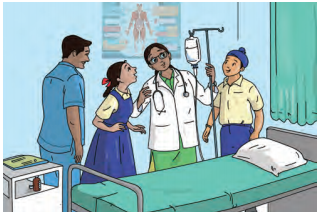
During the Visit — Observation Tasks While visiting, carefully observe and note
- How doctors and nurses treat patients
- Types of equipment used
- Cleanliness and hygiene practices
- Patient care and comfort measures
- Use and contents of a first-aid kit
- Emergency services and response system
- Interaction between healthcare workers and patients
Visit Details Record
Date and time of visit: _____________
Location: _____________
Type of centre (hospital / CHC / PHC / other): _____________
Name of centre: _____________
Name of expert(s) interacted with: _____________
Emergency contact number: _____________
Phone number for ambulance: _____________
National emergency number (police, ambulance, fire): 112
National numberfor ambulance: 108
Any other observations: _____________
Questions to Ask Experts
What are the different facilities available in your centre?
_________________________________________________________
What services are provided to patients (e.g., vaccination, outpatient treatment, diagnosis, in-hospital treatment, specialised treatments)?
_________________________________________________________
What are the most common illnesses in your area? How can they be prevented?
_________________________________________________________
What should we do in an emergency? What should we do if an accident happens?
_________________________________________________________
What are the fees charged to a patient? How is -billing done? How is the payment to be done? Are there any concessions given (e.g., for senior citizens and military personnel)?
_________________________________________________________
How do we decide if someone needs medical help or we can manage at home?
_________________________________________________________
What should we do if someone falls sick during the night or on a holiday?
_________________________________________________________
What precautions are to be taken while taking medicines?
_________________________________________________________
Question 1.
What did you observe about patient care?
Answer:
I observed that doctors and nurses treat patients with patience, kindness and respect. They listen to patients’ concerns carefully, explain treatments, and provide comfort during procedures. Staff also monitor patients’ conditions regularly and ensure that each patient receives timely attention and proper care.
Question 2.
What types of equipment were used?
Answer:
Various medical equipment was used, including thermometers, blood pressure monitors, stethoscopes, weighing scales, first-aid kits, diagnostic tools, oxygen cylinders, and hospital beds. Equipment for vaccination, minor procedures and emergency care were also observed, showing how technology and tools support patient diagnosis, treatment and overall healthcare.
Question 3.
Why is hygiene important in hospitals?
Answer:
Hygiene in hospitals prevents the spread of infections and protects both patients and staff. Cleanliness reduces the risk of contagious diseases, ensures safe treatment, and helps patients recover faster. Maintaining hygiene includes washing hands, sanitising surfaces, wearing gloves and masks and disposing of medical waste safely.
Question 4.
What did you learn about emergency services and how they respond?
Answer:
I learned that emergency services respond quickly to provide immediate medical help. They use ambulances, trained staff, and proper equipment to handle urgent situations. Question uick communication through emergency numbers ensures timely care, which can save lives and prevent serious complications.
Question 5.
How do healthcare workers interact with patients and their families?
Answer:
Healthcare workers interact with patients and their families in a caring, respectful, and professional manner. They listen to their concerns, explain the illness and treatment clearly, and provide guidance and reassurance to ensure comfort, trust, and proper care.
Activity 4: Creating a fist-aid kit
Purpose of the Activity
This activity helps students understand the importance of first-aid and learn how to prepare and use a first-aid kit for basic emergencies.
Planning
- Discuss the importance of first-aid in daily life.
- Revise common injuries like cuts, burns, and dehydration.
- Learn basic first-aid steps (bandaging, burn care, ORS preparation).
- Prepare a notebook to record observations.
- Arrange materials required for making a first-aid kit.
Workshop Details Record
- Duration of Workshop: _____________
- Participants: _____________
- Facilitator (Expert): _____________
- Materials Used: _____________
Workshop Tasks
While creating the first-aid kit, observe and perform
- Identify items needed for a first-aid kit
- Organise and label all materials properly
- Learn howto treat minor cuts and wounds
- Learn first-aid for minor burns
- Prepare ORS solution for dehydration
- Practice using first-aid materials under guidance
- Decide a safe and accessible place to keep the kit
First-Aid Procedures to Practice

Remember
First-aid is only emergency treatment or preventive action before you take the patient to the doctor. Always seek professional medical help for serious injuries or illness.
Question 1.
What items are essential in a first-aid kit?
Answer:
Essential items include bandages, gauze, antiseptic cream, cotton, adhesive tape, scissors, gloves, medicines for pain and fever, ORS packets, thermometer, tweezers, and safety pins. These items help treat minor injuries, burns, dehydration, and provide immediate care before professional medical help is available.
Question 2.
How do you treat a minor cut or burn?
Answer:
For a minor cut, wash the wound with soap and water, place a clean cloth or gauze and tie a bandage firmly. For a minor burn, wash with running water for 10-20 minutes, apply antiseptic ointment, and cover with a loose, clean bandage to avoid pressure.
Question 3.
Where should a first-aid kit be kept and why?
Answer:
A first-aid kit should be kept in a safe, accessible, and well-known place at home or school. It should be easy to reach during emergencies so that immediate treatment can be given for cuts, burns, dehydration or other minor injuries before professional medical help arrives.
Question 4.
Why is it important to know basic first-aid procedures?
Answer:
It is important to know basic first-aid procedures because of the following reasons
- It helps provide immediate care during emergencies.
- It can prevent the condition from becoming worse.
- It helps reduce pain and discomfort of the injured person.
- It can save lives until professional medical help arrives.
Question 5.
How is ORS solution prepared and when should it be used?
Answer:
ORS solution is prepared by mixing 1 litre of clean water with Vi teaspoon of salt and 8 teaspoons of sugar, and stirring well until dissolved. It should be used during dehydration caused by diarrhoea, vomiting, or excessive sweating to restore lost fluids and salts.
Activity 5: Factors affcting health at diffrent ages
Purpose of the Activity
This activity helps students understand how health needs vary across different age groups and how lifestyle and environment affect overall well-being.
Preparation and Data Collection
- Discuss different age groups and their basic needs.
- Collect information from family members or others in different age groups
- Below 5 years
- 6-18 years
- 19-30 years
- 31-45 years
- 46-60 years
- Above 60 years
Tabulation of basic health data


Queries related to environmental factors

Testing Quality of Potable Water
Clean drinking water is essential for good health. Contaminated water can cause diseases like diarrhea, cholera, and typhoid. Testing water ensures it is safe to drink.
Using H2S Strip Test Kit
- Fill the bottle with 20 mL water sample.
- Close and shake well; colour turns golden brown.
- Keep at room temperature (25-35°C); keep warm in cold weather.
- Leave undisturbed for 24-28 hours.
- Observe the colour.
Result
- Golden brown → Water is safe
- Black → Water is contaminated and unsafe
Record Details
- Source: _____________
- Date of testing: _____________
- Date of result: _____________
- Colour: _____________
- Safe to drink: Yes/No
If water is unsafe, inform others and discuss with elders or teachers.
Question 1.
why do health needs differ with age?
Answer:
Health needs differ with age because different life stages require varying levels of nutrition, physical activity, rest and care. Young children need proper growth nutrients, adults need energy and fitness for daily work and elders require rest, regular check-ups and special attention for chronic health issues.
Question 2.
What common health patterns did you observe?
Answer:
Common patterns include young children needing more sleep and a balanced diet, teenagers being more active but often using electronic devices excessively, adults focusing on work and moderate exercise, and older people needing rest, regular medication and preventive care. Hydration and healthy eating affect all age groups.
Question 3.
How does the environment affect health?
Answer:
The environment affects health through air and water quality, noise levels, waste management, and mosquito breeding. Poor sanitation or polluted water can cause infections, while clean surroundings and safe waste disposal reduce disease risk. A healthy environment supports physical well-being and mental comfort for everyone.
Question 4.
why is clean drinking water important for good health?
Answer:
clean drinking water is important for good health because it prevents water-borne diseases like diarrhoea, cholera, and typhoid. It helps in proper digestion, maintains hydration, and supports overall body functions, keeping the body healthy and active.
Question 5.
How can pollution (air, water, and noise) affect our daily life and well-being?
Answer:
Pollution (air, water, and noise) affects our daily life and well-being in the following ways
- Air pollution causes breathing problems, allergies, and lung diseases.
- Water pollution leads to diseases like diarrhea and infections.
- Noise pollution causes stress, headaches, and sleep disturbance.
Activity 6: Analysing data from the survey of family members
Purpose of the Activity
This activity helps students analyse health data collected from family members to identify concerns and understand their specific health needs.
Health Analysis Record

Important Points to Consider
- Elders may need more rest and medical care.
- Young children need proper nutrition and care.
- Persons with disabilities may need special support.
- Environment (noise, pollution, hygiene) affects everyone’s health.
Question 1.
What health concerns did you identify?
Answer:
Common health concerns include poor diet habits, insufficient physical activity, irregular sleep patterns, stress or anxiety, and exposure to environmental pollution. Young children may need proper nutrition, adults may face lifestyle-related issues and elders may require regular medical care and rest to maintain good health.
Question 2.
How do health needs differ among family members?
Answer:
Health needs differ based on age, lifestyle and physical condition. Children require growth nutrients and immunisation, adults need energy, exercise and mental stress management, while elders require rest, preventive care and support for chronic illnesses. Mental well-being and environmental safety are important for all age groups.
Question 3.
Who should take responsibility for improving health in the family?
Answer:
Responsibility for improving health in the family should be shared by all members. -Each person should take care of their own health, while elders can guide and support others. Working together helps maintain good health and well-being for the entire family.
Question 4.
How can proper diet and exercise improve overall health?
Answer:
Proper diet and exercise improve overall health by providing essential nutrients, building strength, and boosting energy levels. They help maintain a healthy weight, improve heart health, strengthen immunity, and reduce the risk of diseases, keeping the body fit and active.
Question 5.
Why is it important to analyse health data of family members?
Answer:
It is important to analyse health data of family members because it helps identify health problems and risk factors early. It also helps understand individual needs, plan proper care, and take preventive measures to improve the overall health and well-being of the family.
Activity 7: Making a plan to improve your and family’s health
Purpose of the Activity
This activity helps students plan actions to improve their own and their family’s health by addressing issues related to lifestyle and environment.
Planning and Understanding the Task
- Identify key health and environmental issues.
- Decide who can solve them (self, family, society, authorities).
- Plan and take practical actions.
Preventive Healthcare Action
im-9
Taking Action: Making a Soak Pit
- Stagnant water allows mosquitoes to breed.
- A soak pit helps absorb excess water from kitchens or washing areas.
- It should be built at least 5 metres away from water sources and buildings.
Steps
- Dig a pit of size 1 m × 1 m × 1 m where excess water is to be released.
- Fill it with alternating layers (20 cm each) of sand and bricks.
- Add a 10 cm top layer of sand.
- Connect a pipe or channel to direct wastewater into the pit.
You can also use a perforated drum inside the pit. This helps prevent water stagnation and mosquito breeding.
Question 1.
What health problems did you identify?
Answer:
Problems include irregular meals, excessive screen time, lack of exercise, poor sleep, stress, mosquito breeding in stagnant water and environmental pollution like garbage or noise. These factors affect both physical and mental health of family members of all ages.
Question 2.
What actions can be taken to solve them?
Answer:
Actions include planning balanced meals, encouraging daily exercise, limiting screen time, maintaining proper sleep schedules, reducing stress through hobbies, building soak pits to prevent stagnant water, cleaning surroundings, using mosquito nets and educating family members about hygiene and preventive health care.
Question 3.
Who is responsible for these actions?
Answer:
Responsibility is shared among self, family, and community. Individuals can follow healthy habits, parents and elders can supervise children’s routines and local authorities or society can help manage environmental issues like waste disposal, water drainage and pollution control.
Question 4.
Why is it important to plan actions for improving health?
Answer:
It is important to plan actions for improving health because it helps identify problems and find practical solutions. It ensures timely steps are taken to prevent diseases, promotes healthy habits, and improves the overall well-being of individuals and the family.
Question 5.
How does a soak pit help in preventing diseases?
Answer:
A soak pit helps prevent diseases by absorbing wastewater and stopping water from collecting in open areas.
This prevents mosquito breeding, which reduces the spread of diseases tike malaria and dengue, and keeps the surroundings clean and hygienic.
Activity 8: Preventing action related to environmental
Purpose of the Activity
This activity helps students identify and practise preventive actions to maintain good health and avoid diseases.
Planning and Understanding the Task
- Identify key preventive actions.
- Practise them regularly with your family.
- Track your progress monthly.
Preventive Actions to Maintain Family Health
1. Nutrient-Rich Diet
(e.g., home cooked food, avoid junk food like chips and packaged snacks)
(a) _____________
(b) _____________
(c) _____________
2. Sleep
(e.g., sleeping at the same time daily, avoiding electronic devices before sleep)
(a) _____________
(b) _____________
(c) _____________
3. Physical Fitness
(e.g., doing yoga with friends and family, regular sports or walks)
(a) _____________
(b) _____________
(c) _____________
4. Mental Well-being
(e.g., eating together at night, playing games with family and friends)
(a) _____________
(b) _____________
(c) _____________
5. Environment –
(e.g., using mosquito nets, proper waste disposal, cleanliness drives)
(a) _____________
(b) _____________
(c) _____________
6. Any special needs to be met
(a) _____________
(b) _____________
(c) _____________
Tracker of actions taken for healthy life

Question 1.
Why is prevention better than cure?
Answer:
Prevention is better than cure because it avoids illnesses before they occur, saves time, money and effort and reduces suffering. By following healthy habits, maintaining hygiene and practising safety measures, we can stay fit and reduce the risk of serious diseases that may require medical treatment later.
Question 2.
What actions will you take to stay healthy?
Answer:
I will eat a balanced, nutrient-rich diet, sleep on time, exercise regularly, limit screen time, spend quality time with family, manage stress, keep my surroundings clean, use mosquito nets, and drink safe water. I will also follow medical advice and vaccinations to prevent illness.
Question 3.
How can regular tracking of health habits help improve well-being?
Answer:
Regular tracking of health habits helps improve well-being by making us aware of our daily routines and progress. It helps identify good and bad habits, encourages consistency, and motivates us to make healthier choices, leading to better physical and mental health.
Question 4.
Why is it important to involve family members in preventive health actions?
Answer:
It is important to involve family members in preventive health actions because it promotes teamwork and support. When everyone participates, healthy habits are easier to follow, and each member encourages others. This leads to better health, awareness, and well-being for the whole family.
Question 5.
How do good daily habits help in preventing diseases?
Answer:
Good daily habits help prevent diseases by keeping the body clean, strong, and well-balanced. Habits like eating healthy food, exercising regularly, getting enough sleep, and maintaining hygiene strengthen immunity, reduce the risk of infections, and support overall physical and mental well-being.