Students can use Kaushal Bodh Class 7 Solutions Project 2 and Class 7 Vocational Education Chapter 2 School Habitat Garden Question Answer to understand textbook activities more clearly.
Class 7 Vocational Education Chapter 2 Question Answer
Class 7 Kaushal Bodh Chapter 2 Question Answer
What did I learn from others? [Page No. 46]
Question 1.
What are three most fascinating things you have discovered?
Answer:
The three most fascinating things that I have discovered are
- A habitat garden can act like a mini-sanctuary and attract birds, butterflies and insects.
- Different animals have different needs for food, water, shelter and space.
- Small features like puddles, feeders and nesting boxes can help support and protect wildlife.
Question 2.
What key insights did you gain from observing and discussing about the living beings and their habitat?
Answer:
Observing and discussing about living beings and their habitats helped me understand that every animal has specific needs for food, water, shelter and space.
I also learned that even small changes in the environment can affect their survival. It showed me how important it is to protect natural habitats and create spaces like habitat gardens to support biodiversity.
Think and Answer [Page No. 48]
Question 1.
What did you enjoy doing?
Answer:
I enjoyed observing the different animals that visited the habitat garden and learning about their behavior. Setting up bird baths, butterfly feeders and insect shelters was very exciting. I liked planting native flowering plants and arranging non -plant elements to attract wildlife.
Question 2.
What were the challenges you faced?
Answer:
I have faced the following challenges while creating and maintaining the habitat garden
- Preventing mosquitoes and harmful insects from affecting the garden.
- Selecting plants and non-plant elements suitable for multiple animal species.
- Observing shy or nocturnal animals like bats and – fireflies.
- Maintaining the garden consistently with daily watering and weeding.
- Protecting the garden from stray animals or accidental human disturbance.

Question 3.
What will you do differently next time?
Answer:
Next time, I will plan the layout more carefully to provide separate areas for different animals. I will include more water and mudpuddling spots for butterflies and birds. I will also keep detailed daily observations to track which animals prefer which areas. Using more shade and wind-protected zones can help sensitive species. Finally, I will involve more students in maintenance and observation to ensure better care and continuous monitoring of the habitat garden.
Question 4.
According to you, what is the importance of the habitat garden?
Answer:
According to me, the habitat garden is important because it
- Provides a safe home for birds, insects, reptiles and small mammals.
- Teaches students about ecosystems, biodiversity and conservation through hands-on learning.
- Creates a green space that improves the school environment.
- Supports ecological balance by providing food, water and shelter.
- Encourages sustainable practices like composting and water conservation.
Question 5.
How do you plan to maintain the habitat garden after completion of project activities?
Answer:
I plan to maintain the habitat garden after completion of project by using the following steps
- Water plants daily and refill bird baths and butterfly puddles.
- Clean pathways and remove fallen leaves regularly.
- Weed plant beds weekly and remove dead plants.
- Check for pests and stagnant water to keep animals safe.
- Use compost to enrich the soil and involve other students in maintenance.
Question 6.
Identify few examples of jobs related to the work you just did. For example, naturalist, conservationist, entomologist, zoologist, botanist, forest officer, environmentalist. Look around, speak to people and write your answer.
Answer:
Jobs related to this work include naturalist, conservationist, entomologist, zoologist, botanist, forest officer and environmentalist. These professionals study animals, insects, plants and ecosystems to protect and conserve wildlife.
Gardeners, landscape designers and ecological researchers also work to create and maintain green spaces that support biodiversity. Visiting schools, parks, or forests and speaking to experts helps students understand how these careers involve observation, habitat planning and promoting environmental sustainability.
School Habitat Garden Class 7 Question Answer
Activity 1: Identifying animals in and around the school
Purpose of the Activity
This activity helps students observe and document the animals that share their school environment. By doing so, students begin to understand the variety of species that can be attracted to a habitat garden and decide which ones they would welcome.
Observation Tasks
Spend some time walking around the school and looking carefully. Animals likely to be found include
- Birds Pigeons, crows, sparrows, kites, peregrine falcon, bulbul, mynah, munia, sunbirds, woodpeckers, owls.
- Small Mammals Squirrels, mice, rats, bats, mongoose.
- Reptiles Lizards, frogs.
- Insects Ants, butterflies, dragonflies, beetles, caterpillars, mosquitoes.
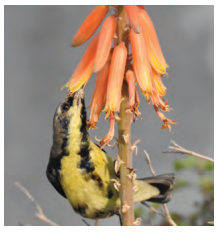
Figure: Sunbird feeding on nectar also helps in pollination

Figure: Caterpillar on the leaves of a flowering nasturtium plant
Observation Record
Make a list of the animals around you. Decide which ones you would like to attract to the habitat garden and which ones you would prefer to keep out.
Animals That You Want or Not Want in the School Habitat Garden

Question 1.
Which animals did you observe on the school campus?
Answer:
Some common animals observed on the school campus could include
- Birds Pigeons, crows, sparrows, kites, bulbul, mynah and sunbirds.
- Small Mammals Squirrels, mice and bats.
- Reptiles Lizards and frogs.
- Insects Ants, butterflies, dragonflies, beetles and caterpillars.
Question 2.
Which animal did you find most surprising to see near human settlements? Why?
Answer:
A surprising animal might be the peregrine falcon or mongoose, because these animals are usually associated with forests or open areas and seeing them near human settlements shows how some wildlife can adapt to urban environments.
Question 3.
Why would you not want certain animals like mosquitoes in your habitat garden?
Answer:
Mosquitoes are unwanted because they can spread diseases like dengue and malaria and make the garden uncomfortable for humans and other animals. They do not provide any beneficial role in the garden ecosystem.
Question 4.
Why is it important to observe animals carefully before planning a habitat garden?
Answer:
It is important to observe animals carefully before planning a habitat garden because it helps us understand which animals already live nearby and what their needs are. This allows us to design the garden with proper food, water, shelter and space, making it safe and suitable for attracting and supporting them.
Question 5.
How can identifying different groups of animals help in designing a suitable habitat garden?
Answer:
Identifying different groups of animals helps in designing a suitable habitat garden by understanding their specific needs. Different animals require different types of food, shelter, water and space. This knowledge helps in selecting the right plants, creating shelters and arranging resources so that the garden can support a variety of animals effectively.
Kaushal Bodh Class 7 School Habitat Garden Question Answer
Activity 2: Interaction with an expert
Purpose of the Activity
This activity will help students to understand the needs of local animals in depth. Experts such as farmers, gardeners, naturalists, zoologists, entomologists or lepidopterists can give specific, local knowledge about the animals you want to attract.
Questions to Ask the Expert
- Which animals identified around the school are likely to come to our habitat garden?
- How can we prevent the entry of animals we do not want?
- Where should the habitat garden be developed within the school?
- What are the specific food and water needs of the animals we want to attract?
- Which plants are best for attracting butterflies and birds in our region?
Observation and Identification
Now spend some time observing the animals around you so that you can understand their needs and recreate a habitat that closely resembles their natural environment.
Record Your Learnings by Help of Experts
Needs of Animals We Would Like in Our Habitat Garden

Preventing Unwanted Animals from the Habitat Garden

Question 1.
Why is it useful to interact with an expert when planning a habitat garden?
Answer:
Interacting with an expert is useful because they have local knowledge about animals’ behaviours, diets and needs. They can guide us on which animals to attract, how to provide food, water and shelter and how to design the garden for their well-being.
Question 2.
How can observing animals help you create a habitat similar to their natural environment?
Answer:
Observing animals helps us understand their natural behaviours, preferred food, shelter and movement patterns.
This information allows us to recreate a habitat that meets their needs, making them more likely to visit and thrive in the garden.
Question 3.
Name any two mobile apps that can help identify birds, insects or plants.
Answer:
Two mobile apps that can help identify birds, insects or plants are as follows
(i) Seek by iNaturalist Identifies insects, butterflies, birds and other animals.
(ii) Merlin Bird ID Identifies bird species using images or sounds.
Question 4.
What information should you record about animals you want to attract to the habitat garden?
Answer:
I should record the following information about animals
- Name of the animal
- Food they usually eat
- How to provide water and food
- Shelter they need
- Space they need
- Other specific needs (like plants or flowers they prefer)
Question 5.
Why is it important to record the needs of animals before developing a habitat garden?
Answer:
It is important to record the needs of animals before developing a habitat garden because different animals require specific food, water, shelter and space. By noting these needs, we can plan the garden properly and create a suitable environment that attracts and supports the animals, helping them survive safely and comfortably.
Activity 3: Identifying natural habitats
Purpose of the Activity
This activity helps students observe natural habitats around their school and nearby areas. By studying animals, their behaviour and their needs for food, water, shelter and space, students learn how to design a habitat garden that supports local wildlife.

Figure: (a) Butterflies get attracted towards brightly coloured flowers
(b) Squirrels live in trees but like to come down to grassy patches for food
(c) Grasshoppers are found in sunny, grassy, moist gardens and sometimes burrow into soil
Observation Tasks
Visit nearby farmland, parks, open areas, water bodies or forested areas. Observe animals early in the morning, when they are most active.
Observations of habitat and behaviour of animals

Question 1.
Why should you observe the natural habitat before designing a habitat garden?
Answer:
Observing natural habitats helps you understand how animals find food, water, shelter and space. This information allows you to design a garden that closely mimics their natural environment, making it suitable for local wildlife.
Question 2.
At what time of the day are animals usually most active for observation?
Answer:
Animals are usually most active early in the morning and sometimes in the late afternoon.
Question 3.
Name two places near your school where you can observe animals in their natural habitat.
Answer:
Two places near school where I can observe animals in their natural habitats are
(i) Nearby farmland
(ii) Local parks or open areas
Other options are water bodies, forested areas or school gardens, etc.
Question 4.
What types of habitats can be found near your school or neighbourhood?
Answer:
Different types of habitats near a school or neighbourhood may include parks, gardens, open fields, roadside areas, water bodies like ponds, and nearby farmland. These places provide animals with food, water, shelter and space, making them suitable for observing a variety of birds, insects and small animals.
Question 5.
Why is early morning considered the best time to observe animals?
Answer:
Early morning is considered the best time to observe animals because many animals are most active during this time. The surroundings are usually quiet, with less human disturbance, making it easier to spot animals. The cool and fresh environment also encourages animals to search for food and water.
Activity 4: Identifying needs of animals
Purpose of the Activity
This activity helps students understand the specific needs of different animals such as space, food, water and shelter. By organising these observations, students can plan and design a habitat garden that attracts and supports suitable animals.
Understanding specific needs of animals


Question 1.
What are the four main needs of animals that should be considered while designing a habitat garden?
Answer:
The four main needs of animals that should be considered while designing a habitat garden are
(i) Space
(ii) Food
(iii) Water
(iv) Shelter
Question 2.
Where do house sparrows usually build their nests?
Answer:
House sparrows build nests in dense bushes, hedges, trees or manmade structures like streetlights and rooftops.
Question 3.
What kind of food do butterflies usually feed on?
Answer:
Butterflies feed on nectar from flowers, sugar syrup, and sometimes rotten or mashed fruits.
Question 4.
Why do squirrels build their nests high on trees?
Answer:
Squirrels build nests high on trees to stay safe from predators, have a good vantage point and access food sources like fruits and nuts easily.
Question 5.
How does knowing the food habits of animals help in planning a habitat garden?
Answer:
Knowing the food habits of animals helps in planning a habitat garden by selecting the right plants and food sources. It ensures that animals get proper nutrition, which attracts them to the garden. This also helps in creating a balanced environment where different animals can survive and thrive.
Activity 5: Designing the habitat garden
Purpose of the Activity
This activity helps students plan and design a habitat garden by considering suitable space, sunlight, plants, water sources and shelter for animals. It also guides them to create a layout that mimics natural habitats and supports birds, butterflies and beneficial insects.

Figure: A habitat garden in the making
Design Questions to Guide Your Planning
Answer the following questions before drawing your garden layout
1. Where will you make the habitat garden (e.g., an open area on school grounds, a balcony, or a terrace)?
____________________________________________________________
2. How much sunlight does the space receive during the day (e.g., does the entire area receive full sunlight or are some parts shades? How many hours of direct sunlight does it receive)?
____________________________________________________________
3. What specific elements do animals need to be attracted to your habitat garden? Consider features like flowering plants, rocks in sunny areas, plants that can ‘break’ the wind for butterflies, water collecting under a garden tap etc).
____________________________________________________________
4. Do any of the above already exist in the school? If yes, what are they?
____________________________________________________________
5. Are these any other aspects that need to be covered?
____________________________________________________________
6. What kinds of plants will attract the animals, birds and insects you want (e.g., seasonal flowering plants)?
____________________________________________________________
7. How will you make sure you do not disturb animals while watering and weeding your garden (e.g., a walkway of sand or brick, areas for mudpuddling in a corner of the garden)?
____________________________________________________________
Sketch Your Garden Layout
Draw your habitat garden design in the space below. Include all key elements such as plant areas, pathways, water containers, shelters and feeding spots.

Question 1.
Why is it important to make a clear plan before designing a habitat garden?
Answer:
It is important to make a clear plan because it helps organise space, plants, and non-plant elements efficiently, ensures the garden meets the needs of animals, and prevents mistakes that could disturb wildlife or waste resources.
Question 2.
What factors should you observe about the space before creating a habitat garden (e.g., sunlight and location)?
Answer:
You should observe the following before creating a habitat garden
- Sunlight (full, partial or shade)
- Wind patterns (to use natural windbreaks)
- Existing trees or shrubs
- Human movement (choose a quiet spot)
- Space available for planting, water and shelter areas
Question 3.
Name two features that can be added to a habitat garden to attract animals like birds and butterflies.
Answer:
Two features that can be added to a habitat garden to attract animals like birds and butterflies are
(i) Nesting boxes or birdhouses for birds.
(ii) Shallow water puddles or butterfly feeders for butterflies.
Question 4.
Why should a habitat garden be made in a quiet area away from heavy human activity?
Answer:
A habitat garden should be made in a quiet area away from heavy human activity because animals feel safe and undisturbed in peaceful surroundings. Noise and constant movement can scare them away. A calm environment encourages animals to visit, find food, build shelters and live comfortably in the garden.
Question 5.
What role do trees and shrubs play in a habitat garden?
Answer:
Trees and shrubs play the following role in a habitat garden
- They provide shelter and hiding places for birds, insects and small animals.
- They act as windbreaks, protecting delicate animals like butterflies.
- They offer food such as fruits, nectar and leaves for different animals.
- They create nesting and resting spaces for birds and other creatures.
Activity 6: Creating the habitat garden
Purpose of the Activity
This activity helps students create the habitat garden by following planned steps. It also helps them understand how a habitat garden can support biodiversity and create a balanced ecosystem.
Steps to Create the Habitat Garden
- Mark the selected area for the habitat garden. If land is not available, use pots or planting boxes.
- Clean the area by removing unwanted plants, debris and rocks.
- Mark the garden boundary with lime powder and include existing trees or shrubs.
- Divide the space according to the layout plan.
- Prepare the soil by digging, loosening it, and adding compost (20-30 kg per 100 sq. m). For pots, use a mix of 2 parts soil, 1 part compost and 1 part dry leaves or cocopeat.
- Build a fence around the garden for protection.

Figure: Butterfly basking on a flat rock in a sunny area
As your garden grows, add non-plant elements such as birdhouses, feeders, butterfly shelters, and water containers.

Figure : Bird houses made of various types of materials such as bamboo sticks, wood, used bottles, etc.

Figure: Bird feeders made of used bottle and old dish or lid. The bottle is filled with bird feed, which slowly keeps spilling on the tray as birds eat

Figure : Butterfly feeders made of old lids, pieces of fruit and sugar syrup can be placed on the feeders for butterflies

Figure : Butterfly house made of long sticks and thick thread
Question 1.
Why is it important to clean the area before creating a habitat garden?
Answer:
It important to clean the area before creating a habitat garden because cleaning removes weeds, debris and unwanted plants, providing a healthy and safe environment for new plants and animals. It also prevents pests and diseases.
Question 2.
What materials can be used to prepare soil for planting in pots?
Answer:
The following materials can be used to prepare soil for planting in pots
- Soil (2 parts)
- Compost (1 part)
- Dry leaves or cocopeat (1 part)
Question 3.
Name two non-plant elements that can be added to support animals in a habitat garden.
Answer:
Two non-plant elements that can be added to support animals in a habitat garden are
(i) Bird feeders or birdhouses
(ii) Butterfly shelters or shallow water containers
Question 4.
Why is it important to mark the boundary of the habitat garden?
Answer:
It is important to mark the boundary of the habitat garden because of the following reasons
- It clearly defines the garden area and helps in proper planning and layout.
- It prevents people from accidentally stepping into or damaging the garden.
- It helps in organising different sections for plants, pathways and shelters.
- It protects the garden space and makes maintenance easier.
Question 5.
How can using pots be helpful when there is no land available for gardening?
Answer:
Using pots is helpful when there is no land available for gardening because they allow plants to be grown in small spaces like terraces, balconies or corridors. Pots can be easily moved to ensure proper sunlight and shade.
They also help in controlling soil quality and watering, making it easier to care for plants and create a habitat garden even without open ground.
Activity 7: Observing occupants of the habitat garden
Purpose of the Activity
This activity helps students observe and record the animals visiting the habitat garden. By studying their behaviour, activities and habitats, students learn how the garden supports different species and understand how ecosystems develop overtime.
Observation Tips
- Butterflies and birds are most active during sunrise and sunset — try to arrive at school early.
- Observe animal behaviour around water sources and feeding areas.
- Work in groups. Divide different areas of the garden between teams.
- If possible, take photographs or make sound recordings.
- Sketch the animals or include photos in your observation records.
Observation records of visitors to the habitat garden

Question 1.
Why should you wait for the habitat garden to grow before observing animals?
Answer:
I should wait because plants need time to grow and provide food, shelter and water for animals. A well-established garden attracts more species and supports natural behaviours.
Question 2.
Name two types of animals that may visit the habitat garden.
Answer:
Two types of animals that may visit the habitat garden are
(i) Birds (e.g., sparrows, sunbirds, pigeons)
(ii) Insects (e.g., butterflies, dragonflies, bees)
Other possibilities are small mammals, lizards, frogs, etc.
Question 3.
When are butterflies and birds usually most active for observation?
Answer:
They are usually most active during sunrise and sunset.
Question 4.
What methods can you use to record your observations of animals?
Answer:
I can use the following methods to record my observation
- Photography or video recording
- Sound recordings of birds or insects
- Sketches or drawings
- Written notes in observation tables
Question 5.
Why is it important to note the number of animals observed in the garden?
Answer:
It is important to note the number of animals observed in the garden because of the following reasons
- It helps in understanding how many animals are visiting the habitat garden.
- It shows whether the garden is successfully attracting different species.
- It helps in comparing changes in animat population over time.
- It provides useful data for improving and maintaining the habitat garden.
Activity 8: Maintaining the habitat garden
Purpose of the Activity
This activity helps students learn how to regularly care for and maintain the habitat garden. By following proper maintenance practices, students keep the garden healthy and active.
Key Maintenance Tasks
- Watering Plants Water plants every day, preferably in the early morning.
- Refilling Water Containers Ensure bird baths and butterfly puddles are always filled with clean water.
- Refilling Feeders Check bird feeders once a week and refill grains or seeds as needed.
- Weeding Remove weeds from plant beds at least once a month.
- Cleaning Pathways Sweep fallen leaves and stems from pathways daily and move them to the compost bed.
- Preventing Stagnant Water Check daily that no water is collecting in places that could attract mosquitoes.
- Composting Collect and compost garden waste (dry leaves, trimmings) every day.
Maintenance Schedule for the Habitat Garden

Question 1.
Why is it important to maintain the habitat garden regularly?
Answer:
It is important to maintain the habitat garden regularly because regular maintenance keeps plants healthy, prevents pests, provides clean water and food for animals and ensures the garden remains attractive to wildlife.
Question 2.
When is the best time of the day to water the plants in the habitat garden?
Answer:
The best time is early morning, when water is absorbed efficiently and evaporation is minimal.
Question 3.
Why should stagnant water be removed from the garden?
Answer:
Stagnant water should be removed because it breeds mosquitoes, which can spread diseases and disturb both humans and animals in the garden.
Question 4.
How does regular watering help plants and animals in the habitat garden?
Answer:
Regular watering helps plants and animals in the habitat garden in the following ways
- It keeps plants healthy and supports their growth.
- Healthy plants provide food like nectar, seeds and leaves for animals.
- Water sources attract birds, insects and other animals to the garden.
- It maintains moisture in the soil, creating a suitable environment for small organisms and insects.
Question 5.
Why is composting important in maintaining the garden?
Answer:
Composting is important in maintaining the garden because it converts garden waste like dry leaves and plant remains into nutrient-rich manure. This improves soil fertility and helps plants grow healthy. It also reduces waste and supports a natural cycle, making the habitat garden more eco-friendly and sustainable.
Activity 9: Showcasing your work
Purpose of the Activity
This activity helps students share and present their habitat garden project and explain how it supports animals and insects.
Planning of Activity
- Label key features such as names of flowering plants, animals benefiting from each feature, areas for mudpuddling and dustbathing.
- Create a visual chart or digital presentation. .
- Make a time-lapse video of the garden’s growth by compiling photographs taken at regular intervals.
Presentation
Presentation should include the following key points
- Purpose: Why did you create the habitat garden?
- Designing and Layout: How did you plan the layout based on the needs of animals?
- Target Species: Which animals did you aim to attract, and what are their specific needs?
- Observed: What have you noticed since setting up the garden?
- Challenges: What difficulties did you face and how did you overcome them?
Question 1.
Why is it important to showcase your habitat garden project?
Answer:
It is important to showcase your habitat garden project because it helps share your learning and ideas with others. It also spreads awareness about protecting animals and their habitats. Presenting the project shows how the garden supports different species and encourages others to create similar eco-friendly spaces.
Question 2.
What key features should be labelled in the habitat garden?
Answer:
The following key features should be labelled in the habitat garden
- Names of flowering plants and other important plants.
- Areas where animals and insects are attracted (like feeding spots).
- Special zones such as mudpuddling and dustbathing areas.
- Water sources like bird baths and butterfly puddles.
Question 3.
How can a time-lapse video help in presenting the growth of the garden?
Answer:
A time-lapse video helps in presenting the growth of the garden by showing changes over a long period in a short time. It clearly displays how plants grow, flowers bloom and animals start visiting the garden. This makes it easier to understand the development of the habitat garden and makes the presentation more interesting and engaging.
Question 4.
What points should be included while presenting the habitat garden project?
Answer:
The following points should be included while presenting the habitat garden project
- The purpose of creating the habitat garden.
- The design and layout based on the needs of animals.
- The target species and their specific needs.
- The observations made after setting up the garden.
- The challenges faced and how they were solved.
Question 5.
What kind of challenges might you face while creating the habitat garden?
Answer:
I might face the following challenges while creating a habitat garden
- Lack of suitable space or proper sunlight for plant growth.
- Poor soil quality or difficulty in preparing the soil.
- Managing water supply and preventing stagnant water.
- Protecting plants from damage and maintaining the garden regularly.