Experts have designed these Class 8 Social Science Notes and Class 8 SST Part 2 Chapter 2 India’s Long Road to Independence Notes for effective learning.
Class 8 India’s Long Road to Independence Notes
India’s Long Road to Independence Notes Class 8
→ Azad Hind Government: A provisional government formed by Subhas Chandra Bose in 1943 to fight for independence.
→ Boycott: Refusal by Indians to buy or use British goods during the freedom struggle to weaken British economic control; it became especially popular during the Partition of Bengal (1905) as part of the Swadeshi Movement.
→ Civil Disobedience Movement (CDM): A mass movement (1930-34) led by Gandhi in which Indians broke unjust laws like the salt law to oppose British rule and demand complete independence.
→ Colonialism: A system of direct political control by a powerful country over a weaker country, as seen in British rule over India, where India’s resources, economy, and people were controlled and exploited by Britain.
→ Communalism: A belief that religion is the main basis of social and political identity, which can create divisions between communities; during the freedom struggle, it contributed to tensions and the Partition of India.
→ Cripps Mission: A British mission sent in 1942 that offered Dominion Status after World War II. Its proposals were rejected by Indian leaders.
→ Direct Action Day: A day observed on 16 August 1946 by the Muslim League under Muhammad Ali Jinnah to press the demand for the creation of Pakistan, marking a shift away from constitutional methods. It led to widespread communal violence, especially in Calcutta.
→ Dominion Status: A political arrangement in which the British were willing to grant India self-government in internal matters while remaining within the British Empire (as proposed in the Nehru Report (1928)).
→ Extremists: Leaders like Bal Gangadhar Tilak, Lala Lajpat Rai, and Bipin Chandra Pal who demanded Swaraj through strong and assertive methods.
→ Freedom Struggle: The long fight of Indians against British rule from 1857 to 1947 through movements, protests, resistance, and sacrifices.
→ Indian National Army (INA): An army formed by Subhas Chandra Bose during World War II to fight British rule with foreign support.
→ Indian National Congress (INC): The main political organisation established in 1885 that led the Indian freedom movement and demanded self-rule (Swaraj) from British rule.
→ Interim Government: A temporary government formed in 1946 under Jawaharlal Nehru before independence.
→ Khilafat Movement: A movement launched by Indian Muslims after World War I to protest against the dismemberment of the Ottoman Caliphate by the British; it was led by the Ali brothers (Maulana Mohammad Ali and Shaukat Ali) and later joined Gandhi’s Non-Cooperation Movement against British rule in India.

→ Martyr: A freedom fighter who sacrificed their life for India’s independence.
→ Mass Movement: A movement like Non-Cooperation or Civil Disobedience involving large-scale participation of people against the colonial rule.
→ Moderates: Early Congress leaders who used peaceful and constitutional methods to demand reforms.
→ Nationalism: A feeling of unity and desire among Indians to end British rule and achieve independence.
→ Nehru Report: A 1928 report led by Motilal Nehru proposing Dominion Status and constitutional reforms.
→ Non-Cooperation Movement: A mass movement (1920-22) led by Mahatma Gandhi and the Indian National Congress in which Indians refused to cooperate with British institutions through non-violent methods to weaken British rule.
→ Partition of Bengal: The 1905 division of the Bengal Presidency by the British under Curzon to weaken Indian unity; it led to widespread protests and the rise of the Swadeshi Movement.
→ Poona Pact: An agreement signed in 1932 between Mahatma Gandhi and Dr. B.R. Ambedkar. Under this pact, separate electorates were rejected, and the number of reserved seats for the Depressed Classes in provincial legislatures was increased. These representatives were to be elected by the general electorate, ensuring their representation within a united society.
→ Princely States: Over 560 semi-independent states that were integrated into India after independence under Sardar Patel.
→ Purna Swaraj: The demand for complete independence from British rule. The Indian National Congress declared it as its goal in 1929 at the Lahore Session under the presidentship of Jawaharlal Nehru.
→ Quit India Movement: A mass movement launched in 1942 during World War II by Mahatma Gandhi and the Indian National Congress, demanding immediate British withdrawal from India, during which Gandhi gave the famous slogan “Do or Die.”
→ Radcliffe Line: The boundary line drawn in 1947 that divided British India into India and Pakistan.
→ Radicals: Leaders who supported strong and immediate action, including revolutionary methods, for independence.
→ Rebellion: Acts of resistance such as the Revolt of 1857 against British authority.
→ Revolutionary Nationalism: The belief that India’s freedom could be achieved through armed struggle against British rule.
→ Round Table Conference: A series of three conferences (1930-32) held in London by the British government to discuss India’s constitutional future and reforms following the recommendations of the Simon Commission. The Indian National Congress did not attend the first conference, while Mahatma Gandhi attended the second conference as the sole Congress representative.
→ Salt March (Dandi March): Gandhi’s 1930 march from Sabarmati Ashram to Dandi in Gujarat to break the British salt law, which marked the beginning of the Civil Disobedience Movement.
→ Satyagraha: Gandhi’s method of peaceful resistance based on truth, civil disobedience and non-violence.
→ Seditious: Actions, speech or writing that encourage people to rebel against authority, especially against a government.
→ Simon Commission: A seven-member British commission (1927), headed by John Simon, appointed to review and suggest reforms for India’s constitutional development. It had no Indian members, which led to widespread protests, and came to India in 1928.
Swadeshi: The use of Indian-made goods and rejection of British products during the freedom struggle; it became popular from 1905 during the anti-Partition of Bengal movement and gained strong momentum in the following years.
Introduction
- Despite differences in language, religion, faith, and culture, the people of India fought together in unity to gain independence.
- The struggle for freedom involved countless events, including reforms, meetings, repressive actions, protests, speeches, uprisings, and acts of heroism. In this struggle, thousands sacrificed their lives for the cause.
- The Indian Council of Historical Research (ICHR), established in 1972, has published a five-volume Dictionary of Martyrs documenting about 14,000 freedom fighters. ICHR continues to support research and helps preserve and deepen the understanding of India’s past.
- Although all freedom fighters shared the goal of independence, they often differed in their methods and approaches in achieving it.
A Royal Proclamation
- The Revolt of 1857 was a major turning point that shocked the British and forced them to reorganise the administration of India.
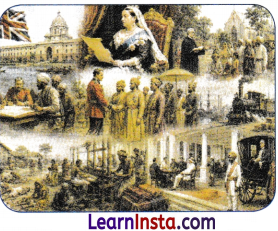
- In 1858, the British Crown, under Queen Victoria, took direct control of India from the East India Company.
- The Indian territories under British control were governed directly by the Secretary of State for India, based in London, and the Viceroy (Governor- General), who acted as the Queen’s representative in India.
- In 1858, the Queen also issued a Royal Proclamation, promising to respect the rights, dignity, and honour of the Indian princes. In addition, it assured that all Indian citizens would be treated with dignity and that Christianity would not be imposed on anyone.
- Although the British claimed to prefer peaceful governance, they closely monitored and controlled the princely states.
- British officials, called Residents or Political Agents, interfered in the administration of these states, reducing their autonomy.
- Christian missionary activity was indirectly supported by the state and encouraged by British officials.
- India faced economic exploitation: heavy land taxes led to famines and discontent among peasants and tribals, while local industries suffered due to competition from cheap British goods entering Indian markets.
- Indians were treated as inferior to the British and faced discrimination in employment, the legal system, and social life.
- Indian employees were paid less than Europeans, juries were biased in favour of Europeans, and segregation existed in clubs and public spaces.
- The Arms Act (1878) prohibited Indians from possessing arms, while allowing the British to do so.
- The Vernacular Press Act (1878) censored the Indian-language press, restricting freedom of expression.
Reform Movements
- British rule introduced significant changes in administration and led to widespread discussions within Indian society.
- The Indian elite often regarded Europe as an example for modernising the country.
- Reformers were influenced by European ideas and worked to address issues such as limited access to education, child marriage, the degraded status of widows, and caste-based discrimination.
- Overall, these reform movements made only small changes in Indian society as a whole.
Few reformers and their movements are as follows:
Raja Ram Mohan Roy founded the Brahmo Samaj (1828, Calcutta) to oppose child marriage and caste discrimination, support widow rights and girls’ education, and promote monotheistic Hinduism and English education.
Swami Dayananda Saraswati established the Arya Samaj (1875, Bombay), emphasising a return to the Vedas, rational thinking, equality, women’s education, and widow remarriage, while opposing ritualism and caste by birth.
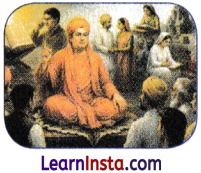
The Shuddhi Movement started in the late 19th century by the Arya Samaj aimed to bring back people who had converted to other religions and promoted social pride, debates, and education.
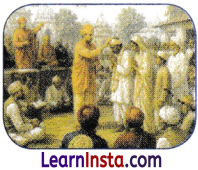
Reformers like Syed Ahmed Khan, Iswar Chandra Vidyasagar, Jyotirao and Savitribai Phule promoted modern education (especially for girls and marginalised groups), opposed caste and gender inequality, and established schools to encourage social reform.
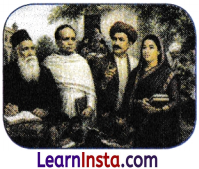
Other Influences
Two famous personalities from cultural movements played a major role in awakening national feelings among Indians.
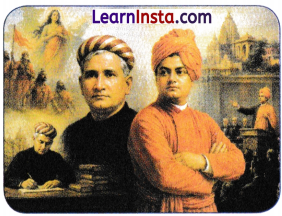
→ Bankim Chandra Chattopadhyay (or Chatterjee)
- During the 1860s, Bankim Chandra Chattopadhyay served as a sub-magistrate in Bengal and also wrote popular Bengali novels that blended romance and Indian historical themes.
- In 1882, he published Anandamath, a novel set against the backdrop of the Sannyasi Rebellion and the Bengal famine of 1770.
- The novel depicted sannyasis worshipping the motherland as a form of the divine mother and included the famous poem Bande Mataram.
- Although Bankim did not directly care for independence from the British, Bande Mataram later became an important slogan during the 1905 nationalist awakening.
- Rabindranath Tagore later put the poem to music and sang it at the 1896 Congress session in Calcutta. In 1950, the Constituent Assembly made it India’s national song.
→ Swami Vivekananda
- Swami Vivekananda, born in 1863 as Narendranath Dutta, encouraged Indians to overcome fear, weakness, and self-doubt, famously urging: “Arise, awake, and stop not till the goal is reachedAt 18, he met Sri Ramakrishna, who greatly influenced him spiritually, and he later became his devoted disciple, taking the name Swami Vivekananda.
- He travelled across India and gave a strong speech at the Parliament of the World’s Religions in Chicago in 1893, where he spoke in support of India’s culture and civilisation.
- He also started the Ramakrishna Mission to combine religion with service to society.
- He encouraged scientific progress, advising Jamsetji Tata to establish a research institute that later became the Indian Institute of Science.
- He criticised blind imitation of the West, urging Indians to reconnect with their ancient spiritual roots while building a brighter future.
- Despite his short life of 39 years, he left a strong influence on many freedom fighters; his birthday, 12 January, is celebrated as National Youth Day in India.
The Rise of the Indian National Congress
- As unrest continued across different parts of India, regional efforts to establish citizens’ associations achieved only limited success.
- Allan Octavian Hume, a British officer, criticised colonial policies, blaming them for India’s poverty. His views displeased the British authorities, leading to his resignation in 1882. He then worked to unite Indians who shared his views.
- The Indian National Congress was founded in 1885, with its first session held in Bombay.
- Womesh Chunder Bonnerjee as its first president, Hume, and Dadabhai Naoroji played leading roles in its establishment.
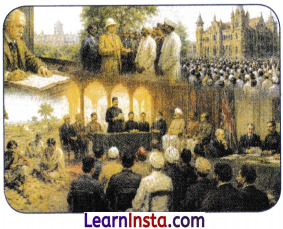
- Seventy-two delegates from diverse regions and religions attended the first session, mostly drawn from the Anglicised upper classes.
- The Congress initially expressed faith in British rule and loyalty to the Crown, passing yearly resolutions for dialogue with colonial authorities.
- The Congress sought greater Indian participation in governance, protection of civil rights, and social and economic reforms, believing these measures would reduce growing public discontent.
- Most of the Congress’s demands were rejected by the colonial government. It made only a few small changes and did not allow Indians to have meaningful participation in governance.
Growing Discontent
→ The Kuka Movement
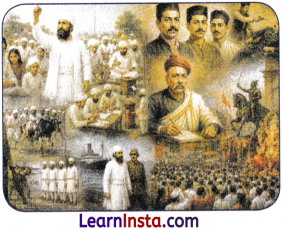
- The Namdhari (Kuka) Movement, led by Baba Ram Singh in the 1860s-70s, promoted social reforms such as ending female infanticide and child marriage, simplifying marriage rituals to abolish dowry, and challenging social injustices.
- Kukas also resisted British rule by boycotting foreign goods, wearing hand-spun white clothes, and establishing their own postal system and private courts to avoid British institutions. They also opposed cow slaughter sanctioned by the colonial government.
- In 1872, after some Kukas attacked slaughterhouses, the British executed 65 Kukas and exiled Baba Ram Singh to Burma, where he died in captivity, but the movement inspired later mass boycott campaigns in India.
→ The Chapekar Brothers:
- Following a severe famine and an outbreak of bubonic plague in Western Maharashtra in 1896, the authorities’ harsh measures created widespread resentment.
- The Chapekar brothers assassinated the British Plague Commissioner of Poona and a British military officer; they were eventually captured and executed.
→ Bal Gangadhar Tilak
- Bal Gangadhar Tilak, a mathematics teacher and Congress member, strongly criticised the moderate stance of the Congress.
- Through his Marathi newspaper Kesari, Tilak opposed colonial oppression and voiced nationalist ideas.
- Tilak was a powerful orator who popularised Ganesh Chaturthi and Shivaji festivals, turning them into cultural and political events that inspired mass participation.
- He was later imprisoned for 18 months on charges of sedition despite the lack of evidence, which made him a national hero known as ‘Lokmanya’.
- He also translated and interpreted the Bhagavad Gita in Marathi, which was later published in English by the title, ‘The Gita Rahasya’.
- In western India, secret societies and revolutionary groups emerged; in Bengal, the Anushilan Samiti was founded in 1902 to train young men intellectually, morally, and physically.
- Aurobindo Ghose and his brother Barindra Kumar Ghose (Barin Ghose) were key figures in coordinating revolutionary activities.
→ Birsa Munda:
- In eastern India, Birsa Munda, from the Munda tribe in Chota Nagpur (present-day Jharkhand), led tribal resistance against British exploitation, oppressive landlords, and missionary inroads. He also sought to restore tribal faith, rights, and dignity.
- Birsa launched the Ulgulaan (Great Tumult) between 1899-1900, mobilising tribal communities to reclaim their land and rights.
- During the uprising, police stations and some churches were attacked, leading to severe repression and the killing of many Mundas.
- Birsa was arrested in early 1900 and died in jail four months later, at the age of 24, but his movement left a lasting legacy, and he is still revered among tribal communities of eastern India.
The 1905 Partition of Bengal And National Awakening
- In the early years of the 20th century, Lord Curzon, the Viceroy of India, proposed the partition of the Bengal Presidency, then India’s largest presidency, which included present-day Assam, Bihar, Jharkhand, and Odisha.
- Officially, the partition aimed to improve administrative efficiency, but in reality applying a “divide and rule” policy by separating the largely Muslim to the east from the largely Hindu west.
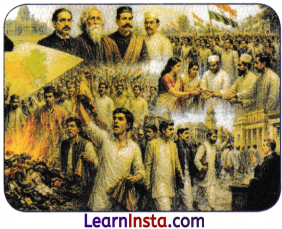
- The partition was implemented the move provoked widespread outrage; leaders like Surendranath Banerjee, Rabindranath Tagore, Ashwini Kumar Dutt and Bipin Chandra Pal united people against what they saw as an attack on identity and solidarity.
- The partition sharpened divisions: while most Hindu leaders opposed it, many Muslim leaders defended it, encouraged by promises of development and administrative posts in East Bengal.
- In response, public meetings, processions, protest rallies, and patriotic songs like Vande Mataram became symbols of resistance. The song was later banned from being sung in public, and the protests soon spread beyond Bengal.
- People tied rakhis on each other’s wrists to symbolise Hindu-Muslim unity against British attempts to divide them.
- Two major programmes emerged: Swadeshi (promoting Indian goods) and Boycott (rejecting foreign goods and reducing dependence on British products). Bonfires of foreign goods were lit, and wearing Indian-made fabrics became a symbol of self-reliance and national pride.
- The boycott extended to British schools, colleges, and courts, but its impact was limited since Indian institutions were not fully ready to replace them.
Growth of the Swadeshi Movement:
- The idea of Swadeshi had begun to spread even before 1905, as several Indian leaders encouraged self-reliance.
- In 1886, Jamsetji Tata established the Swadeshi Mills in Bombay, promoting Indian textile production.
- In 1895, Punjab National Bank was founded in Lahore using only Indian capital, with Lala Lajpat Rai among its founding members and an early director.
- In 1901, Prafulla Chandra Ray founded Bengal Chemicals and Pharmaceuticals Ltd., supporting Indian industry.
- These initiatives aimed to strengthen Indian businesses and reduce British economic dominance.
The Nationalist Agenda
- In 1906, Bipin Chandra Pal launched the English daily Banile Mataram, which spread nationalist ideas daily; Aurobindo Ghose later joined and took charge of the publication.
- Bande Mataram promoted the idea of Indian independence. It also advocated National Education alongside Swadeshi and Boycott and promoted passive resistance against colonial rule.
- The National Council of Education established the Bengal National College to provide an education rooted in Indian thought and values while offering modern subjects.
- Aurobindo Ghose was appointed the first principal of the Bengal National College, which later became part of Jadavpur University after independence.
- At the Congress session in Calcutta (December 1906), presided over by Dadabhai Naoroji, the objectives of Swaraj (self-rule), Boycott, Swadeshi and National Education were formally declared.
- Swaraj was not clearly defined at the time, ranging in interpretation from self-rule within the British Empire to complete independence.
→ INDIA AS THE ‘MOTHER’
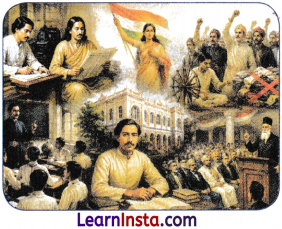
- The theme of Mother India (Bharat Mata) was central to many nationalist speeches and writings, portraying India as a divine motherland.
- This idea was partly inspired by Bankim Chandra’s novel Anandamath, which depicted the motherland as sacred.
- In 1905, during the partition of Bengal, Abanindranath Tagore created a famous painting of Bharat Mata.
- In the Madras Presidency (present-day Chennai), poet and freedom fighter Subramania Bharati strengthened nationalist feelings by translating
- Bande Mataram into Tamil and writing patriotic poems dedicated to Mother India.
- In Punjab, Lala Lajpat Rai launched a publication named Vande Mataram to promote nationalist ideas.
The All-India Muslim League
- The All India Muslim League was founded by several Muslim leaders in December 1906 at Dhaka to defend Muslim political interests in British India.
- Many Muslims distrusted the Congress, fearing inadequate representation in a largely Hindu-dominated organisation. These fears had been developing ever since the Congress came into existence.
- Earlier, Syed Ahmad Khan had established the All India Muhammadan Educational Conference (1886) as an alternative platform for Muslim concerns.
- The Congress tried to address Muslim issues but was largely unsuccessful, leading to the League’s creation.
- Initially, the League represented mainly the Muslim elite. However, many muslims had opposed the partition of Bengal. This division later contributed to the rise of the Two-Nation Idea.
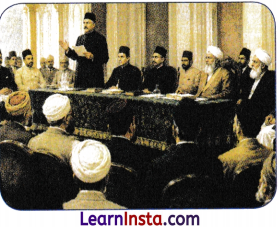
The 1907 Surat Split
- At the Calcutta session (1906), the Congress resolution calling for Swaraj alarmed the British authorities.
- Under pressure from the British authorities, the Surat session (December 1907) saw the Moderates attempt to step back from the Calcutta resolutions and return to earlier demands for minor administrative concessions and gradually achieve self-government within the British Empire.
- Prominent Moderate leaders included Gopal Krishna Gokhale (founder of the Servants of India Society), Dadabhai Naoroji, Surendranath Banerjee, Pherozeshah Mehta and Rashbehari Ghosh.
- When Tilak was prevented from speaking, chaos broke out. The Nationalist camp led by Tilak, Lala Lajpat Rai (the ‘Lion of Punjab’), and Aurobindo Ghose, held a separate session, marking a clear split between Moderates and Nationalists.
- In the early 20th century, the British and the Moderates called supporters of complete independence ‘Extremists’ or ‘Radicals’, while they identified themselves as ‘Nationalists’.
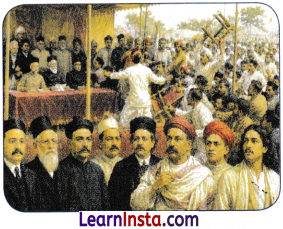
The Revolutionaries
- Newspapers in both English and Indian languages questioned colonial policies and exposed injustices – examples include Kesari (Tilak), Bande Mataram (Aurobindo), Voice of India (Dadabhai Naoroji), and The Bengalee (Surendranath Banerjee).
- The radical paper Yugantar, linked to the Anushilan Samiti and Barindra Ghose, openly advocated revolt and violent overthrow of British rule.
- In April 1908, Khudiram Bose and Prafulla Chaki attempted to assassinate Judge Douglas Kingsford (Judge was giving severe sentences to freedom fighters); the bomb killed two British women instead. Chaki shot himself to avoid capture, while Khudiram (only 18) was arrested and later executed.
- Following this, Aurobindo Ghose, Barindra, and others were arrested in the Alipore Bomb Trial (1908-09). The British considered Aurobindo Ghose one of the greatest threats to their rule and expected the trial to silence him. Aurobindo was defended by Chittaranjan Das and acquitted, while Barindra and others received harsh sentences.
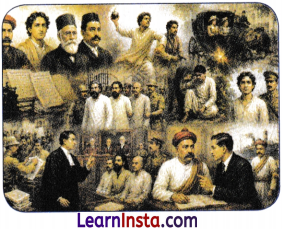
- The colonial authorities clamped down on the nationalist press, suppressing Bande Mataram and prosecuting leaders.
- Bal Gangadhar Tilak was jailed for sedition due to his writings in Kesari. His lawyer was Muhammad Ali Jinnah, though Tilak was sentenced to six years’ imprisonment in Mandalay. (In a later 1916 case, Jinnah successfully defended Tilak.)
- Growing public opposition eventually led the British to cancel the partition of Bengal in 1911, although its effects continued to be felt.
- Revolutionary attacks continued across the country. In 1909, an attempt was made to bomb Viceroy Minto’s carriage; while Vinayak Deshpande, Krishnaji Karve, and Anant Kanhere assassinated a district magistrate in Nasik and were later executed.
- In 1911, Vanchinathan assassinated a district collector near Tirunelveli after the British targeted the Swadeshi Steam Navigation Company founded by V.O. Chidambaram Pillai, leading to Pillai’s imprisonment.
- In 1912, a bomb was thrown at Viceroy Charles Hardinge during his ceremonial entry into Delhi, but he survived with injuries.
- During the First World War (1914-1918), the Ghadar Movement (1914-1915) attempted to organise a pan-Indian mutiny in the British Indian Army. It was led by the Ghadar Party, established by Indian migrants in North America, including Sohan Singh Bhakna and Lala Hardayal.
- Although Sachindra Nath Sanyal, Rash Behari Bose, Kartar Singh Sarabha, and others worked to organise the uprising, the British uncovered the plan, leading to arrests, executions, and imprisonment. Rash Behari Bose escaped to Japan, where he later laid the foundation of the Indian National Army.
- Jatin Mukherjee, nicknamed Bagha Jatin (“Tiger Jatin”), earned his name after wrestling a tiger bare-handed.
- He was a leader of the Anushilan Samiti and collaborated with Rash Behari Bose in the German Plot during World War I, which aimed to smuggle German arms into India for an armed uprising.
- The plan was discovered, forcing Jatin and his companions to hide in the jungles of Balasore (Odisha) near the intended landing site of the weapons.
- On 9 September 1915, Jatin and his group fought a 75-minute gun battle against British forces from behind an anthill. Jatin was severely wounded and died the next day.
- His companions who survived were captured and hanged, and the incident deeply rattled the colonial government, though it also hardened its resolve to rule with an iron hand.
Freedom Struggle in North-East:
- People from North-East India made important contributions to India’s freedom struggle at different times.
- Before 1857, major uprisings included the Khasi Revolt (1829-1833) led by Tirot Sing in Meghalaya and the Singpho Rebellion (1830s – 1840s) in eastern Assam against British rule.
- During the Revolt of 1857, Maniram Dewan and Piyali Baruah were publicly executed by the British in Assam.
- In the Quit India Movement (1942), freedom fighters such as Kanak Lata Baruah and Kushal Konwar sacrificed their lives.
- In Manipur, Rani Gaidinliu began resisting British rule at the age of 13, urging people not to pay taxes or work for the colonial government.
Sri Aurobindo:
- In 1910, Aurobindo Ghose left for Chandemagore after learning about his likely arrest and deportation.
- He later moved to Pondicherry (present-day Puducherry), then under French rule, and withdrew from active politics.
- He devoted himself to developing his philosophy of spiritual evolution and Integral Yoga, writing several books.
- He was known as ‘Sri Aurobindo’.
Cellular Jail (KALA PANI):
- The Cellular Jail in the Andaman Islands was a British prison where many revolutionaries were sent into exile, far from the Indian mainland.
- Popularly known as ‘Kala Pani’ (Black Water), it was built for solitary confinement to isolate and weaken freedom fighters.
- Prisoners were forced to perform hard labour, faced harsh punishments, and lived in inhumane conditions. Revolutionaries such as Barindra Ghose and V.D. Savarkar described the forced labour and ill-treatment they endured in the jail.
- Many prisoners died, some lost their mental health, and those who attempted to escape were executed.
- The Cellular Jail became a lasting symbol of the sacrifices made during India’s freedom struggle.
Home Rule Movement and The Lucknow Pact
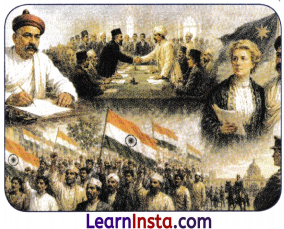
- After his release from jail in 1914, Bal Gangadhar Tilak set himself three tasks: reconciling Congress factions, working towards Home Rule and promoting Hindu-Muslim cooperation.
- In 1916, at the Lucknow session of Congress, the Lucknow Pact was signed between the Congress and the All India Muslim League, accepting separate electorates for Muslims in legislative councils.
- The same year, Tilak and Annie Besant (Irish reformer and activist) launched the Home Rule Movement, which demanded self-government for India within the British Empire.
- The Home Rule demand was for internal autonomy, seen as a practical first step rather than full independence.
- The British government refused to accept even this demand, but the movement marked the beginning of a new phase of mass political mobilisation in India’s freedom struggle.
Gandhi and The Non-Cooperation Movement
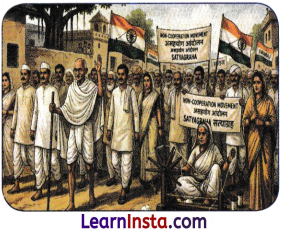
- In 1869, Mohandas Karamchand Gandhi was born in Porbandar, Gujarat.
- He faced racial discrimination in South Africa, which led him to develop the method of satyagraha — based on truth, nonviolence (ahimsa), passive resistance, and acceptance of suffering.
- Gandhi returned to India in 1915, joined the Indian National Congress on the advice of Gopal Krishna Gokhale, and began applying satyagraha to local grievances.
- He successfully mobilised indigo farmers in Bihar, mill workers in Ahmedabad, and peasants in Kheda (Gujarat).
- In 1928, Vallabhbhai Patel led the Bardoli movement for peasants’ rights, one of the most successful grassroots movements of the freedom struggle. Impressed by his leadership, Gandhi honoured him with the title ‘Sardar’, and he thereafter became widely known as Sardar Vallabhbhai Patel.
→ The Non-Cooperation Movement
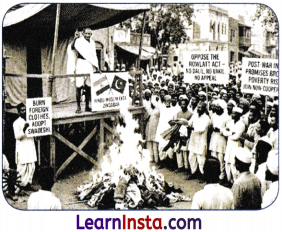
- World War I (1914-1918) caused food shortages and rising prices in India due to exports and defence expenditures; civil liberties were further curtailed by the Rowlatt Act (1919), allowing detention without trial.
- In response, Mahatma Gandhi began the Non-Cooperation Movement by launching a nationwide protest, urging unity of Hindus and Muslims, promoting Swadeshi goods as a duty, and encouraging non-violent boycott of foreign courts, goods, and schools.
- Gandhi promised Swaraj within a year if strict nonviolence was maintained.
- After Tilak’s death in August 1920, Gandhi became the undisputed mass leader of the Indian National Congress.
- At the Nagpur session (December 1920), the Congress formally launched the Non-Cooperation Movement, supported by leaders like Vallabhbhai Patel, it quickly drew mass participation across India.
The Jallianwala Bagh Massacre And Its Aftermath
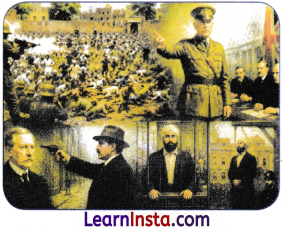
- On 13 April 1919, thousands gathered at Jallianwala Bagh, Amritsar, for Baisakhi celebrations and to protest the Rowlatt Act; Brigadier-General Dyer ordered troops to fire on the unarmed crowd for about ten minutes, killing and injuring hundreds.
- Official British figures admitted nearly 400 dead and 1,200 wounded, while Indian estimates placed deaths at over 1,000. The massacre deeply scarred public trust in British committee rule and united Indians in their resolve for freedom.
- Dyer, branded the “Butcher of Amritsar,” defended his actions before a British inquiry committee; though condemned, he faced no punishment and was only removed from India. The British government has never formally apologised, calling it merely a “deeply shameful event.”
- Punjab’s lieutenant governor Michael O’Dwyer supported Dyer’s actions. Two decades later, revolutionary Udham Singh assassinated O’Dwyer in London.
- Udham Singh was arrested and hanged, and during his trial, he asserted that his action was justified.
The Khilafat Movement And Its Aftermath
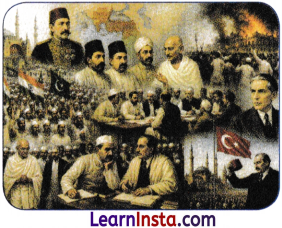
- The Ottoman Empire lasted for six centuries, with the Sultan in Constantinople (Istanbul in Turkey) serving as the Caliph, the politico-religious leader of the Muslim world.
- After World War 1, the Ottoman Empire was dismembered, weakening the Caliph’s position.
- In India (1919), Muslim leaders like the Ali brothers (Muhammad Ali and Shaukat Ali) and Maulana Abul Kalam Azad launched the KJhilafat Movement to preserve the Caliph’s authority.
- Gandhi supported the Khilafat cause, seeing it as a chance to unite Hindus and Muslims against British rule and bring Muslims into the nationalist movement.
- In 1920, an alliance was formed between the Khilafat leaders and the Congress, promising to fight together for both Khilafat and Swaraj.
- The movement initially succeeded in mobilising Muslims and Hindus together, but later it faced criticism.
- Some Congress members believed the Caliphs’s position in Turkey was not of India’s concern, and leaders like Syed Ahmad Khan questioned linking Indian Muslims’ loyalty to a distant religious authority. Jinnah also opposed mixing the freedom struggle with religious issues and left the Congress in 1920.
- In 1922, the Chauri Chaura incident happened in which protesters set a police station on fire, killing policemen led Gandhi to call off the Non-Cooperation Movement, a decision opposed by leaders like Motilal Nehru, Chittaranjan Das, Jawaharlal Nehru, and Subhas Chandra Bose.
- Motilal Nehru and Chittaranjan Das later formed the Swaraj Party, which tried a different strategy but declined after Das’s death in 1925.
- The Khilafat Movement ended when Mustafa Kemal abolished the Turkish Sultanate (1922) and the Caliphate (1924).
- While it briefly united Hindus and Muslims, it also strengthened feelings of separateness among Indian Muslims, encouraged more radical Muslim leaders to raise fresh demands, and was followed by few Hindu-Muslim riots in later years.
Protests, Repression and Revenge
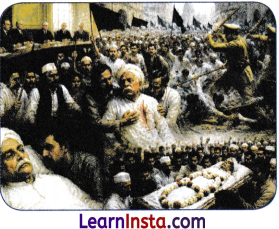
- The British government, aware of rising discontent, tried reforms that looked like concessions but avoided granting home rule or independence.
- In 1927, the Simon Commission was sent to India to study constitutional reform, but it had no Indian members, sparking widespread protests.
- Demonstrators raised the slogan “Simon Go Back!” and waved black flags as symbols of resistance.
- In October 1928, Lala Lajpat Rai led a nonviolent march in Lahore against the Commission, but the police brutally lathi-charged the protest.
- Despite being badly injured, Rai declared that the blows struck at him would be the “last nails in the coffin of British rule in India.”
- He died two weeks later from his injuries, further, inflaming nationalist sentiment.
- The Simon Commission exposed the British refusal to consult Indians about their own future, intensifying demands for complete self-rule.
→ More Revolutionary Actions
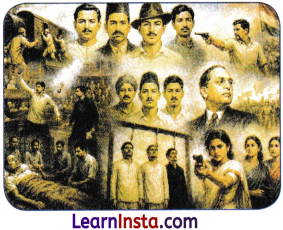
- Many revolutionaries believed that using force was the right way to win independence because they felt Gandhi’s non-violent approach was too slow.
- The Hindustan Republican Association (HRA), inspired by the Ghadar Movement, was led by Ashfaqulla Khan, Ram Prasad Bismil, and Chandrashekhar Azad.
- The group carried out the Kakori Train Robbery to fund their revolutionary activities; several members were executed as a result.
- Later, the HRA reorganised into the Hindustan Socialist Republican Association (HSRA) under Chandra Shekhar Azad and Bhagat Singh, adopting socialist ideology.
- HSRA attempted to avenge Lala Lajpat Rai’s death (1928) but mistakenly killed a younger British officer instead of the intended target.
- In 1929, Bhagat Singh and an associate dropped two low-intensity bombs in the Central Legislative Assembly, Delhi, declaring it was “to make the deaf hear.” They distributed pamphlets and shouted revolutionary slogans.
- Bhagat Singh was arrested, went on a hunger strike against unjust treatment of Indian prisoners, and was executed in 1931 along with Shivaram Rajguru and Sukhdev Thapar at the age of 22-23.
- Subhas Chandra Bose praised Bhagat Singh as representing the unconquerable spirit of revolt.
- Women also played a revolutionary role:
- Suniti Chowdhury and Shanti Ghosh assassinated a District Magistrate in Comilla (now in Bangladesh) in 1931.
- Bina Das, a student at Calcutta University, attempted to assassinate the Governor of Bengal during a convocation ceremony. She confessed her motive was to free India from “perpetual subjection to infinite shame and endless suffering.” She was sentenced to nine years of rigorous imprisonment.
Purna Swaraj and Civil Disobedience
- In 1928, unsatisfied by the Simon Commission, led to the drafting of the Nehru Report under Motilal Nehru.
- The report demanded Dominion Status for India, meaning:
- Full internal self-government.
- Britain would still control defence and foreign affairs.
- The British monarch would remain the head of state.
- It was similar to the status enjoyed by dominions such as Canada and Australia.
- As Britain showed no willingness to grant Dominion Status, younger Congress leaders like Jawaharlal Nehru and Subhas Chandra Bose demanded Purna Swaraj (Complete Independence).
- The demand for Purna Swaraj was not entirely new:
- Earlier raised by the radical group within Congress.
- Maulana Hasrat Mohani had demanded complete independence in 1921.
- Aurobindo had made a similar demand in 1908.
- V.D. Savarkar had called for Swaraj in 1925.
- In December 1929, at the Lahore Session of the Indian National Congress, Congress officially passed the resolution for Purna Swaraj.
- The resolution stated:
- Freedom is the inalienable right of Indians.
- British rule had exploited and ruined India politically, economically, culturally, and spiritually.
- India must break all connections with British rule and achieve complete independence.
- To achieve Purna Swaraj, Mahatma Gandhi launched the Civil Disobedience Movement.
The movement began with the Salt March in March 1930:
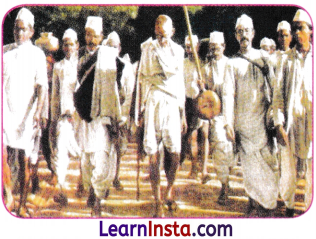
- Gandhi marched 380 km to Dandi in Gujarat from Sabarmati Ashram in Ahmedabad.
- He broke the salt law by collecting salt at Dandi.
- Salt became a symbol of protest against British taxation and monopoly.
Features of the Civil Disobedience Movement:
- Salt Marches across the country.
- Boycott of foreign cloth.
- Refusal to pay taxes.
- Breaking colonial laws.
- Mass participation across India.
Women played an important role:
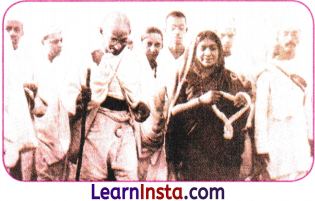
- Participated in marches and picketed liquor and foreign cloth shops.
- Many women came out of seclusion to join protests.
Sarojini Naidu, an eminent poet and inspiring speaker:
- Participated in the Salt March.
- Became the first Indian woman president of Congress in 1925.
- Advocated women’s rights and voting rights.
- Was arrested several times during protests.
British repression during the movement:
- The Qissa Khwani Bazaar massacre occurred on 23 April 1930 in Peshawar (Currently in Pakistan).
- British troops fired on peaceful protesters protesting the arrest of Abdul Ghaffar Khan.
- Hundreds were killed or injured.
- Under Chandra Singh Garhwali, two platoons of the Royal Garhwal Rifles chose imprisonment rather than firing on unarmed Indians.
The Gandhi-Irwin Pact
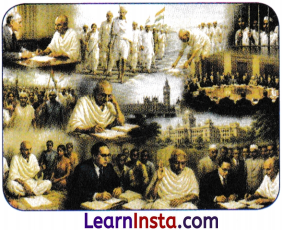
- In 1931, a pact was signed between Viceroy Irwin and Mahatma Gandhi.
- The British agreed to release all prisoners not involved in violence and permitted the private manufacture of salt.
- In return, the Congress agreed to suspend the Civil Disobedience Movement and participate in a Round Table Conference in London.
- The agreement marked the first official talks between the British government and the Congress on equal terms.
- However, the Round Table Conference failed to achieve its objectives.
- The pact faced criticism from younger Congress leaders because Purna Swaraj (complete independence) was not clearly assured.
- Gandhi later attempted to restart the Civil Disobedience Movement.
- Due to repression and declining support, the Civil Disobedience Movement was eventually withdrawn in 1934.
- After this, Congress adopted constitutional methods, and sought greater concessions through negotiations.
- In 1935, the British granted limited provincial autonomy by allowing elected provincial governments.
- The British, however, retained control over foreign affairs, defence and internal security, while governors held overriding powers.
- Gandhi then focused on ending untouchability and improving conditions for the Depressed Classes (Scheduled Castes).
- Dr. B.R. Ambedkar demanded separate electorates for the Depressed Classes to ensure fair political representation.
- Gandhi opposed this demand and began a fast unto death.
- The Poona Pact was signed, rejecting separate electorates but increasing the number of reserved seats for the Depressed Classes in the legislatures.
The Idea of Separate Nations
- Despite the wide reach of the Civil Disobedience Movement, many Muslims showed limited participation, leading to growing alienation.
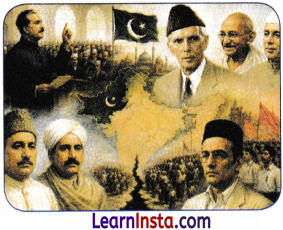
- In 1930, Muhammad Iqbal, an Urdu poet and philosopher, at the Allahabad (Prayagraj) session of the Muslim League, proposed a separate Muslim-majority region in north-western India.
- Though not a direct demand for partition, it planted the seeds of separatism. Congress leaders like Abdul Ghaffar Khan and Maulana Azad supported a united India.
- Later, Muhammad Ali Jinnah supported the demand for a separate nation (Pakistan).
- Meanwhile, leaders like V.D. Savarkar of the Hindu Mahasabha also viewed Hindus and Muslims as two separate nations, without openly advocating the partition of India.
World War II and the Indian National Army
- In 1939, World War II began in Europe, and Indian troops were sent to fight without consulting Indian leaders.
- Over 2.5 million Indian soldiers were recruited, forming the largest volunteer army; at least 87,000 lost their lives.
- The war caused an economic crisis, with food shortages, rising prices, and heavy taxation.
- On the orders of Winston Churchill, then Prime Minister of UK, large quantities of Indian grain were diverted to the war front, worsening shortages in India.
- Poor food management and the Bengal Famine of 1943 further deepened the crisis, causing around 1 million deaths.
- Before the war, many Indians supported the British, hoping for self-government after the conflict.
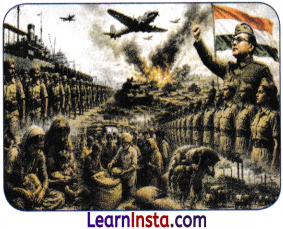
- However, after the war, support declined as people realised their sacrifices had been ignored by the British. Subhas Chandra Bose believed that armed struggle, rather than non-violence, was necessary to achieve independence.
- In 1941, he escaped from house arrest and travelled through Afghanistan and Russia to Germany to seek foreign support against the British.
- Later, believing Japan would provide greater support, he travelled to Indonesia, Japan, and reached Singapore (1943), where he reorganised the
- Indian National Army (INA) and formed the Azad Hind Government.
- The INA fought alongside Japanese forces in Burma and north-eastern India (Manipur and Nagaland) but was eventually defeated.
- Despite its failure, Bose was admired by many Indians for his determination, although others criticised his decision to collaborate with Nazi Germany and Japan.
The Quit India Movement
- During World War II, Winston Churchill sent Stafford Cripps to India with the Cripps Mission.
- The Cripps Mission promised India Dominion Status after the war.
- Provinces were allowed to separate from post-war India if they wished.
- Some leaders, such as C. Rajagopalachari, supported the proposal for tactical reasons.
- Most Congress leaders, including Mahatma Gandhi, rejected the offer as inadequate.
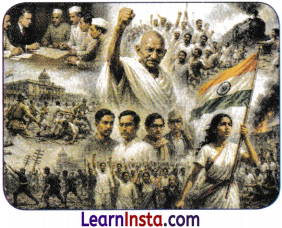
- In August 1942, Gandhi launched the Quit India Movement with the slogan “Do or Die.”
- The movement demanded that the British leave India immediately.
- Despite the Congress leadership was arrested, the movement continued through, protests, strikes, rallies, and attacks on government property spread across India.
- Workers stopped work, students left schools, and people damaged government property and communication systems.
- Leaders such as Jayaprakash Narayan and Ram Manohar Lohia helped keep the underground movement active.
- Viceroy Linlithgow described the movement as the biggest rebellions against British rule since 1857.
- Though the movement was brutally suppressed, it showed that the British could no longer rule India without Indian consent.
- Kanaklata Barua, a 17-year-old freedom fighter from Assam, was shot dead by British police while leading a procession to hoist the Indian flag at Gohpur police station in 1942.
- Kanaklata Barua is remembered as one of the youngest martyrs of India’s freedom struggle and was known as “Birangana” (heroic woman).
Aruna Asaf Ali and The Quit India Movement:
- Aruna Asaf Ali played an important role in the Quit India Movement.
- After Congress leaders were arrested, she hoisted the national flag at Gowalia Tank Maidan in Bombay and became a symbol of resistance.
- She had earlier taken part in protests and faced imprisonment.
- She stayed hidden for nearly four years to avoid arrest, while the British announced a reward for capturing her.
- During this time, she helped run secret activities and published underground bulletins against British rule.
- Later, she supported the Royal Indian Navy mutiny of 1946.
Partition, Turmoil and Independence
- After World War II ended in 1945, European colonial powers became weaker, and Britain realised it could no longer continue ruling India.
- In 1946, mutinies in the Royal Indian Air Force and Royal Indian Navy showed growing unrest among Indian military personnel and weakened British control.
- The Cabinet Mission of 1946 proposed a plan for the peaceful transfer of power and grouping of provinces with limited central authority.
- However, differences between the Congress and the Muslim League made it difficult to reach a solution, and the discussions failed.
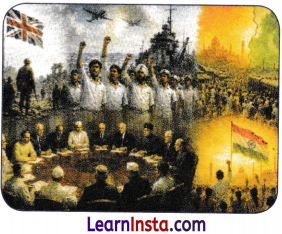
→ ‘Direct Action’
- Political discussions between the Indian National Congress and the All- India Muslim League failed because of deep political differences.
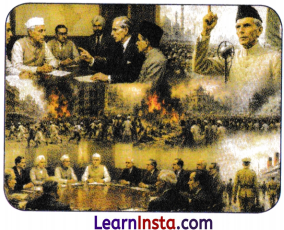
- Muhammad Ali Jinnah demanded a separate Muslim state and called for “Direct Action Day” on 16 August 1946.
- Communal riots broke out in Calcutta and spread fear, violence, and displacement among Hindus and Muslims.
- The violence increased fear and tensions between communities, making the possibility of partition stronger.
- An interim government under the leadership of Jawaharlal Nehru was formed in September 1946 to manage the transition from British rule.
- Rising pressure forced the British to speed up their withdrawal from India.
→ The Partition of India
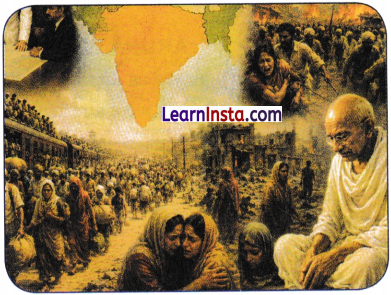
- India was divided because of rising political differences and conflicts between sections of Hindus and Muslims, but many leaders, including the Congress, disagreed with the decision.
- In 1947, Lord Mountbatten appointed Cyril Radcliffe, a British lawyer, unfamiliar with India and was given only 5 weeks to draw the line.
- Pakistan was created with two regions: West Pakistan (present-day Pakistan) and East Pakistan (present-day Bangladesh, which got independent from Pakistan in 1971).
- Millions of people suddenly became minorities on the wrong side of the border and were forced to migrate. Partition in August 1947 led to one of the largest and most violent migrations in history, causing massacres, riots, and suffering.
- Women faced severe violence, including abductions and assaults during the riots.
- Mahatma Gandhi deeply mourned the communal hatred and violence.
Sardar Vallabhbhai Patel:
- After independence, over 560 princely states had to decide whether to join India or Pakistan. Sardar Vallabhbhai Patel worked through talks and strict measures to bring most of these states into India.
- His role in bringing the states together helped form a united India, which earned him the name “Iron Man of India.”
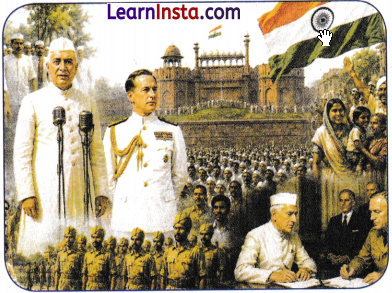
- India gained independence on 15 August 1947, with Jawaharlal Nehru becoming Prime Minister and Lord Mountbatten serving as Governor-General.
- The new Indian government faced the difficult task of rebuilding the nation, restoring peace, and establishing democratic institutions.
- Historians believe that Britain left India due to many reasons, such as Gandhi’s efforts, revolutionary movements, unrest among Indian forces, Britain’s weakened condition after World War II, and the end of colonial rule around the world.
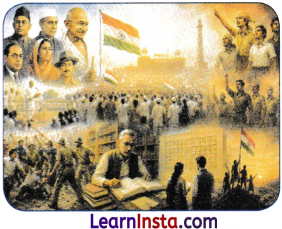
- From 1857 to 1947, generations of Indians struggled against British rule and made many sacrifices to achieve freedom.
- The efforts of revolutionaries, farmers, and ordinary people all played a role in India’s journey towards independence. India’s freedom was achieved through the combined efforts and sacrifices of countless people.