These Class 6 Social Science Worksheet and Class 6 SST Chapter 10 Grassroots Democracy Part 1 Governance Worksheet with Answers are excellent for board exam practice.
Class 6 SST Chapter 10 Grassroots Democracy Part 1 Governance Worksheet
Class 6 Grassroots Democracy Part 1 Governance Worksheet
Worksheet On Grassroots Democracy Part 1 Governance Class 6 – Grassroots Democracy Part 1 Governance Worksheet Class 6
Multiple choice questions (MCQs)
Question 1.
What is the role of the executive in government?
(a) Making laws
(b) Interpreting laws
(c) Enforcing laws
(d) Checking laws
Question 2.
Which of the following is an organ of the government?
(a) Judiciary
(b) Civil Services
(c) Armed Forces
(d) NGOs
Question 3.
The word “Democracy” is derived from which language?
(a) Latin
(b) Greek
(c) Sanskrit
(d) French
Question 4.
Which branch of the government is responsible for interpreting the law?
(a) Executive
(b) Legislature
(c) Judiciary
(d) Civil Services
Question 5.
How many levels of government exist in India?
(a) One
(b) Two
(c) Three
(d) Four
Question 6.
What does “Satyameva Jayate” mean?
(a) Power to the people
(b) Justice for all
(c) Truth alone triumphs
(d) Equality and fraternity

Question 7.
Which organ of the government legislates laws?
(a) Judiciary
(b) Executive
(c) Legislature
(d) Local Government
Question 8.
The motto of the Supreme Court of India is:
(a) “Truth alone triumphs”
(b) “Where there is dharma, there is victory”
(c) “Justice for all”
(d) “Government by the people”
Fill in the blanks
1. The role of the judiciary is to _________ the law.
2. _________ democracy involves citizens electing representatives to make decisions.
3. _________ means “Truth alone triumphs.”
4. The Indian Parliament consists of the _________ and _________
5. _________ refers to the separation of powers between different branches of government.
6. The _________ level of government handles issues like local roads and sanitation.
7. In a direct democracy, decisions are made by _________ voting.
8. “Grassroots democracy” emphasizes the participation of _________ citizens.
Match the table
| Term | Definition |
| 1. Judiciary | (a) Rule by the people |
| 2. Executive | (b) Participation of ordinary citizens |
| 3. Legislature | (c) Makes the law |
| 4. Democracy | (d) Implements the law |
| 5. Grassroots Democracy | (e) Interprets the law |
Crossword puzzle
Solve the following crossword with the help of given clues.
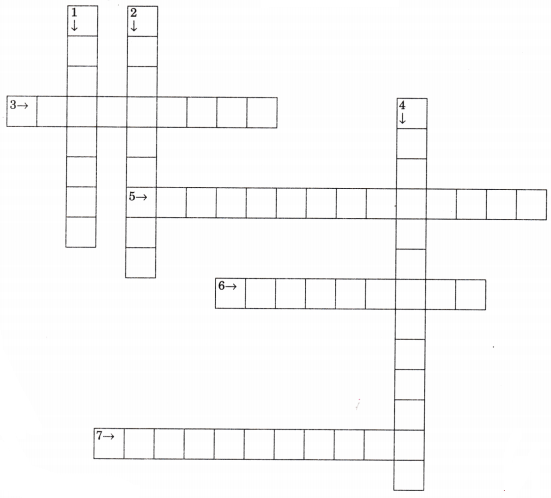
| Across | Down |
| 3. Nominal head of the nation and all three organs of the government | 1. Nominal head of the state |
| 5. Eleventh President of India | 2. This organ ensures that rules formulated by the legislature and implemented by executives are properly maintained and followed |
| 6. Organ of the government that ensures execution and implementation of the government rules and policies | 4. Executive head of the Central government |
| 7. Organ of the government that formulate laws and policies for the nation or state |
Assertion Reason-based Questions
Choose the correct option after analysing both the statements of assertion and reason.
(a) Both assertion and reason are correct, and reason is the correct explanation for the assertion.
(b) Both assertion and reason are correct, but reason is not the correct explanation for the assertion.
(c) The assertion is correct, but the reason is incorrect.
(d) The assertion is incorrect, but the reason is correct.
Assertion: The judiciary in India is responsible for interpreting laws.
Reason: The executive implements the laws made by the legislature.
Picture based question
Look at the given pictures carefully. Now identify which role is this and which government is responsible for this job?
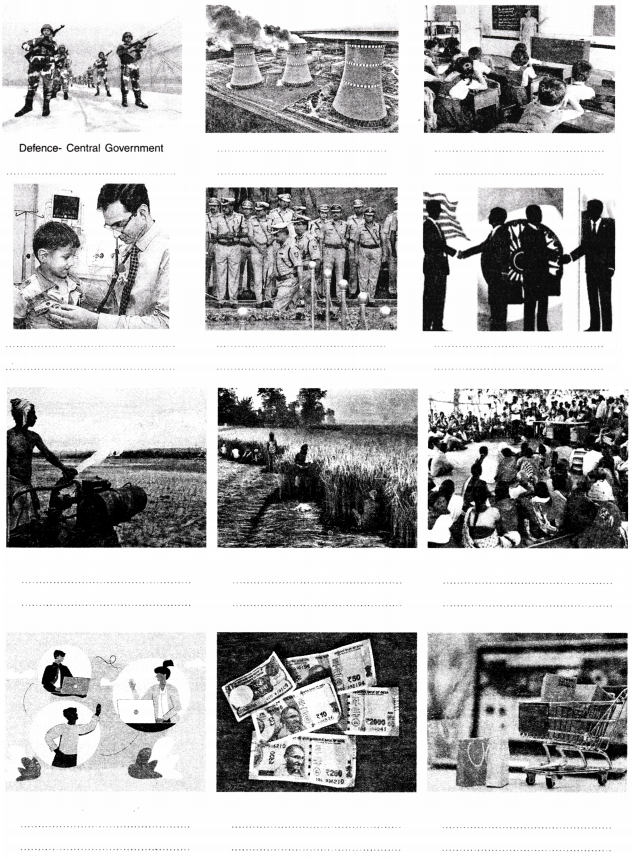
Choose the correct answer
Choose the actions or activities that affect you in any form and then try to find which organ of the government they belong to.
1. Your school has been closed by the District Magistrate due to a cold wave for another three days _________ Organ _________
2. The Chief Minister has organised a summit to attract investors to establish new industries in the state Organ
3. The President has implemented his rule in the north-eastern state of Manipur. The _________ Organ _________.
4. The Chief Justice of India said no one should sleep hungry. If there is food grain in government godowns, distribute them free Organ _________
5. The Prime Minister has asked the Central Education Board to fasten the process of releasing new textbooks Organ _________
6. Police have restricted the movement of traffic around your house due to a religious procession Organ _________
7. The broken road infront of your house is being repaired Organ _________
8. A camp for new voting cards has been arranged in your locality. Organ _________
Relationship-Based Question
Identify which diagram will represent the relationship between them in the correct manner.
1. Central government, State government, Local government
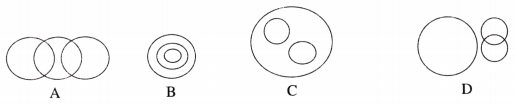
2. Legislature, Executive, Judiciary
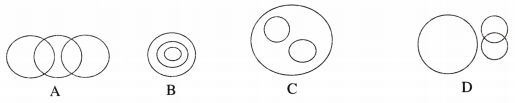
3. India, Rajasthan, Tamil Nadu, Myanmar
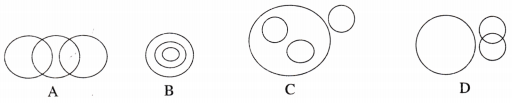
4. Supreme court, Vidhan sabha, Vidhan parishad

Very Short Answer Questions
Question 1.
What will happen if there is no governance?
_________________________________________
_________________________________________
_________________________________________
Question 2.
Identify three organs of government in your school.
_________________________________________
_________________________________________
_________________________________________
Question 3.
Define democracy.
_________________________________________
_________________________________________
_________________________________________
Question 4.
What is the function of the judiciary?
_________________________________________
_________________________________________
_________________________________________
Short Answer Questions
Question 1.
How does the executive, legislative, and judiciary work together in governance?
_________________________________________
_________________________________________
_________________________________________
Question 2.
What will be the situation in a country if its judiciary fails to deliver justice in society?
_________________________________________
_________________________________________
_________________________________________
Question 3.
How does governance impact the everyday lives of citizens?
_________________________________________
_________________________________________
_________________________________________
Long Answer Questions
Question 1.
How does representative democracy function in India? Explain with examples.
_________________________________________
_________________________________________
_________________________________________
Question 2.
Discuss the importance of checks and balances in governance. Provide examples.
_________________________________________
_________________________________________
_________________________________________
Question 3.
What are the key features of grassroots democracy, and how does it strengthen local governance? Which level of government affects us the most?
_________________________________________
_________________________________________
_________________________________________
Application-based questions
There is a flood situation in your place. How do the local, state, and central governments work together to provide relief and support to affected areas?
_________________________________________
_________________________________________
_________________________________________
Logical Thinking Question
Imagine there is a problem of law and order in a city, close to international border. In this situation, who must initiate action? The defence under the Central Government or the police under the State Government.
_________________________________________
_________________________________________
_________________________________________
Case study based questions
“The Constitution provides for a democratic government in India. The two main principles of democracy are: Political equality and Freedom. It is because of these reasons that more than half of the independent countries in the world have a democratic form of government. In many countries, people have struggled for a long time and made enormous sacrifices in order to have a democratic government. Many more countries are still carrying on this struggle so that they may achieve democracy. In today’s world, we do not have direct democracy where all the people participate in choosing their leaders. The size of the countries and the large population makes it impossible to involve all the people directly in decision-making. So, we have representative democracies where people choose their representatives through elections. These representatives are involved in making laws.”
Read the given excerpt and answer the following questions:
Question 1.
In your understanding, what is a Constitution?
_________________________________________
_________________________________________
_________________________________________
Question 2.
What are the main two principles of democracy?
_________________________________________
_________________________________________
_________________________________________
Question 3.
Why do people have to struggle to have democracy?
_________________________________________
_________________________________________
_________________________________________
Question 4.
What is democracy and why do people want to switch to this form of government everywhere?
_________________________________________
_________________________________________
_________________________________________
Question 5.
Why are we forced to have representative democracy and not direct democracy?
_________________________________________
_________________________________________
_________________________________________