These Class 7 Social Science Worksheet and Class 7 SST Chapter 9 From the Rulers to the Ruled Types of Governments Worksheet with Answers are excellent for board exam practice.
Class 7 SST Chapter 9 From the Rulers to the Ruled Types of Governments Worksheet
Class 7 From the Rulers to the Ruled Types of Governments Worksheet
Worksheet On From the Rulers to the Ruled Types of Governments Class 7 – From the Rulers to the Ruled Types of Governments Worksheet Class 7
Multiple Choice Questions
Question 1.
In a parliamentary democracy like India, who elects the Prime Minister?
(a) The President of India
(b) The Chief Justice of India
(c) The elected members of the Lok Sabha
(d) The elected members of the Rajya Sabha
Question 2.
Which one of the following is a trait of dictatorship?
(a) Power is held by a person or a small group
(b) Elections are held regularly
(c) Power is shared by all
(d) People make laws
Question 3.
What is the key responsibility of a government?
(a) To run businesses
(b) To maintain law and order and provide essential services
(c) To entertain people
(d) To choose kings
Question 4.
What makes one country’s government different from another?
(a) Its weather
(b) Its location
(c) Its history, culture, and goals
(d) Its language
Question 5.
Which principle is not a part of democracy?
(a) Equality
(b) Freedom
(c) Dictatorship
(d) Universal adult franchise
Question 6.
What form of government is ruled by a king or queen?
(a) Democracy
(b) Dictatorship
(c) Monarchy
(d) Oligarchy

Question 7.
Which country has a constitutional monarchy?
(a) Saudi Arabia
(b) Iran
(c) The United Kingdom
(d) China
Question 8.
In a democracy, who gives the government its power?
(a) Religious leaders
(b) Kings
(c) The army
(d) The People
Question 9.
During the era of mahajanapadas, which clan had a democratic governance system?
(a) The Lichchhavi
(b) The Amatra
(c) Magadha
(d) Avanti
Question 10.
In a constitutional monarchy, who makes the rules?
(a) The Prime minister
(b) The Parliament
(c) The Monarch
(d) The Council of Ministers
Assertion and Reason Questions
There are two statements marked as Assertion (A) and Reason (R). Mark your answer as per the codes provided below:
Question 1.
Assertion (A): In any government, the judiciary makes sure that the laws are being followed.
Reason (R): The judiciary is an independent branch that makes non-biased decisions for the government without any interference of other parts of the government.
Codes:
(a) Both (A) and (R) are true, and R is the correct explanation of (A).
(b) Both (A) and (R) are true, but (R) is not the correct explanation of (A).
(c) (A) is true, but (R) is false.
(d) (A) is faise, but (R) is true.
Question 2.
Assertion (A): Democratic countries like India, have Universal adult suffrage which allows all adults to vote in elections.
Reason (R): It ensures that all adults in the country, irrespective of their gender, race, or status have equal rights and participation in the making of their government.
Codes:
(a) Both (A) and (R) are true, and R is the correct explanation of (A).
(b) Both (A) and (R) are true, but (R) is not the correct explanation of (A).
(c) (A) is true, but (R) is false.
(d) (A) is false, but (R) is true.
Fill in the Blanks with the Words given in the Box Below
| council, governments, people, order, Abraham Lincoln |
1. Palana means maintaining ________ within the state.
2. Democracy means the “rule of the ________”.
3. The functions of government are similar to the responsibilities of a student ________
4. The phrase “government of the people, by the people, for the people” was said by ________
5. Since countries have their own history, culture, and aspirations, it is natural that ________ of different countries are different.
State Whether the Following Statements are True or False
1. In a democracy, the people of the country decide how will the government be like.
2. In a theocracy, the source of authority comes from a group of intellectual people.
3. Governments in monarchies are formed through voting.
4. All governments have the same working patterns and systems.
5. Most democracies have some strict fundamental rules that outlines how the government works.
Match the Contents in Column A with those in Column B
| Column A | Column B |
| 1. Monarchy | A. Early republic |
| 2. Vajji | B. Making law |
| 3. Executive | C. Four pilgrimage sites |
| 4. Legislature | D. Form of government |
| 5. Upper House | E. Law implementation |
Choose the correct option:
(a) 1-C, 2-A, 3-E, 4-B, 5-D
(b) 1-C, 2-D, 3-A, 4-E, 5-B
(c) 1-D, 2-E, 3-B, 4-C, 5-A
(d) 1-C, 2-A, 3-D, 4-E, 5-B
Very Short Answer Type Questions
Question 1.
In a democracy, what does equality refer to?
Answer:
_________________________________
_________________________________
_________________________________
_________________________________
Question 2.
What do you understand by representative participation?
Answer:
_________________________________
_________________________________
_________________________________
_________________________________
Question 3.
In a democracy, what does freedom stand for?
Answer:
_________________________________
_________________________________
_________________________________
_________________________________
Question 4.
What is the role of the judiciary in an active democratic government?
Answer:
_________________________________
_________________________________
_________________________________
_________________________________
Question 5.
List two fundamental rights of a citizen in a democracy.
Answer:
_________________________________
_________________________________
_________________________________
_________________________________
Short Answer Type Questions
Question 1.
Mention the significance of democracy.
Answer:
_________________________________
_________________________________
_________________________________
_________________________________
Question 2.
State the importance of accountability in a democracy.
Answer:
_________________________________
_________________________________
_________________________________
_________________________________
Question 3.
Give the approximate time interval between general elections in a democratic country.
Answer:
_________________________________
_________________________________
_________________________________
_________________________________
Question 4.
What is representative democracy?
Answer:
_________________________________
_________________________________
_________________________________
_________________________________
Long Answer Type Questions
Question 1.
What is theocracy? Discuss a country that follows a theocratic system of governance.
Answer:
_________________________________
_________________________________
_________________________________
_________________________________
Question 2.
What is the primary role of a monarch in a constitutional monarchy?
Answer:
_________________________________
_________________________________
_________________________________
_________________________________
Question 3.
In ancient India, how did the territories function under a democratic form of administration? Provide an example to support your answer.
Answer:
_________________________________
_________________________________
_________________________________
_________________________________
Case Based Questions
Read the following excerpt and answer the questions that follow:
The implementation of these rules and the administration of the country according to them is known as the executive function. Finally, ensuring that the rules are followed is referred to as the judicial function. Democracy is defined as the ‘rule of the people’. This means that, similar to the third method of electing representatives in a school, in a democracy, the people select their representatives to govern them. However, not every country uses the same method for choosing these representatives.
(а) What is the executive function?
(b) State the key duty or aim of the judicial function?
(c) How is democracy defined?
(d) What does the phrase ‘rule of the people’ mean?
(e) What is the third method of electing representatives in a school?
Answer:
_________________________________
_________________________________
_________________________________
_________________________________
Skill Based Questions
Question 1.
Re-read Chapter 5, The Rise of Empires/ from your textbook. Observe the shift in power among various kings during their territorial expansions or invasions. List the changes you have identified and discuss your findings with your subject teacher.
Answer:
_________________________________
_________________________________
_________________________________
_________________________________
Question 2.
How can dictatorship in a government lead to the oppression and violation of citizens’ fundamental rights? Share your perspective with relevant examples during the class discussion.
Answer:
_________________________________
_________________________________
_________________________________
_________________________________
Competency Based Question
Question 1.
Discuss the elements of oligarchy in a government. Do you think democracy incorporates or reflects any features of oligarchy? If yes, provide examples to support your answer.
Answer:
_________________________________
_________________________________
_________________________________
_________________________________
Picture Based Questions
Observe the picture given below and answer the questions that follow:
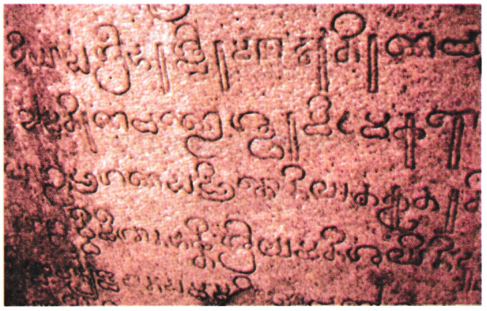
(a) Identify the given picture.
(b) Where is it located?
(c) What does it feature about Chola Dynasty?
(d) What is written on the shown inscription?
(e) List the process or elements of the topic discussed in this inscription.
Answer:
_________________________________
_________________________________
_________________________________
_________________________________