Working through Class 9 English Notes and Class 9 English Kaveri Chapter 3 Winds of Change Summary in English & Hindi simplifies the understanding of long chapters.
Summary of Winds of Change Class 9
Winds of Change Summary Class 9
This chapter explores the origin and historical significance of the Indian hand fan known as the ‘pankha’. It also examines its cultural spread, regional varieties and present condition.
It shows how pankhas evolved from everyday utility objects into symbols of tradition, craftsmanship and livelihood. It also highlights the challenges they face in modern times.
Winds of Change Summary in English
Origin and Meaning of Pankha
- The words ‘punkha’ or ‘pankha’ come from the word ‘pankh’, meaning feather of a bird.
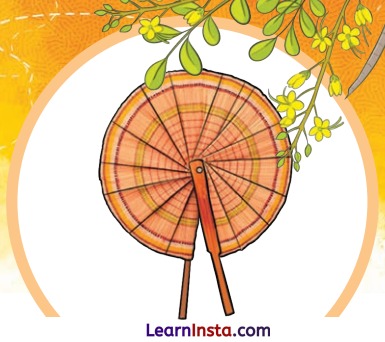
- A pankha refers to a small hand-held fan that has been used in India since ancient times.
- Evidence of its existence can be seen in Buddhist wall paintings at Ajanta (2 nd century CE) and in embroidery, sculptures and carvings.
- In ancient times, pankhas were used in temples to fan deities and in royal courts to fan kings.
- The pankhas ranged in size from tiny hand held fans to very large ones that needed strong people to operate.
Cultural Importance and Variety
- Over time, pankhas became important cultural objects that spread through trade routes.
- Although they were common across India, each region developed its own style and designs.
- Artisans used different materials such as bamboo, cane, palm leaves, silk, brass, leather and silver. According to local traditions and rituals they decorated them with beads and stones.
- Pankhas were seen as exotic and stylish items. They reflected fine craftsmanship and cultural value. They also gained popularity as valuable goods traded across different regions of India.
Pankhas in Modern Times
- Today, pankhas are no longer used for everyday cooling and are mostly decorative and traditional craft items.
- Each fan reflects the culture of the region where it is made. Examples from Rajasthan include
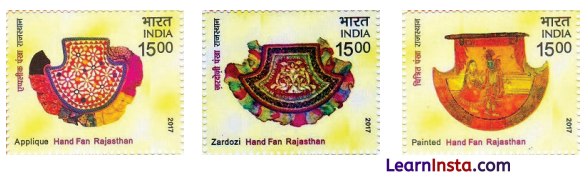
- Applique hand fans made by stitching fabric pieces on cloth with needlework.
- Zardozi fans decorated with glittering gold thread embroidery.
- Temple fans made by engraving brass and giving them long handles.
- Cardboard fans featuring various images are often offered to gods.
Gujarat’s Unique Pankha Craft
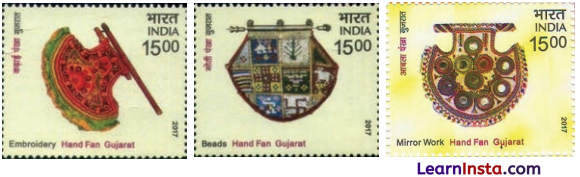
- Gujarat has its own traditional pankhas, made from pure cotton decorated with colourful beads. They sometimes even have a silver handle. This has made the state a recognised centre of bead craft in India.
- These hand fans are made in Kutch using hand-stitched leather and are decorated with thread and wool.
- Many home-based women workers in Gujarat play an important role in making embroidered hand fans.
Pankha Traditions in Other States
Different Indian states have their own special pankhas
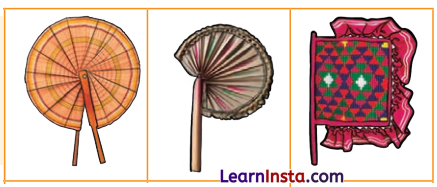
- In Bengal, fans are made from the milky-white soft centre of the sola plant. These palm leaf fans are locally called Tal Patar Pankha and are kept as valued household possessions.
- In Uttar Pradesh, Phadh fans are decorated with gold, silver zari, silk and satin frills.
- In Odisha and Bihar, large palm-leaf fans and colourful bamboo fans are made. They are known for their strength, durability and attractive appearance.
- Among tribal communities, fans are made using bamboo sticks, grass, palm leaves and metal. They are often decorated with geometric patterns and white ink on red backgrounds.
Decline and Transformation of the Craft
- With the arrival of modern technology, the use of pankhas has reduced and the tradition is slowly disappearing from daily life.
- However, the craft has transformed into a commercial business, providing livelihood to many artisans.
Preserving the Pankha Heritage
To preserve this traditional craft, it is important to
- Celebrate and appreciate pankhas and the stories behind them.
- Provide artisans with platforms to display and sell their work.
- Promote workshops and handicraft exhibitions to spread awareness and
- support sustainable livelihoods for pankha makers.

The title reflects the literal breeze created by pankhas. It also shows the gradual transformation in their role from sacred and royal objects to decorative handicrafts. This highlights how time, technology, and changing lifestyles have reshaped this traditional art form.
Winds of Change Summary in Hindi
पंखा शब्द की उत्पत्ति पंख से हुई है और भारत में इसके उपयोग के प्रमाण अंजता में मिली दूसरी शताब्दी की बौद्ध चित्रकलाओं से मिलते हैं। परंपरागत रूप से मंदिरों में देवताओं और राजदरबारों में राजाओं को हवा देने के लिए इस्तेमाल किए जाने वाले पंखा अंतत एक विदेशी व्यापारिक वस्तु बन गया। भारत के प्रत्येक क्षेत्र ने स्थानीय सामग्रियों और संस्कृति के आधार पर अद्वितीय शैलियों का विकास किया-
- राजस्थान-एप्तिक वर्क (कपड़ों के पैटर्न को एक साथ सिलकर बनाया गया काम) और जरदोजी (सोने के धागे का काम) के लिए प्रसिद्ध है।
- गुजरात-कच्छ से आने वाले मनके की कारीगरी, दपर्ण का काम ओर हाथ से सिले हुए चमड़े के पंखों के लिए मशहूर हैं।
- पश्चिम बंगाल-कारीगर सोला (नलीय घास) का उपयोग करके सफेद, स्पंजी पंखे बनते है जिन्हें पाटर पंखा कहा जाता है।
- अन्य क्षेत्र-उत्तर प्रदेश में रेशम और साटन की झालरों वाले पंखें देखने को मिलते है। ओडिशा और बिहार बड़े ताड़ के पत्तों और बांस के पंखों के लिए मशहूर हैं।
आज यह शिल्प कारीगरों की आजीविका का साधन हैं, हाँलाकि इसे तकनीक से प्रतिस्पर्धा का सामना करना पड़ रहा है। अध्याय इस खूबसूरत सांस्कृतिक विरासत की आवश्यकता पर जोर देते हुए समाप्त होता है।
Themes (Main Ideas) of Winds of Change
Rich Cultural Heritage of India
The chapter celebrates the pankha as an important part of India’s ancient traditions, showing how this simple object reflects the country’s art.
Regional Diversity and Creativity
Highlighting India’s cultural diversity and artistic creativity.
Role of Handicrafts in Daily Life
Earlier, pankhas were used in temples, royal courts and homes, showing how traditional crafts were closely connected with everyday life.
Transformation with Time
With the arrival of modern technology, pankhas lost their practical use and became decorative items, showing how traditions change with time.
Literary Devices of Winds of Change
- Imagery Descriptions of embroidered silk fans, mirror work, colourful beads, brass engravings and palm-leaf fans help readers clearly visualise the beauty and craftsmanship of traditional pankhas.
- Symbolism The pankha symbolises India’s cultural heritage and traditional craftsmanship, representing the connection between art, history and everyday life.
- Contrast The chapter contrasts the past and present by showing how pankhas were once daily utility items but have now become decorative and commercial craft products.
- Personification Phrases describing the pankha culture as ‘slowly losing its presence’ give human-like qualities to the craft, highlighting its gradual decline.
Winds of Change Class 9 Word Meanings
- Exotic – Unusual or attractive because of being foreign or rare
- Intricate – Very detailed and complex
- Applique – Decorative work where pieces of fabric are sewn onto a larger cloth
- Zardozi – Ornate embroidery using gold or silver thread
- Encrusted – Covered or decorated
- Engraving – Carving designs into a hard surface like metal
- Embellished – Decorated with added details
- Dainty – Delicately small and pretty
- Sola – A type of water grass
- Perpetually – Constantly
- Antiquity – The distant past
- Advent – Arrival