These Class 7 Social Science Worksheet and Class 7 SST Chapter 6 The Age of Reorganisation Worksheet with Answers are excellent for board exam practice.
Class 7 SST Chapter 6 The Age of Reorganisation Worksheet
Class 7 The Age of Reorganisation Worksheet
Worksheet On The Age of Reorganisation Class 7 – The Age of Reorganisation Worksheet Class 7
Multiple Choice Questions
Question 1.
What evidence supports the origin of modern numerals in India?
(a) The Naneghat caves
(b) The Karla caves
(c) The Hathigumpha caves
(d) The Udayagiri-Khandagiri
Question 2.
What methods did kingdoms use to form alliances with neighbouring kingdoms?
(a) Campaigns against them
(b) Matrimonial alliances
(c) By trading with each other
(d) By cancelling tolls on imported goods
Question 3.
Which ruler was assassinated around 185 BCE by his commander-in-chief?
(a) Chandragupta Maurya
(b) Ashoka
(c) Pushyamitra Shunga
(d) Gautamiputra Satkarni
Question 4.
Which river system helped agriculture and trade flourish?
(a) Indus-Kaveri
(b) Ganga-Yamuna
(c) Krishna-Godavari
(d) Kaveri-Ganga
Question 5.
Under which kings did Kalinga rise as a prominent power?
(a) The Nanda dynasty
(b) The Shunga dynasty
(c) The Chola dynasty
(d) The Chedi dynasty
Question 6.
Who claimed to have defeated an alliance of South Indian kings?
(a) Kharavela
(b) Karikala
(c) Gautami Balashri
(d) Megasthenese
Question 7.
Who constructed the Grand Anicut?
(a) The Keralputra
(b) Karikala
(c) Kautilya
(d) Ashoka
Question 8.
What is a notable example of the blend of Indian and Greek culture?
(a) The Heliodorus pillar
(b) Chera’s coins
(c) Statue of King Karikala
(d) Prayaga Prashasti

Question 9.
What have archaeologists discovered during excavations in North India?
(a) The Pandyas coins
(b) The Chola’s
(c) Indo-Greeks coins
(d) The Kharvela’s coins
Question 10.
Who controlled significant sections of the Silk Route?
(a) The Pandyas
(b) The Cholas
(c) Indo-Greeks
(d) The Kushanas
Assertion and Reason Questions
There are two statements marked as Assertion (A) and Reason (R). Mark your answer as per the codes provided below:
Question 1.
Assertion (A): The Kaveri delta brought more land under cultivation.
Reason (R) Karikala undertook many projects for the benefit of his people.
Codes:
(a) Both (A) and (R) are true, and R is the correct explanation of (A).
(b) Both (A) and (R) are true, but (R) is not the correct explanation of (A).
(c) (A) is true, but (R) is false.
(d) (A) is false, but (R) is true.
Question 2.
Assertion (A): Ashoka was assassinated by his commander in-chief Pushyamitra Shunga.
Reason (R): After the death of Ashoka, Pushyamitra declared himself the next emperor of the Maurya Empire.
Codes:
(a) Both (A) and (R) are true, and R is the correct explanation of (A).
(b) Both (A) and (R) are true, but (R) is not the correct explanation of (A).
(c) (A) is true, but (R) is false.
(d) (A) is false, but (R) is true.
Fill in the Blanks with the Words given in the Box Below
| Tamil Nadu, Kharavela, India and Pakistan, Buddhism, Sangam literature |
1. The Gandhara style emerged in the western regions of ___________.
2. ___________ the oldest in south India, consists of several collections or anthologies of poems.
3. ___________ was the most powerful and ethical ruler in Chedi dynasty.
4. The Satavahanas were devout followers of ___________
5. The Pandyas’ rule over parts of and the surrounding regions.
State Whether the Following Statements are True or False
1. Agriculture provided economic stability to the Satavahana Kingdom.
2. The Chola king is said to have defeated a combined force of Indo-Greeks.
3. The Satavahana Empire fragmented into smaller independent kingdoms.
4. The Cheras were known for their extensive trade connections.
5. After the decline of the Nandas, the northern area became an easy target for the Indo-Greeks.
Match the Contents in Column A with Those in Column B
| Column A | Column B |
| 1. Kanishka | A. The Cheras |
| 2. Keralaputra | B. The Chedis |
| 3. Karikala | C. The Kushanas |
| 4. Kharvela | D. The Shungas |
| 5. Pushyamitra | E. The Cholas |
Choose the correct option:
(a) 1-C, 2-A, 3-E, 4-B, 5-D
(b) 1-C, 2-D, 3-A, 4-E, 5-B
(c) 1-B, 2-E, 3-A, 4-C, 5-D
(d) 1-C, 2-A, 3-D, 4-E, 5-B
Very Short Answer Type Questions
Question 1.
What was the most common and peaceful method of forming alliances during the Age of Reorganisation?
Answer:
_______________________________
_______________________________
_______________________________
Question 2.
Who was the founder of the Shunga dynasty?
Answer:
_______________________________
_______________________________
_______________________________
Question 3.
What is the Ashvamedha Yajna?
Answer:
_______________________________
_______________________________
_______________________________
Question 4.
Which kingdom was referred to as “Andhra”?
Answer:
_______________________________
_______________________________
_______________________________
Question 5.
For whom were the Udayagiri-Khandagiri caves constructed?
Answer:
_______________________________
_______________________________
_______________________________
Short Answer Type Questions
Question 1.
Mention some significant features of the Chera dynasty.
Answer:
_______________________________
_______________________________
_______________________________
Question 2.
How did the !ndo-Greeks establish their presence in India?
Answer:
_______________________________
_______________________________
_______________________________
Question 3.
Describe the Era of Reorganisation.
Answer:
_______________________________
_______________________________
_______________________________
Question 4.
Provide a brief description of the Kushanas.
Answer:
_______________________________
_______________________________
_______________________________
Long Answer Type Questions
Question 1.
List at least three differences between the Mathura and Gandhara styles of art.
Answer:
_______________________________
_______________________________
_______________________________
Question 2.
Which kingdom in this chapter is your favourite? Describe what you like most about it.
Answer:
_______________________________
_______________________________
_______________________________
Question 3.
Describe life during the Satavahana period.
Answer:
_______________________________
_______________________________
_______________________________
Case Based Questions
Read the following excerpt and answer the questions that follow:
Kharavela, one of their main rulers, was a devoted follower of Jain teachings; he was sometimes called bhikshu-raja or monk-king, although he respected all schools of thoughts. Near Bhubaneswar, the famous Udayagiri-Khandagiri caves, likely developed for Jain monks, feature intricate panels and statues, and spacious rooms carved into the rock, showcasing the skill of the craftsmen. The design and craftsmanship of these caves make them notable examples of’rock-cut architecture’, a style of architecture that we will turn to in higher classes.
(a) Who was Kharvela?
(b) What was he sometimes called?
(c) Which caves were located near Bhubaneshwar?
(d) For whom were these caves developed?
(e) Which form of architecture is represented by these caves?
Answer:
_______________________________
_______________________________
_______________________________
Skill-Based Question
Question 1.
How did the decline of the Mauryan empire influence regional political formations such as the Shungas and the Satavahanas?
Answer:
_______________________________
_______________________________
_______________________________
Competency Based Question
Question 1.
Compare the administrative systems of the Cheras and the Pandyas. Discuss the most significant features of these kingdoms.
Answer:
_______________________________
_______________________________
_______________________________
Picture-Based Questions
Observe the given picture and answer the questions that follow:

(a) Identify this picture.
(b) Where is the place shown in the picture located?
(c) Who contributed in the building of this place?
(d) For whom was this place made?
(e) How does it look in the centre?
Answer:
_______________________________
_______________________________
_______________________________
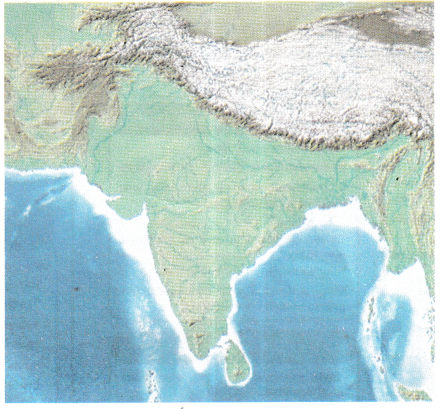
Map Work
On the given map, mark the location of the following territories:
(a) Indo-Scythians (Shakas)
(b) The Chedis
(c) The Pandyas
(d) The Cheras
(e) The Indo-Greeks