Experts have designed these Class 5 EVS Notes and Chapter 2 Journey of a River Class 5 Notes for effective learning.
Class 5 EVS Chapter 2 Notes Journey of a River
Class 5 Journey of a River Notes – Journey of a River Class 5 Notes
→ Perennial River: A river that flows throughout the year.
→ Seasonal River: A river that flows only during certain times of the year, mostly in the rainy season. When there is no rain, these rivers may dry up.
→ Tributary: A small stream or river that flows into a large river.
→ Godavari Pushkaram: A religious festival held every 12 years for bathing in the Godavari River.
→ Delta: A landform where a river splits into smaller streams before meeting the sea.

→ Coringa Mangrove Forests: A forested coastal region where the Godavari meets the Bay of Bengal.
→ Eco-tourism: It means visiting natural places like forests, rivers or mountains to enjoy beauty, watch animals or birds and learn about nature without harming the environment.
→ Reservoir: A man-made lake formed behind a dam to store water.
→ Fertiliser: Chemicals used in farming that can pollute rivers if washed away.
→ National Water Mission: A government programme that helps manage and save water in India.
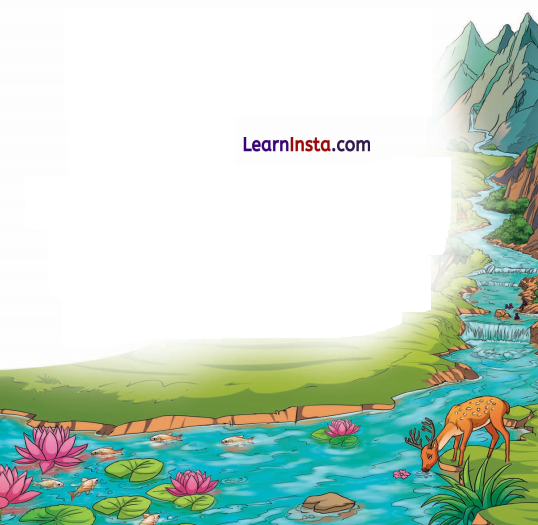
→ The Godavari River starts in the Western Ghats, at Trimbakeshwar in Maharashtra. Although it starts as a small stream, many tributaries (smaller joining rivers) flow into it, which help the river grow wide and strong.
→ Godavari travels a distance of 1,465 kilometres before joining the Bay of Bengal. It is the second longest river in India after the Ganga. There are many stories about the Godavari in ‘Ramayana’ and the ‘Puranas’. It is also known as Dakshina Ganga because it flows through Southern India and is regarded as sacred.
→ In Nashik, people gather to bathe in the river’s holy water, especially during the event Godavari Pushkaram. Since the river flows throughout the year, it is called a perennial river. Some rivers are seasonal as they flow only during the rainy season.
→ As Godavari flows through forests and fields, the river supports all forms of life – animals like tigers barking deer, the Indian Gecko and trees like red sandalwood. When Godavari reaches the sea, it spreads out into many small streams which forms a delta. The place where fresh water meets the sea is called Coringa Mangrove Forests, where Godavari ends.
→ Godavari also supports people in small towns and villages by providing water for drinking, cooking, cleaning, farming and factories. Its water is supplied through pipes and canals. Over 900 dams store its water, which is used during dry seasons for irrigation, drinking and electricity.
→ Reservoirs are large water bodies where water from dams is stored. Dams cause flooding which makes people leave their homes and move to safer places.
→ The Godavari River is polluted by plastic, waste, dirty water and chemicals from factories and farms. Even if it looks clean, the water can still cause illness. Pollution is harming fish, turtles and birds living in and around the river.
→ Fertilizers from farms mix with river water and make plants grow too fast on the surface. This blocks sunlight and harms fish and other living things in the water. During heavy rains, the river sometimesoverflows and floods homes, roads and farms. When there is no rain for longtime, the river can dry up. This causes water shortage for both people and animals.
→ To solve these problems, people should use water carefully. In some places, special machines called Water ATMs give clean water. The National Water Mission helps manage and save water in India. We can also help by saving water, planting trees and keeping rivers clean.