Experts have designed these Class 9 Science Notes and Exploration Chapter 1 Exploration Entering the World of Secondary Science Class 9 Notes for effective learning.
Class 9 Science Chapter 1 Exploration Entering the World of Secondary Science Notes
Class 9 Science Exploration Chapter 1 Notes
Class 9 Science Chapter 1 Notes – Class 9 Exploration Entering the World of Secondary Science Notes
→ Assumption: A condition accepted as true to simplify study.
→ Estimation: An approximate calculation to check reasonableness.
→ Model: A simplified representation of a system focusing on important features.
→ Prediction: A reasoned expectation based on evidence.
→ Principle: A general idea used to understand situations.
→ Scientific law: A statement describing a consistent pattern in nature.
→ Scientific theory: An explanation of why phenomena occur.
→ SI Units: Standard international units of measurement.

→ Entering the World of Secondary Science:
- Science involves curiosity, observation, questioning, and experimentation.
- Science focuses on both what we know and how we know it.
- Science shows how observations are transformed into measurements, and how recurring patterns are represented through symbols and equations.
- Scientific ideas are tested, revised, and sometimes discarded.
- In science, models are used to represent complex systems and are continuously improved.
- Science helps us understand nature, technology, and our place in the world.
- Exploration in science requires careful observation direction in selecting appropriate models, asking the right questions and understanding the boundaries of each idea and purpose.

→ Models in Science:
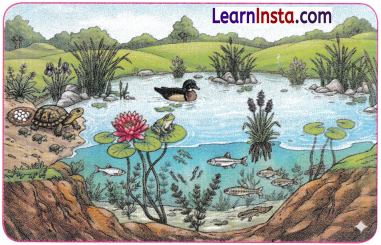
- The natural world is complex, so science uses models to simplify the reality.
- These models focus on only important details and ignore less relevant ones.
- Building a specific model involves making assumptions and deliberately ignoring certain factors.
- Ignoring details is not a mistake, but done to simplify understanding, making sure we get answers to what we are searching for.
→ Scientific Language and Mathematics:
- Science uses precise and specific language.
- Everyday words (force, work, cell) have special meanings in science.
- Use of maths in science is as it expresses relationships clearly and is a language of understanding, not just calculation.
- Scientific quantities are represented using symbols and units.
- For instance, mass, velocity, force and electric current are represented using symbols like m, v, F and I.
- Science often uses mathematics to facilitate relationships between quantities to be expressed clearly.
- Science employs mathematical expressions to describe the rates of chemical reactions, patterns of population growth, and changes in energy within a system.
- To apply mathematics in science, we must first analyse the situation, identify relevant quantities, and use mathematical relationships to reason carefully.
→ Importance of Units
- Standard units (SI units) ensure consistency worldwide, avoiding conversions and errors.
- Using wrong units can cause serious errors.
- Example: A passenger aircraft’s fuel miscalculation due to unit confusion.

→ Laws, Theories, and Principles:
- Law: Describes patterns observed in nature and is described by words or mathematical relationships.
- Theory: Explains why those patterns occur. These explanations are shaped by evidence gathered over time.
- For example: The atomic theory helps us understand the fundamentals of molecules, formation.
- Principle: Broad ideas guiding understanding.
- For instance: The principle of conservation of Energy applies when we climb up stairs.
- Scientific knowledge is based on evidence and can change with new findings.
- Scientific theories are not mere guesses; they involve rigorous testing and critical explanation.
- These theories and ideas remain open to improvement and often evolve as new evidence emerges.
- This improvement makes science more reliable.
→ Scientific Predictions:
- Science allows prediction of outcomes.
- Predictions are based on evidence and not guesses.
- If predictions fail, models, measurements and assumptions are re-examined.
→ Nature of Science:
- Science is not absolute.
- It improves with the appearance of new evidence.
- cience treats failure of models as its greatest strength, not weakness.
- When predictions do not match evidence, scientists do not discard ideas based on opinion-they rely solely on evidence.
- Scientific theories are never final-they can always be questioned and refined.
→ Estimation in Science:
- Approximate answers are often sufficient, specifically in the early stages of reasoning.
- Estimation helps in checking reasonableness and building intuition.
- Exact values are not always necessary.
- The knowledge of estimation also helps us identify errors and enhance confidence in our thinking.
- Science consistently upholds the principle of critical (careful) reasoning over accurate calculations.
→ Science and Real Life:
- Science connects multiple disciplines:
- Physics
- Chemistry
- Biology
- Earth science
- Almost every real-world problem require interdisciplinary thinking.
- Science naturally intersects with mathematics, technology, arts and social science.
- To fully understand the world, we must cultivate diverse ways of gaining insight and expressing ideas.
→ Scientific Thinking:
- Science is a human activity involving:
- Curiosity
- Creativity
- Collaboration
- Critical Questioning
- It encourages scientists for critical thinking and learn from mistakes.
- It also helps understand technology.