Experts have designed these Class 7 Science Notes Chapter 3 Electricity Circuits and Their Components Class 7 Notes for effective learning.
Class 7 Science Chapter 3 Electricity Circuits and Their Components Notes
Class 7 Electricity Circuits and Their Components Notes
Class 7 Science Chapter 3 Notes – Electricity Circuits and Their Components Notes Class 7
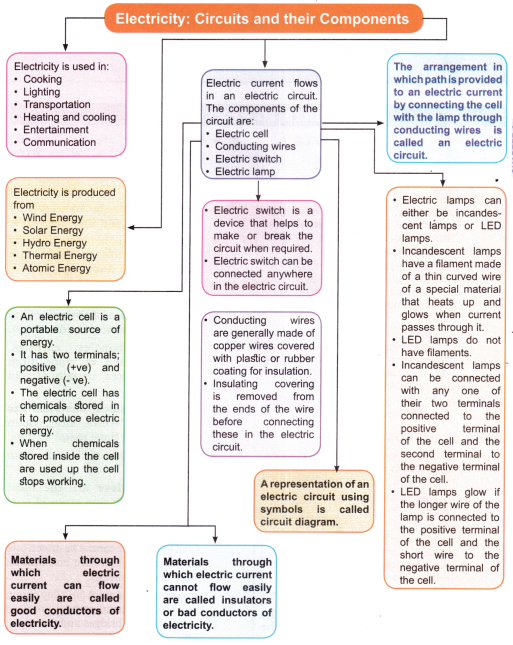
→ Electricity is used in our homes for lighting, for using kitchen appliances, for heating or cooling our rooms, for charging our mobile phones, for watching televisions etc.
→ Electricity isused for transportation in electric vehicles and in a large number of industrial activities.
→ Electricity is a form of energy. Electric energy is produced from wind energy using wind mills, from the Sun’s energy using solar panels or from energy of water falling from heights using turbines in dams.
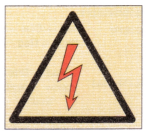
→ Danger signs are displayed on electric poles and electric installations. Handling electric wires and electric installations without proper care may lead to accidents resulting in body injuries or even death.
→ Students are advised to perform activities and experiments on electricity using small cells or batteries used in torches and other small electric equipment.
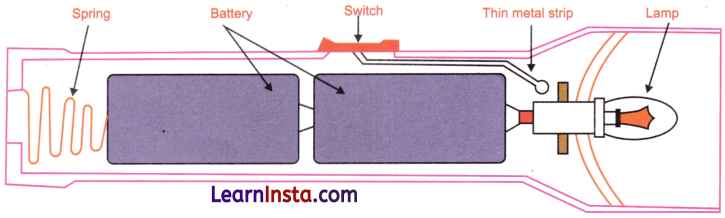
→ An electric torch is a lighting device that has electric cells and a lamp. Torch is useful at night while moving out in the dark.
→ When switch is pressed on, the metal strip touches the lamp terminal, circuit is completed and the lamp glows.
→ The front part of the torch case ‘ has a semi spherical reflector surrounding the lamp. The light of the glowing lamp is focussed to the front side by this reflector.

→ A simple electric circuit has an electric cell or a battery, an incandescent lamp or a LED lamp, electric wires and an electric switch.
→ An electric cell is a portable source of electric energy.
→ An electric cell produces electricity from the chemicals stored inside the cell. The torch lamp glows with the electricity provided by the electric cell placed inside the torch.
→ Electric cells are used inside the wall clocks, battery operated toys, alarm clocks, TV remotes, musical toys, transistor radios etc.
→ An electric cell has a metal cap on one side and a metal disc on the other side. There is a “+” sign on the metal cap at the top and a “ – ” sign on the bottom metal disc. The metal cap having a “+” sign is the positive terminal and the metal disc with sign is the negative terminal.
→ The cell provides electricity for the torch lamp to glow or for the toy to play or for the wall clock to keep working.
→ Small lamps or other components in a circuit need only one cell. Components like TV remote, a battery-operated toy, a torch etc. need two or more cells. These components thus use batteries instead of a cell.
→ Batteries are used in place of a single cell for more energy or for energy for a longer time.
→ A battery is a combination of two or more cells connected to each other. Positive terminal of one cell is connected to the negative terminal of the second cell. Positive terminal of the second cell is connected to the negative terminal of the third cell and so on. This combination of cells makes a battery.

→ The term battery is also used for a single cell like the battery of our mobile phone or other similar devices.
→ A torch lamp has an outer case made of glass and fixed on a metal base. Within the outer case a curved thin wire is visible. This is supported by and is hanging on two thick wires. This curved thin wire is the filament of the lamp. When the torch is switched on, this filament glows in the lamp.
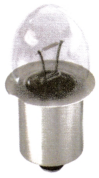
→ The thick wires are standing inside the case on the metal base. One of the two standing thick wires is connected to a metal tip at the centre of the base. The other thick wire is connected to the metal case. These make the two terminals of the lamp.
→ Light Emitting Diode (LED) lamps are now used in place of incandescent lamps.
→ LEDs are available in different colours; red, blue green even white.
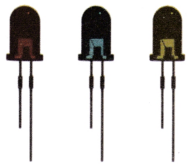
→ An LED has two leads (wires) attached to it. One lead is slightly longer than the other. The longer lead is attached to the positive terminal of the battery and the shorter lead is attached to the negative terminal.
→ To make an electric lamp glow we need to connect the lamp to the cell or the battery with electric wires.
→ An electric circuit is the path provided to electricity to flow through an electric wire or a device.
→ The electricity that flows through a device, like a lamp, is called the electric current.
→ The path for the electricity to flow through the lamp is complete only when one terminal of the cell is connected to one terminal of the lamp and second terminal of the lamp is connected to the second terminal of the cell.
→ An incandescent lamp glows when the positive terminal of the cell is connected with a wire to any one terminal of the lamp (metal tip or metal case) and the negative terminal of the cell is connected to the second terminal of the lamp.
→ An LED lamp glows only when the positive terminal of the cell is connected to the longer wire (the positive terminal of the LED lamp) and the negative terminal of the cell is connected to the shorter wire (the negative terminal of the LED lamp).
→ The arrangement in which path is provided to an electric current by connecting the cell with the lamp through conducting wires is called an electric circuit. The lamp glows when the circuit is complete.
→ The electric current flows through an electric circuit in case the circuit is properly completed with the conducting wires. Circuit has to be complete with a path from the positive terminal of the cell to its negative terminal.
→ The circuits will not be complete and the lamp will not glow in the following cases;
- Both the terminals of the lamp are connected to positive terminal of the cell.
- Both the terminals of the lamp are connected to negative terminal of the cell.
- One terminal of the cell is connected to one terminal of the lamp but the wire from the second terminal of the lamp is not connected to second terminal of the cell.
- Lamp is fused. When the filament of the lamp is broken the circuit breaks and the electric current cannot pass. The lamp is said to be fused.
→ An electric switch is a simple device that helps us. to make the circuit when required and bre&k the circuit when not required.
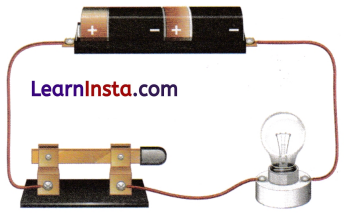
→ We can make a simple switch using two drawing pins, a safety pin, a wooden plank and connecting wires.
→ When the circuit is complete with the switch in ON position, the lamp glows.
→ When the safety pin touches both the drawing pins from its different ends, the circuit is made and when it is turned away from one drawing pin, the circuit breaks.
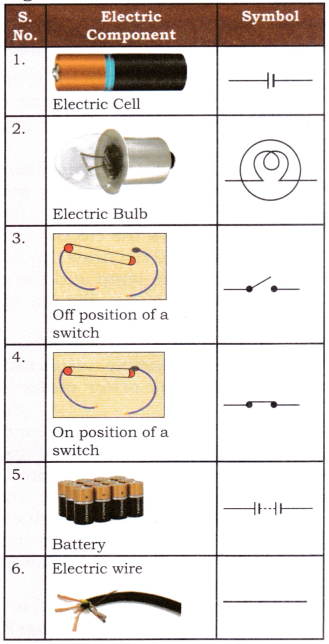
→ To show the electric circuit on a diagram we do not draw the diagrams of the battery, the lamp and the electric wires and switches etc. We use symbols for these items.
→ Some common symbols used in a circuit diagram are shown in the Figure below.
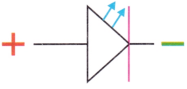
→ The symbol for an LED lamp, triangle points towards the flow of current. The two arrows show the light emitted by the LED lamp.
→ The longer line in the symbol of an electric cell represents the positive terminal and the shorter line represents the negative terminal.
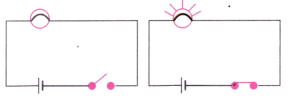
Electric Circuit Diagrams (a) with switch off position and (b) with switch on position
→ Materials through which electric current passes easily are called good conductors of electricity or conductors of electricity.
→ Materials through which electric current cannot pass are known as insulators or bad conductors of electricity.
→ Circuit diagram: A drawing of an electric circuit showing components with symbols.
→ Conductors: Objects or materials that allow electricity to pass through them.
→ Electric battery: A combination of two or more electric cells.
→ Electric current: Flow of electricity though a conductdr.
→ Electric circuit: Pathway for the electric current by connecting conductors with cell and electric devices.
→ Electric cell: A shell of a metal having chemicals stored inside that produce electricity.
→ Electric lamp: An electric device that glows to give out light on passing electricity through it.
→ Electric switch: A small device that makes or breaks an electric circuit when required.
→ Filament: A thin wire inside a lamp that glows when electric current is passed.
→ Insulators: Objects or materials that do not allow electricity to pass through them.
→ Terminal: An end point of a cell or a lamp that connects to the electric circuit.
→ Torch: A lighting device that glows its lamp with electricity from the cells.