Experts have designed these Class 5 EVS Notes and Chapter 8 Clothes How Things are Made Class 5 Notes for effective learning.
Class 5 EVS Chapter 8 Notes Clothes How Things are Made
Class 5 Clothes How Things are Made Notes – Clothes How Things are Made Class 5 Notes
→ Weaving: Making fabric by crossing threads over and under each other
→ Handloom: A manual machine used to weave fabric by hand
→ Thread: A thin strand made by twisting fibres
→ Fibre: Hair-like material used to make thread or cloth
→ Silk: Natural fibre from the cocoon of a silk moth

→ Synthetic: FibreMan-made fibre from artificial materials
→ Tailorbird: A bird that stitches leaves together to make its nest
→ Embroidery: Decorative stitching on fabric
→ Recycle: Reusing old materials to make something new
→ Nature is full of hidden artists, animals, birds and insects who are experts in weaving, stitching, designing and gluing things together. Birds like the baya weaver and tailorbirds and insects like spiders create nests with grass, leaves and silk.
→ The male baya weaver is a bird that builds beautiful hanging nests using grass. These nests look like pouches and hang from tree branches. The bird weaves the grass over and under to make the nest strong. Expert weaverbirds make neat and fine nests, while young birds make rough ones as they are still learning.
→ Weaving means joining strips or threads to make a patterned fabric. One set of threads is placed vertically and the other set goes horizontally. They are crossed over and under to form things like mats, baskets or cloth. For a long time, people have woven natural materials like coconut fibre, palm reeds, bamboo, grass, jute, cotton and silk into mats, baskets or sheets.
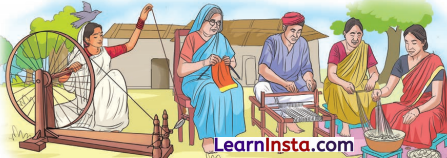
→ People in India have known how to weave for over 4,000 years.Traditional weaving is done by hand using a tool called a loom. The cloth made this way is called handloom fabric. India has some of the best handloom weavers, who are very skilled at their work.Many families in India depend on weaving activities for work and livelihood. Weaving also keeps our traditions and culture alive.
→ Textile mills use modern machines to weave cloth in large amounts. The process of twisting cotton fibres to make thread or yarn is called spinning. A tool like the charkha (spinning wheel) helps spin thread from cotton. When you untwist a cotton strand, you get a thin, hair-like thread called a fibre.
→ Silk is a natural fibre from a small insect called a silk moth. The moth makes a cocoon and the silk thread is pulled out from it. Synthetic fibres are man-made, for example nylon and polyster. They are not found in
nature.
→ Humans are not the only ones who use threads. A tailorbird makes its home by sewing. It uses its beak to poke holes in a big leaf and then pulls natural threads, like plant fibres or spider silk, through the holes. It is just like a tailor sewing clothes. This creates a safe, green nest for its eggs and baby birds. In different parts of India, people use many kinds of stitches-not just to join cloth, but also to decorate it beautifully. Each stitch shares a story about the place, the people and their traditions.
→ In our country, people usually don’t throw away old clothes. If clothes don’t fit us anymore, we give them to younger brothers, sisters or anyone who can use them. Sometimes, elders make something new from old clothes-like a bag or a cleaning cloth. There is also an old tradition of making quilts by joining small pieces of cloth together. These colourful quilts look very beautiful and help reuse old fabric.