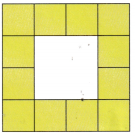
Each of our Maths Mela Class 5 Worksheet and Class 5 Maths Chapter 1 We the Travellers 1 Worksheet with Answers Pdf focuses on conceptual clarity.
Class 5 Maths Chapter 1 We the Travellers 1 Worksheet with Answers Pdf
We the Travellers 1 Class 5 Maths Worksheet
Class 5 Maths Chapter 1 Worksheet with Answers – Class 5 We the Travellers 1 Worksheet
Nisha is studying old transportation with her grandfather. Nlsha: Grandpa, most vehicles were invented in the 19th century. However, humans have always been interested in travelling. So, how did they travel long ago?
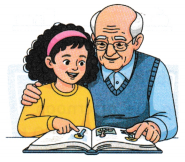
Grandpa: Thousands of years ago, people travelled long distances on foot or used animals to travel from one place to another. Later, they built boats and ships to travel across lakes, rivers, and seas. Thereafter, they started using animal-drawn carts.
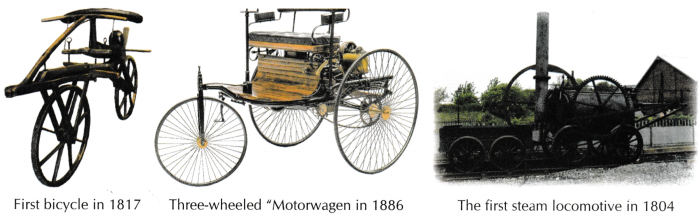
Question 1.
Study the above information and answer the following questions:
(a) How many years ago was the first steam locomotive invented than the first bicycle?
____________________________________________________________________
(b) Write all the numbers between 1804 and 1817.
____________________________________________________________________
(c) When was the three-wheeled Motorwagen invented? Write the year in words.
____________________________________________________________________
(d) Doctors recommend walking about ‘ten thousand’ steps daily. Write this number in a figure.
____________________________________________________________________
(e) How many steps do you walk to go to your school or your best friend’s home? Write the answer in words and figures.
____________________________________________________________________

Reading and Writing Large Numbers
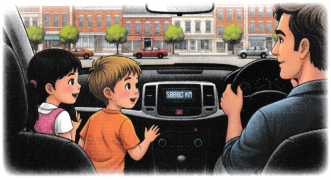
Priya and Arjun are planning to go for a long drive in their car with Uncle Rajeev. A meticulous driver, Rajeev always ensured his car was in top form for any journey.
Priya peeked at the odometer of the car and read the reading as 56789 km.
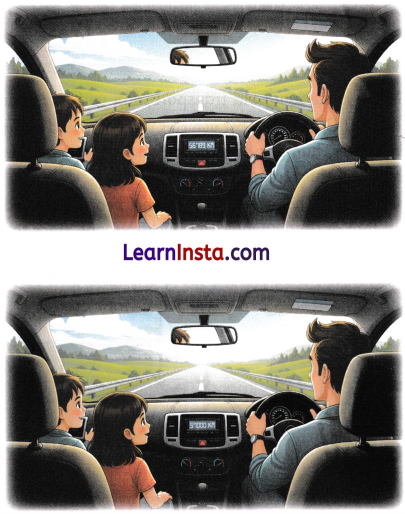
In tke ajternoon Priya jinds tke reading as 57000 km.
Arjun smiled, “Tkat’s a big jump! But kow j:ar did we actually travel?”
Question 2.
Look at tke readings and write tkese numbers in words.
First reading: ____________________________________________________________________
Second reading: ____________________________________________________________________
Question 3.
Look at tke ten.-tkousan.ds place in botk numbers. Write tke digit and its palce value Jor eack reading.
(a) First reading: Digit = ______________, Place value = ______________
(b) Second reading: Digit = ______________, Place value = ______________
Question 4.
Break down eack number into its expanded Jorm.
(a) 56,789 = ____________________________________________________________________
(b) 57,000 = ____________________________________________________________________
Question 5.
Find the distance of the journey.
____________________________________________________________________
____________________________________________________________________
Question 6.
If they want to travel up to 90,988 km, how many imo’re kilometres would they need to go from the second reading?
____________________________________________________________________
____________________________________________________________________
Question 7.
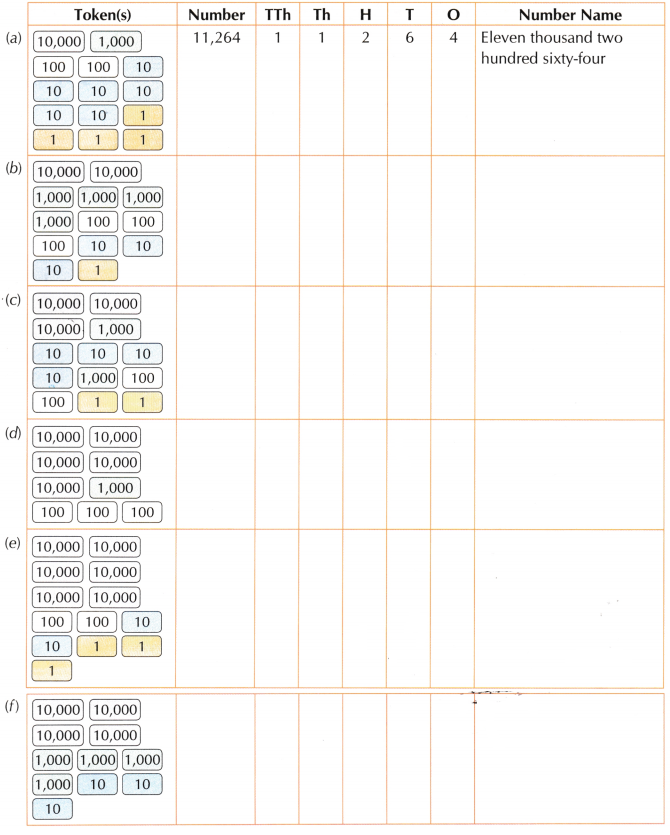
Priya and Rohan have some tokens of 1s, 10s, 100s, 1000s and 10000s. They are forming different numbers and challenging each other to read the number correctly. Help them and complete the table below.
Question 8.
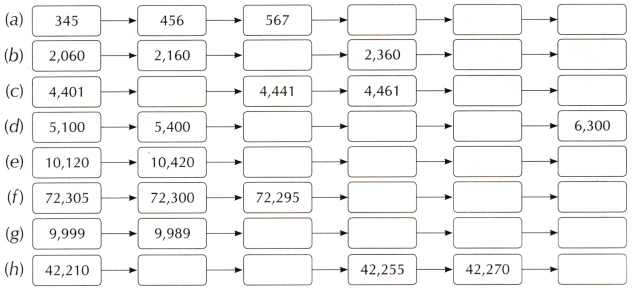
Fill in the blanks by continuing the pattern. in each of the following sequences.
Question 9.
In the bustling Lower Bazaar, Rajeev handed the children a shopping list and asked to compare prices at two different shops. Can you help them decide where to buy?
Shop A: 12,450 rupees/or winter jackets
Shop B: 12,390 rupees /or the same jackets

(a) Which shop is offering a lower price, and by how much?
____________________________________________________________________
(b) If Shop C had marked a price of 12,500 rupees for the same jackets, arrange all three prices in ascending order.
____________________________________________________________________
Question 10.
Using the number line given below, arrange the following numbers in descending order.

Question 11.
In the number 42,756, swap any two digits to make tKe’largest possible number. Now, swap two digits oj that number to make the smallest possible number.
____________________________________________________________________
____________________________________________________________________
Question 12.
Interchange two digits oj 20,481 to make a number:
(a) Between 10,000 and 11000
(b) More than 50,000
(c) Between 21,000 and 25,000
____________________________________________________________________
____________________________________________________________________
____________________________________________________________________
Question 13.
Interchange two digits oj 38,297 to make a number:
(a) as small as possible
____________________________________________________________________
(b) as big as possible
____________________________________________________________________
Nearest Tens (10s), Hundreds (100s), and Thousands (1,000s)
On their way, the car odometer read 57,863 km. An hour later it read 57,947 km, and by the end oj the journey it showed 58,780 km.
Question 14.
Fill in the table Jor each reading nearest ten, hundred, and thousand.
| Nearest ten | Nearest hundred | Nearest Thousand | |
| (a) Reading 1: | |||
| (b) Reading 2: | |||
| (c) Reading 3: |
Also, jind how many kilometers did the car travel jrom the jarst to third readings? Round off the distance to the nearest ten, hundred and thousand.
____________________________________________________________________
____________________________________________________________________
____________________________________________________________________
____________________________________________________________________
Question 15.
On their way to Kujri, the driver pointed at a signboard showing distances to nearby towns: …
Kufri: 17,846 m, Chail: 30,499 m, Narkanda: 64,780 m.
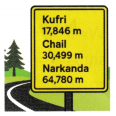
Round off these distances to the nearest kilometre to see which one is closest.
(a) Kufri: _______________________________________
(b) Chail: _______________________________________
(c) Narkanda: _______________________________________
Question 16.
In an orchard, a farmer collected 18,946 apples and 21,354 oranges,
(a) Write both the numbers in words.
____________________________________________________________________
____________________________________________________________________
____________________________________________________________________
(b) Write the number of apples in expanded form.
____________________________________________________________________
(c) Interchange two digits in the number of oranges to make it smaller than number of apples.
____________________________________________________________________
(d) Estimate the total number of fruits collected to the nearest thousands.
____________________________________________________________________
Think and Answer
Raman pointed to a scoreboard with several large numbers. ‘Some numbers have the same nearest ten, some have the same nearest hundred, and some even have the same nearest thousand.
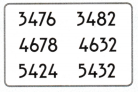
Look at the numbers on the scoreboard and:
(a) Identify two numbers that can be rounded to the same nearest ten.
____________________________________________________________________
(b) Find another pair with the same nearest hundred.
____________________________________________________________________
(c) Find two numbers with the same nearest thousand.
____________________________________________________________________
(d) Find a pair of numbers with the same nearest ten, hundred, and thousand.
____________________________________________________________________
Travelling, Now and Then
We learnt that people in the past travelled on jbot, on animals,- and used boats and sailing ships. Now, people use bicycles, motorbikes, cars, buses, trains, ships, and aeroplanes to travel from one place to another. Humans are also using submarines to go deep underwater and spacecraft to travel to outer space.
Question 17.
Guess how long a person can travel in an hour and match the following:
| (a) on foot | (i) 25-45 km |
| (b) on horseback | (ii) 750-920 km |
| (c) by cycle | (iii) minimum 28,000 km |
| (d) by motorbike | (iv) 40-160 km |
| (e) by train | (v) 40-60 km |
| (f) by ship | (vi) 3-5 km |
| (g) by aircraft | (vii) 10-15 km |
| (h) by spacecraft | (viii) 12-20 km |
Question 18.
A school has 641 girls and 619 boys. How many vehicles are needed for all of them to go on a trip using the following modes of travel? The numbers in the brackets indicate the number oj people who can travel in one vehicle.
(a) Autorickshaw (3)
(b) E-rickshaw (5)
(c) Big car (7)
(d) Tempo traveller (12)
(e) Bus (35)
(f) Aeroplane (180)
Question 19.
A car can cover 60 km in one hour.
(a) How far will it cover in 9 hours if it keeps the same speed?
____________________________________________________________________
(b) How long will it take to travel from City A to City B, whlchis 720 km apart?
____________________________________________________________________
Finding Large Numbers Around Us
There are many real-life situations where we can get the numbers in the range of 4-5 digits. For example, there are 40 students in a class and each student pays ₹ 500 school fee. Then, total fees collected from that class is ₹ 20,000.
Question 20.
How many students are there in your class? What is your monthly school fee? Find the school fees collected monthly from your class.
____________________________________________________________________
____________________________________________________________________
Question 21.
Think about the number of berths in a sleeper and AC coaches of a train. How many berths will there be in a train with 15 coaches?
____________________________________________________________________
____________________________________________________________________
Question 22.
Guess how many words are there in a storybook, if that book has 160 pages and each page has about 50 words?
____________________________________________________________________
____________________________________________________________________
Question 23.
There are three blocks (A, B, and C) in a colony. The Population of these blocks are given below.
Block A: 5,230;
Block B: 4,998;
Block C: 5,105
(a) Arrange the populations in descending order.
_______________________________________
(b) Estimate the total population of the colony to the nearest thousand.
_______________________________________
(c) Write the population of your home-town in both figures and words.
_______________________________________
Think and Answer
List some quantities whose count is a 4-digit or a 5-digit number in the context of trees, animals, place, etc.
____________________________________________________________________
____________________________________________________________________
Question 24.
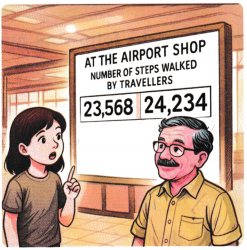
At the airport shop a dLsplay board thowed the number of steps walked by travellers on fitness trackers: 23,568 and 24,234. ‘Can you List 5 numbers between these two?’
____________________________________________________________________
____________________________________________________________________
Pastime Mathematics
Activity
Take any two different digits, and make two 2-digit numbers from them. Subtract the smaller number from the larger number. Again, make two more numbers using the digits obtained in difference, and repeat until you get a single-digit number.
Try this with your own pair of digits and see if you always end with the same single-digit number.
Digits chosen: __________________________________
Step 1: _______________________________________
Step 2: _______________________________________
Step 3: _______________________________________
Final single-digit number : _________________________
Why do you think this happens with any two digits?
____________________________________________________________________
____________________________________________________________________
Question 25.
Find numbers between 63,750 and 74,500 such that the ones, tens, and hundreds digits are all 0.
____________________________________________________________________
____________________________________________________________________
Question 26.
Write the following numbers in the expanded form.
(a) 2,783 = __________________________________
(b) 7,065 = __________________________________
(c) 8,930 = __________________________________
(d) 40,301 = __________________________________
(e) 93,334 = __________________________________
(f) 50,607 = __________________________________
Question 27.
Fill in the blanks with the correct answer. One is done for you.
(a) 893 = 80 Tens + 93 Ones
(b) 96 = ________ Tens + 16 Ones
(c) 507 = 4 Hundreds + ________ Ones
(of) 6,641 = 5 Thousand + ________ Hundreds + 4 Tens + ________ Ones
(e) 2,096 = Thousand + 10 Hundreds + ________ Ones
(0 71,604 = ________ Ten Thousand + 11 Thousand + ________ Hundreds + 4 Ones
(g) 83,001 = 7 Ten Thousand + ________ Thousand + ________ Hundreds + 1 One
Question 28.
Answer the following questions:
(a) How many notes of ₹ 10 are there in ₹ 4,937? _________________________
(b) How many notes of ₹ 100 are there in ₹ 4,937? _________________________
(c) How many ₹ 200 notes are there in ₹ 4,937? _________________________
{d) How many ₹ 500 notes are there in ₹ 4,937? _________________________
(e) How many notes of ₹ 10 are there in ₹ 56,800? _________________________
(f) How many notes of ₹ 100 are there in ₹ 56,800? _________________________
(g) How many ₹ 200 notes are there in ₹ 56,800? _________________________
(h) How many ₹ 500 notes are there in ₹ 56,800? _________________________
King’s Horses
Question 29.
At a festival, suman saw a puzzle display with wooden horses arranged along the sides of a square. The sign claimed there were 5 horses on each side but only 18 horses in total. ‘How is that possible?’ Confused Suman.
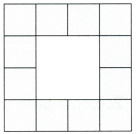
Help Suman to show the arrangement.
Question 30.
If the square stable had 6 horses on each side but still fewer than 24 horses in total, how could they be arranged? Draw your own arrangement.