Students can use Poorvi Book Class 8 Solutions Unit 3 Mystery and Magic Chapter 7 The Case of the Fifth Word Questions and Answers as a quick reference guide.
The Case of the Fifth Word Class 8 Questions and Answers
The Case of the Fifth Word Class 8 Question Answer
NCERT Class 8 English Poorvi Chapter 7 The Case of the Fifth Word Question Answer
The Case of the Fifth Word Question Answer – Let us do these activities before we read. (Page 101)
I. Work in pairs. Solve the crossword puzzle given below with the clues in the form of anagrams.
| Note: An anagram is a word or phrase that is made by rearranging the letters in a diffrent order to make a new word or phrase. For example, ‘Neat’ is an anagram of ‘a net’. |
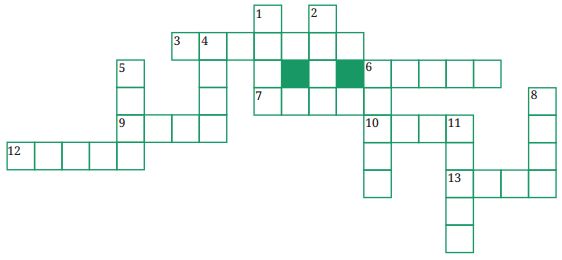
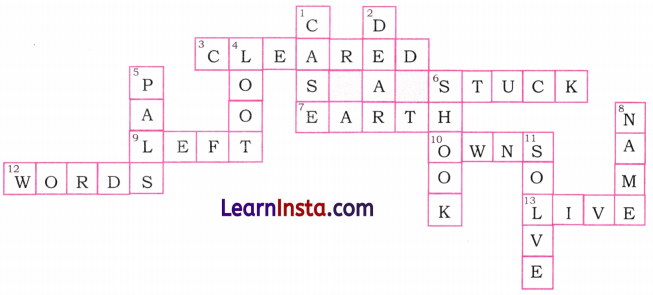
Across: 3. Declare 6. Tucks 7 Heart 9 Felt 10. Sown 12 Sword 13. Evil
Down: 1. Aces 2. Read 4. Tool 5. Alps 6. Hooks 8. Mane 11. Loves
Answer:
|
GOLDEN VOCABULARY TIPS An anagram is a word or phrase formed by rearranging the letters of another word or phrase to create a new meaning. The key rule is that all original letters must be used exactly once. Examples:
|
II. Work in pairs. Match the different meanings of ‘case’ in Column 2 with the correct usage in the sentences in Column 1. Share your answers with your classmates and teacher.
| Column 1 | Column 2 |
| 1. Lalit said that he could not sing but that was not the case as he sang melodiously later. | (i) writing format |
| 2. The lawyer was waiting for the case to be taken ud in court. | (ii) container |
| 3. Mv pencil case is a gift from my grandmother. | (iii) situation |
| 4. The subject of a formal letter is written in title case. | (iv) matter |
Answer:
| Column 1 | Column 2 |
| 1. Lalit said that he could not sing but that was not the case as he sang melodiously later. | (iii) situation |
| 2. The lawyer was waiting for the case to be taken ud in court. | (iv) matter |
| 3. Mv pencil case is a gift from my grandmother. | (ii) container |
| 4. The subject of a formal letter is written in title case. | (i) writing format |

The Case of the Fifth Word Class 8 Question Answer – Let us Discuss (Page 104)
I. Complete the following statements with suitable reasons. Share your answers with your classmates and teacher.
| cleverness knowledgeable keen listener gentle humble |
1. Leroy’s nickname was Encyclopedia and everyone called him by that name because ______________.
2. At the dinner table on Tuesday night, Chief Brown stared at his cream-of-mushroom soup as ______________.
3. Encyclopedia sat quietly at the dinner table because ______________.
4. Nolan put the will on the kitchen table because ______________.
Answer:
1. Leroy’s nickname was Encyclopedia and everyone called him by that name because he had a vast store of knowledge and facts in his head, just like an encyclopedia, and he never forgot anything he read.
2. At the dinner table on Tuesday night, Chief Brown stared at his cream-of- mushroom soup as a sign that he was thinking deeply about a mystery he could not solve.
3. Encyclopedia sat quietly at the dinner table because he knew his parents were discussing the case so that he could listen carefully and help solve it.
4. Nolan put the will on the kitchen table because he had a stroke and, knowing he was about to die, he used his last strength to leave the will where it could be easily found.
II. Do you think Chief Brown would need Leroy’s help to solve this case? If yes, why? If no, why not?
Answer:
Yes, Chief Brown needed Leroy’s help to solve this case. Even though Chief Brown is smart and experienced, the mysteiy was too difficult for him to solve by himself. The case had hidden clues, like strange words written on the will, which needed careful thinking to understand. Leroy, known as Encyclopedia because of his great memory and knowledge, notices small details that others miss. His quick thinking helped solve the case. This shows that sometimes even the smartest adults need help from others.
Class 8 English The Case of the Fifth Word Question Answer – Let us Discuss (Pages 107-108)
I. A fact is something that can be proven true or false. A fact is not based on people’s beliefs. An opinion on the other hand is a belief, feeling, or judgement, and can vary from one person to another. An opinion cannot be proven.
Identify which of the following statements from part I and II of the story are facts or opinions. One example has been done for you. Share your answers with your classmates and teacher.
1. Encyclopedia’s father was the Chief of Police. Fact
2. Everyone thought that Chief Brown must be the smartest police chief in the countiy.
3. An encyclopedia is a book or set of books filled with facts from A to Z.
4. Leroy’s friends said that he was like a library and computer rolled into one, and more user-friendly.
5. Two masked men held up the Diamond Mart on Sixth Avenue.
6. Nolan and Davenport had met while both were in prison in South Carolina.
7. Chief Brown’s hunch was that Davenport and Nolan decided to hide the loot until things cooled down.
8. Nolan wrote a four words code to tell Davenport where he had hidden the . stolen jewellery.
Answer:
2 Opinion
3. Fact
4. Opinion
5. Fact
6. Fact
7. Opinion
8. Fact
II. Complete the table by choosing the character traits of Leroy given in the box below. There is an extra word that you do not need. One example has been done for you.
| Textual Evidences | Traits |
| 1. He read more books than anyone in Idaville, and he never forgot a fact. | knowledgeable |
| 2. Encyclopedia never spoke of the help he gave his father. He didn’t want to seem different from other boys. | |
| 3. Encyclopedia sat quietly. He knew his mother and father were discussing the case for his benefit. | |
| 4. Usually, he needed to ask only one question to solve a case before dessert. |
Answer:
| Textual Evidences | Traits |
| 1. He read more books than anyone in Idaville, and he never forgot a fact. | knowledgeable |
| 2. Encyclopedia never spoke of the help he gave his father. He didn’t want to seem different from other boys. | humble |
| 3. Encyclopedia sat quietly. He knew his mother and father were discussing the case for his benefit. | keen listener |
| 4. Usually, he needed to ask only one question to solve a case before dessert. | Cleverness |
The Case of the Fifth Word Class 8 Questions and Answers – Let us Think and Reflect (Pages 108-110)
I. Read the given extracts and answer the questions that follow.
1. Chief Brown would have liked to tell everyone about his only child. But who would believe him? Who would believe that the best detective alive was an eighth grader? So, he said nothing.
Encyclopedia never spoke of the help he gave his father. He didn’t want to seem different from other boys. But there was nothing he could do about his nickname. He was stuck with it.
Only his parents and teachers called him by his real name, Leroy. Everyone else called him Encyclopedia.
(i) Complete the following sentence with a suitable reason.
Chief Brown’s dilemma can be called unique because ______________.
Answer:
he had the best detective in the world as a son, but no one would believe that an eighth grader could solve cases.
(ii) What can be inferred about why Encyclopedia never spoke of the help he gave his father?
A. He is shy and lacks confidence in his abilities to share his insights.
B. He wants to avoid the jealousy others might feel about his skills.
C. He desires to blend with the other boys to prevent seeming different.
D. He is embarrassed about being smarter than most adults around him.
Answer:
C. He desires to blend with the other boys to prevent seeming different.
(iii) The parents choose not to call their son ‘Encyclopedia’ . Select the reason that is false.
A. For them he is more than his unique abilities; he is their child, with a personal identity.
B. Calling him by his real name reflects their affection and the desire to acknowledge him as an ordinary boy.
C. They want him to be remembered as different from the others around.
Answer:
A. For them he is more than his unique abilities; he is their child, with a personal identity.
(iv) What does the writer mean by the fact that Leroy was ‘stuck with’ the name Encyclopedia?
Answer:
The writer means that Leroy could not avoid or change the nickname “Encyclopedia” given to him by others, despite not wanting to be seen as different. He was “stuck with” it because it had become widely known and associated with him.
2. Chief Brown studied the four words: Nom Utes Sweden Hurts. He shook his head and passed the notebook to Mrs. Brown again. “Can you figure it out?”
“Nom is a shortening of nominative, a gram¬matical term,” stated Mrs. Brown, who had taught English and other subjects in high school. “Utes is an American Indian tribe. Sweden is a country in northern Europe. Hurts is hurts. ”
She lifted her gaze to Encyclopedia and shook her head.
“I can’t figure it out,” she confessed. “Davenport disappeared right after the hold-up, ’’Encyclopedia reminded her.
(i) What does Chief Brown’s reaction of shaking his head suggest about his understanding of the four words?
A. He is confident that the words are a clue.
B. He is confused, unable to make sense of the words.
C. He believes the words are random and meaningless.
D. He thinks the words are unrelated to the case.
Answer:
B. He is confused, unable to make sense of the words.
(ii) Identify whether the given statement is true or false.
Mrs. Brown explained the actual meanings of the individual words rather than decoding the hidden message behind them.
Answer:
True
(iii) What does Mrs. Brown’s inability to decode the words suggest about the message?
Answer:
Mrs. Brown’s inability to decode the words suggests that the message was more complex and required a different way of thinking. The words were part of a code, not just their literal meanings, and she couldn’t understand the hidden meaning without recognising the connection between them.
(iv) Complete the following sentence suitably.
The purpose of Encyclopedia’s reminder in the last line of the extract was to _____. (refocus the discussion on the context of the crime/suggest that the coded message was meant for Davenport/imply that the message was likely a clue about the location of the stolen jewellery)
Answer:
imply that the message was likely a clue about the location of the stolen jewellery.
II. Answer the following questions.
Question 1.
Nolan and Davenport were very close. Support this statement with evidence from the text.
Answer:
Nolan and Davenport were very close, as they became friends while in prison due to shared interests. Nolan also left everything he owned, including his palm-tree nursery, to Davenport in his will, showing how close they were.
Question 2.
Why did Davenport disappear right after the jewellery hold-up? What might his plans have been if, Nolan had not died?
Answer:
Davenport disappeared right after the jewellery hold-up to avoid being caught, as he was suspected of being involved. If Nolan had not died, Davenport would likely have stayed hidden until things calmed down. His plan may have been to eventually reunite with Nolan and recover the stolen jewellery they had hidden.
Question 3.
What does Mrs. Brown’s interest in the case tell us about her?
Answer:
Mrs. Brown’s interest in the case shows that she is curious, intelligent, and engaged with the situation. Even though she’s not part of the police work, she listens carefully and tries to help, which suggests she enjoys solving problems.
Question 4.
Explain why Chief Brown was proud of his son.
Answer:
Chief Brown was proud of his son because, despite being so young, Encyclopedia was able to solve complex cases that even the police couldn’t. His son’s intelligence and talent for solving problems filled him with admiration and pride.
Question 5.
Why were Chief Brown’s suspicions regarding Nolan and Davenport justified, even when there was a lack of concrete proof ?
Answer:
Chief Brown’s suspicions were justified because of Nolan and Davenport’s past crimes and their strange behaviour. Even without concrete proof, the missing jewellery and the clerk’s suspicion made it seem likely they were involved in the robbery.
Question 6.
Analyse the role of the four-word coded message in the story.
Answer:
The four-word coded message plays a key role in the story as it helps uncover the location of the stolen jewellery. Nolan created the code for Davenport, using the days of the week as a simple clue. Encyclopedia decodes the message, which leads him to discover where the jewellery is hidden, ultimately solving the mystery.
Question 7.
Write a character sketch on Leroy with the help of the character traits table given in ‘Let us discuss’ section.
You may begin it like this: Encyclopedia was a knowledgeable eighth grader who never forgot a fact that he read.
Answer:
Leroy was a knowledgeable eighth grader with a great memory. Despite his intelligence, he was humble and never showed off. Leroy was always willing to listen to others. His cleverness was evident in the way he solved complicated problems and helped his father solve cases that even the police couldn’t. Leroy’s humility, listening skills, and intelligence made him well-liked and respected, even though he never wanted to appear different from others.
The Case of the Fifth Word Question Answer Class 8 – Let us Learn (Pages 111-117)
I. Match the phrasal verbs from the text given in Column 1 with their meanings in Column 2. You may refer to a dictionary.
| Column 1 | Column 2 |
| 1. put on | (i) appeared been discovered |
| 2. cooled down | (ii) solve a problem |
| 3. turned up | (iii) became normal or calmed |
| 4. make of | (iv) wear (clothes, hat, etc.) |
| 5. figure out | (v) escaped without being punished |
| 6. got away with | (vi) have an idea or understanding of something |
Answer:
| Column 1 | Column 2 |
| 1. put on | (iv) wear (clothes, hat, etc.) |
| 2. cooled down | (iii) became normal or calmed |
| 3. turned up | (i) appeared, been discovered |
| 4. make of | (vi) have an idea or understanding of something |
| 5. figure out | (ii) solve a problem |
| 6. got away with | (v) escaped without being punished |
Now, fill in the blanks with the phrasal verbs given in Column 1.
A. Finally, some important evidence about the case has ______________.
B. After I ______________, I understood that I had made a big mistake.
C. I couldn’t ______________ why he was angry with me.
D. He ______________ his special coat and went to his friend’s birthday party.
E. Ravi forgets to do his homework but he ______________ it as teacher didn’t ask for it that day.
F. I do not know what to ______________ his behaviour.
Answer:
A. turned up
B. cooled down
C. figure out
D. put on
E. got away with
F. make of
II. Fill in the blanks in the following sentences by choosing the correct word pairs from the box given below.
|
1. After running for 50 kilometres last _________________, I felt _________________ for two days.
2. When the committee met yesterday, they brought _________________ local cases to the _________________.
3. While learning to drive, Rina used too much force on the _________________, causing the car to _________________ down.
4. He has composed a beautiful _________________ of music in order to bring _________________ to thousands of people.
5. She was busy _________________ her hair not caring about the _________________ flwers in her garden.
Answer:
1. week, weak
2. four, fore
3. brake, break
4. piece, peace
5. dyeing, dying
III. Leroy solved the mystery of the missing fifth word with his critical thinking abilities. Work in pairs to solve the puzzles given in the illustrations below and infer what they say. One example has been done for you.
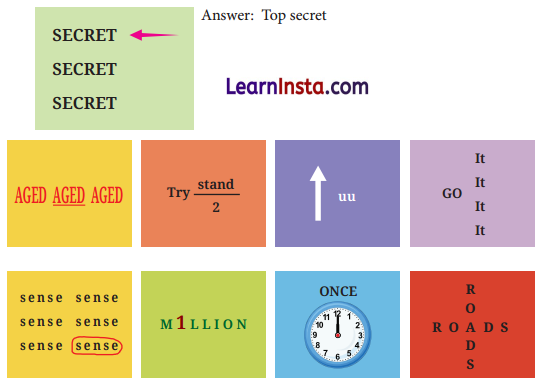
Answer:
1. Middle Aged
2. Try to understand
3. Up to you
4. Go for it
5. Sixth sense
6. 1 million
7. Once upon a time
8. Cross roads
IV. Spoonerism is a mistake made when speaking, where the first sounds of the words in a phrase or a sentence are exchanged with each other. This usually gives a funny meaning.
Some examples of spoonerism are saying ‘wrong load’ instead of ‘long road’, ‘round of mice’ instead of ‘mound of rice’.
|
GOLDEN PHONOLOGY TIPS A Spoonerism is a type of verbal slip or wordplay where the beginning sounds of two words are swapped, often creating something funny or unexpected. Example:
|
Find the correct order for the followingspoonerisms.
1. knowing sits
2. it’s roaring with pain.
3. plaster man
4. blarm wanket
5. tars and crucks
6. shake a tower
7. bead a rook
8. mardon me padam
Answer:
1. Snowing kits
2. It’s pouring with rain
3. Master plan
4. Warm blanket
5. Cars and trucks
6. Take a shower
7. Read a book
8. Pardon me madam
V. Read the following sentences from the text and study the highlighted words.
1. Everyone thought that he must be the smartest police chief in the country.
2. She read what he had copied.
3. They tell where the jewellery is hidden.
4. “Nom is a shortening of nominative, a grammatical term,” stated Mrs. Brown, who had taught English and other subjects in high school.
5. “Nolan and Davenport had met,” Chief Brown said, “while both were in prison in South Carolina.”
6. When he came up against a case he couldn’t solve, he acted at once.
7. The code is simple, especially as it’s written on a sheet from a calendar.
8. They became friendly because of shared interests.
9. Encyclopedia solved the case for him before dinner was over.
Now, fill in the blanks with the words in the box given below to complete the following sentences. There are two extra words that you do not need.

Detective stories are exciting, keeping readers guessing (i) ____________ the real culprit is. They take place in settings (ii) ____________ clues are hidden carefully. (iii) ____________ the mystery seems tricky, a clever detective always finds answers. Readers often wonder (iv) ____________ criminals leave small but important clues. The challenge is to decide (v) ____________ suspect is guilty. (vi) ____________ the truth is revealed, everything makes sense. But one may wonder (vii) ____________ they could have solved it themselves. These stories are fun (viii) ____________ they make readers think till the very end.
Answer:
Detective stories are exciting, keeping readers guessing (i) who the real culprit is. They take place in settings (ii) where clues are hidden carefully, (iii) Though the mystery seems tricky, a clever detective always finds answers. Readers often wonder (iv) why criminals leave small but important clues. The challenge is to decide (v) which suspect is guilty, (vi) when the truth is revealed, everything makes sense. But one may wonder (vii) how they could have solved it themselves. These stories are fun (viii) because they make readers think till the very end.
VI. Combine the following pairs of sentences using the word given in brackets. One example has been done for you.
1. We gave him the signal. He was waiting for the signal, (that)
2. We went to a place. The incident occurred there, (where)
3. Teacher said she would retire soon. She is now nearly sixty, (who)
4. It was the day. Half the class was absent, (when)
Answer:
1. We gave him the signal that he was waiting for.
2. We went to a place where the incident occurred.
3. The teacher, who is now nearly sixty, said she would retire soon.
4. It was the day when half the class was absent.
VII. Read the following sentences from the text.
1. “What’s suspicious about that?” Mrs. Brown asked.
2. “What do you make of the four words, Leroy?”
3. “Wasn’t he mixed up in a jewelleiy robbeiy a few years ago?”
4. “Didn’t you search Nolan’s house, dear?”
5. “Is there a young fir tree in Mr. Nolan’s . palm-tree nursery?”
Answer:
1. Mrs. Brown asked what was suspicious about that.
2. Mrs. Brown questioned Leroy what he made of the four words.
3. Mrs. Brown inquired if he had been mixed up in a jewellery robbery a few years ago.
4. Mrs. Brown asked Chief Brown if he hadn’t searched Nolan’s house.
5. Mrs. Brown inquired if there was a young fir tree in Mr. Nolan’s palm-tree nursery.
VIII. Rewrite the following sentences in Reported Speech.
1. “Why did you stop talking to me?” asked Rohan.
Rohan questioned ____________.
2. “Did you enjoy the family gathering yesterday?” asked my aunt.
My aunt asked ____________.
3. “When will you visit us again?” asked my grandmother.
My grandmother inquired ____________.
4. Madavi said to Ravi, “Will you come with me to meet our old teacher tomorrow?” asked Madavi.
Madavi asked Ravi ____________.
5. My friend said, ‘What gift are you planning to give your brother?”
My friend inquired ____________.
6. “Shall I carry these notebooks to the staffroom, Ma’am?” asked Veenu.
Veenu asked her teacher ____________.
Answer:
1. Rohan questioned why I had stopped talking to him.
2. My aunt asked if I had enjoyed the family gathering the day before.
3. My grandmother inquired when I would visit them again.
4. Madavi asked Ravi if he would come with her to meet their old teacher the following day.
5. My friend inquired what gift I was planning to give my brother.
6. Veenu asked her teacher if she should carry those notebooks to the staffroom.
IX. Read the conversation between Aditi and Rahul.

ADITI: Did you see anyone leave a package near the lift?
RAHUL: I noticed a man wearing a blue jacket drop it off.
ADITI: What time did you see this happen?
RAHUL: It was around 6:45 p.m.
ADITI: Were you able to see his face?
RAHUL: He wore a hood and so I couldn’t see his face.
Complete the following paragraph by transforming the dialogue in indirect speech.
Aditi asked Rahul 1. ____________.
Rahul replied that he had noticed a man wearing a blue jacket drop it off.
Aditi asked Rahul 2. ____________.
Rahul replied that it had been around 6.45 p.m.
Aditi further inquired 3. ____________.
Rahul said that he had worn a hood, so he couldn’t see his face.
Answer:
1. Aditi asked Rahul if he had seen anyone leave a package near the lift.
2. Aditi asked Rahul what time he had seen this happen.
3. Aditi further inquired if he had been able to see the man’s face.
Class 8 English Chapter 7 Question Answer – Let us Listen (Page 117)
I. You will listen to a podcast about ways of improving observation skills. As you listen, mark the statements 1-4 as true or false. (Transcript for teacher on page 151)
Hello everyone! In today’s episode, we’ll be discussing some simple but effctive ways to improve our observation skills. Being observant isn’t just about seeing, it’s about truly noticing details in the world around us. Whether it’s in daily life or in the workplace, observation skills can help us become more aware, make better decisions, and even improve memory. Let’s get started!
First, slow down and take your time. Rushing through tasks often leads to missed details. When you take time to focus on what’s in front of you, you’re more likely to notice features you might otherwise overlook. When you pause and observe, the details become clearer.
Another effctive method is to engage all your senses.Observation isn’t just about seeing; it’s also about hearing, smelling, touching, and even tasting. The more senses you engage, the more information you absorb. For example, when you’re in a new environment, don’t just look around—pay attention to sounds, smells, and textures too.
A third tip is to ask questions. Curious people tend to be better observers because they actively try to understand what they’re noticing. Asking questions about what you see, like “Why is this here?” or “What purpose does it serve?” forces your brain to think critically about what you’re observing. Next, take notes or make sketches. Writing down what you observe can help reinforce details in your memory.
Even quick sketches of an object or place can strengthen your understanding of its features.
Finally, it’s important to practise mindfulness. Mindfulness helps you stay present in the moment and fully engage with your surroundings. When you’re mindful, you’re not distracted by anything, this leads to improved observation skills. Start incorporating these techniques into your daily routine, and soon you’ll be observing things you never noticed before!
1. Observation skills help improve your common sense.
Answer:
False
2. Rushing through tasks helps you focus better and observe more.
Answer:
False
3. Taking notes or making sketches helps with what you observe.
Answer:
True
4. Incorporating tips on observation skills will soon lead to success.
Answer:
True
II. You will once again listen to the podcast. As you listen, complete the given sentences by filling in the blanks with one to three exact words you hear.
1. It is important to slow down and ____________ to notice several aspects around you more clearly.
Answer:
take your time
2. The more senses like hearing and smelling you use, the more ____________ you absorb.
Answer:
information
3. People who are ____________ tend to be better observers because they seek to understand what they notice.
Answer:
curious
4. When you make a note of things, it helps reinforce the ____________ in your memory.
Answer:
details
5. Practising mindfulness helps a person stay ____________ with their surroundings.
Answer:
present
NCERT Class 8 English Poorvi Chapter 7 Question Answer – Let us Speak (Pages 118-119)
I. Read the following words from the text loudly with the help of pronunciation guide given in brackets.

Now, practise reading the following words.

Answer:
Students to do as directed.
II. Work in groups of five or six. Conduct a group discussion on the topic, ‘The Interesting Aspects of a Mystery Story’.
Guidelines
- The moderator initiates the discussion inviting the speakers to share their view son the subject.
- The speakers take turns to put forth their viewpoint using polite expressions to agree or disagree.
- The speakers may interrupt by raising their hands to add or clarify a point.
- The moderator ensures equal participation of all the members in the group, consolidates views, and calls upon other speakers to respond.
- The moderator sums up the points of discussion, suggests guidelines for future action and thanks the members of the group.
Note: Choose a moderator. Decide upon the duration of the discussion.
Answer:
Students activity. Do it yourself.
Class 8th English Chapter 7 The Case of the Fifth Word Question Answer – Let us write (Pages 119-121)
| Phrases for Turn-taking | Phrases for Expressing Agreement | Phrases for Expressing Disagreement |
|
|
|
I. A report is written for an event that has already occurred. The purpose of a report is to provide fist-hand details of an incident or event. It presents the information in a proper sequence.
|
GOLDEN WRITING TIPS A report is a formal piece of writing that presents information on a specific topic in a clear, structured, and factual way. It may describe an event, give recommendations, or present findings. Basic Structure of a Report
Key Features
For practice on Report Writing see page no 341 in the Writing Section. |
Read the sample report written about the ‘Inter-school Football Tournament’ organised by your Vidyalaya.
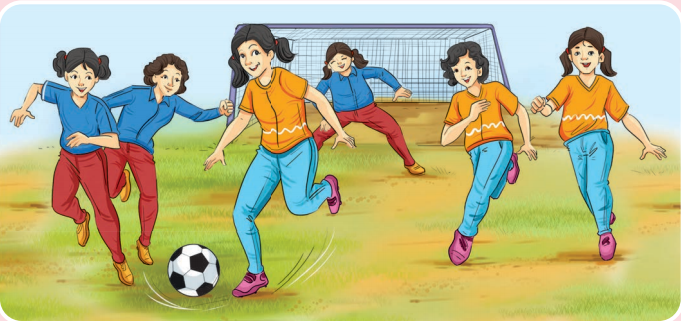
Note the format, content, and language used.
| Inter-school Football Tournament by | Title—Byline (Reporter’s Name and Class) |
| An Inter-school Football Tournament was organised by our Vidyalaya from 21 April 20XX to 24 April 20XX at Motinagar Football Ground. Ten teams participated in the tournament. | Paragraph 1:
Note: use of past tense, for example, organised, participated, etc. |
| The tournament was declared open by the Chief Guest, Dr. Singh, Honorary Sports Secretary of the State, on Wednesday, 21 April 20XX in the presence of all the teams and spectators from the participating schools. The matches were held from 8:30 a.m. to 11:30 a.m. on all the days of the tournament. Following a tough competition, the teams from ABC Senior Secondary School and XYZ Senior Secondary School emerged as the fialists.
For the final match, players from both these teams were cheered by students from their respective schools. After an exciting match, the score was tied at 3–3. Subsequently, a penalty shootout was used as tie breaker by the referee to decide the winner. Finally, the team from ABC Senior Secondary School won the penalty shootout and was declared the winner. |
Paragraphs 2 and 3: Description of the event in detailNote:
|
| The winning team was awarded with a trophy, medals, and certifiates by the Chief Guest. Addressing the students, he said,“All of you must take up a sport to keep yourself healthy.” The inter-school football tournament was a great success, showcasing exceptional talent, teamwork, and sportsmanship among the participating teams. | Paragraph 4:
|
IV. Choose any five words and find out their alternative words from the thesaurus.
|
GOLDEN VOCABULARY TIPS A thesaurus is a book or electronic resource that lists words in groups of synonyms and related concepts. It helps find alternative words with similar meanings, making writing more varied and expressive. The word originates from the Greek thesauros, meaning “storehouse” or “treasure”. |
Now, as a member of the Art and Craft Club, write a report on an ‘Inter-school Art Exhibition’ organised by your school. Include the necessary details.
Answer:
Inter-school Art Exhibition
By: Smriti, Class 8
An Inter-school Art and Craft Exhibition was organised by Art and Craft Club of our Vidyalaya from 10 September 2025 to 12 September 2025 in the school auditorium. Ten schools participated in the exhibition.
The exhibition was declared open by the Chief Guest, Mrs. Gaurie Patel, a renowned artist, on 10 September 2025 in the presence of students, teachers, and visitors from the participating schools. The exhibition was open daily from 9 a.m. to 4 p.m. Following a careful judging process, the artworks from Greenfield School and Sunrise Public School were selected as the best entries.
After the exhibition, the winners were announced and awarded prizes. Subsequently, certificates and trophies were given to the winning students by the Chief Guest. Finally, Mrs. Patel encouraged all students to continue practising art and expressed her appreciation for the creativity and hard work shown by all participants.
The inter-school Art Exhibition was a great success, highlighting talent, creativity, and passion for art among the students.
The Case of the Fifth Word Class 8 NCERT Solutions – Let us Explore (Page 121)
I. Work in pairs. Read the words and observe the image given below. Check if your answers match. Share your answers with your classmates and teacher.
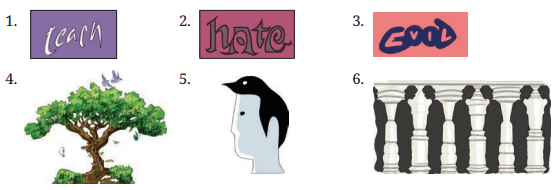
These are optical illusions which may trick the eye and make you think that you can see two different things.
Answer:
Optical illusions show how our eyes and brain can be tricked into seeing two images at once. The words and pictures above are examples that challenge how we perceive things.
The images and words we observe are:
1. A word that looks like both teach and learn at once.
2. A word that can look like hate or note, depending on how we see it.
3. A word that can look like good or evil, depending on how we see it.
4. An image where we can spot a tree, with an ape on one side and a tiger on the other.
5. A figure that can be seen either as a man or a penguin sitting on an ice-berg.
6. An illusion where pillars are drawn so they look like men standing side by side.
II. Read the steps to play a language game—Name the Mystery Object.
1. Divide the class into teams.
2. Each team chooses an object and prepares three hints to enable the other teams to name the object.
3. Each team takes turns to name the object given by the other team.
4. If a team names the object with the first hint, they get 20 points, with the second hint 10 points, and with the third hint 5 points.
One example with three hints:
(i) I display information for all to share, with a swipe I’m clean and bare.
(ii) I am rectangular or a square, whom neither teacher nor student can spare.
(iii) I am mostly black, sometimes green, now in white too I am seen.
Answer:
The answer is a blackboard or a whiteboard, or a greenboard.
III. Visit the library and look for an encyclopedia. What is it? Check how it is different from a dictionary. Share your answers with your classmates and teacher.
Answer:
An encyclopedia is a book that gives detailed information about many subjects like history and science. A dictionary is different because it lists words in order and explains their meanings and pronunciation. The main difference is that an encyclopedia explains topics, while a dictionary explains words. Encyclopedias often have pictures, but dictionaries mostly have short definitions.
Answer:
A thesaurus is a book or online tool that shows words with similar meanings. It helps find different words to say the same thing. For example, happy can be joyful or pleased, big can be large or huge, fast can be quick or swift, smart can be clever or bright, and easy can be simple or effortless. Using a thesaurus makes writing more interesting.