These Class 7 Science Curiosity Worksheet and Class 7 Science Chapter 7 Heat Transfer in Nature Worksheet with Answers are excellent for board exam practice.
Class 7 Science Chapter 7 Heat Transfer in Nature Worksheet
Class 7 Heat Transfer in Nature Worksheet
Worksheet On Heat Transfer in Nature Class 7 – Heat Transfer in Nature Worksheet Class 7
A. Multiple-Choice Questions
Question 1.
Heat transfer through the movement of particles in liquids and gases is called
(a) conduction
(b) convection
(c) radiation
(d) reflection
Question 2.
Which of the following materials is a poor conductor of heat?
(a) Aluminium
(b) Copper
(c) Air
(d) Iron
Question 3.
Which of the following helps replenish groundwater?
(a) Hand pump
(b) Rainwater harvesting
(c) Bore well
(d) None of these

Question 4.
This question consists of an Assertion (A) and a Reason (R). Read the Assertion and Reason and choose the appropriate answer.
Assertion (A): Gravel allows water to seep faster than clay.
Reason (R): The space between particles is greater in gravel than in clay.
(a) Both A and R are true, and R is the correct explanation of A.
(b) Both A and R are true, but R is not the correct explanation of A.
(c) A is true but R is false.
(d) A is false, but R is true.
Question 5.
This question consists of an Assertion (A) and a Reason (R). Read the Assertion and Reason and choose the appropriate answer.
Assertion (A): Smoke rises upward from an incense stick.
Reason (R): Warm air is heavier than cooler air, so it rises.
(a) Both A and R are true, and R is the correct explanation of A.
(b) Both A and R are true, but R is not the correct explanation of A.
(c) A is true but R is false.
(d) A is false, but R is true.
B. State True (T) or False (F).
1. Radiation requires a material as medium to transfer heat.
2. Wool keeps us warm because it traps air, which is a poor conductor.
3. During a land breeze, cool air moves from land to sea.
4. An ice stupa provides water in the winter season.
5. Infiltration helps refill underground water.
C. Fill in the blanks.
1. When water vapour cools down, it turns into _______________
2. The principles of _______________ are utilised in designing houses and clothing.
3. _______________ bricks help in keeping houses warm in winters and cool in summers by trapping air.
4. The porous layer of rock or soil that stores groundwater is called an _______________
5. _______________ coloured clothes are comfortable to wear in summers.
D. Assign one word to the following terms.
1. The process of surface water seeping through soil and rocks. _______________
2. The Indian scientist who wrote the Brihatsamhita. _______________
3. The traditional room heater used in the Himalayan region. _______________
4. Materials that do not allow heat to pass through them easily. _______________
5. The process by which plants release water vapour into the atmosphere. _______________
E. Match the Columns.
Question 1.
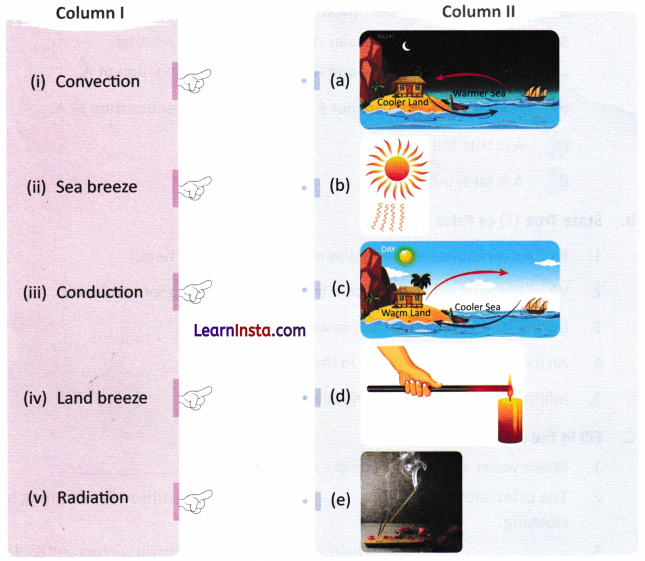
Match the terms given in Column I with their correct images given in Column II.
Question 2.
Match the terms given in Column I with their correct descriptions given in Column II.
| Column I | Column II |
| (i) Ice stupa | (a) Underground layer of rock or soil that stores groundwater |
| (ii) Rainwater harvesting | (b) Traditional heating device used in Himalayan homes |
| (iii) Aquifer | (c) The process of water turning into vapour due to heat |
| (iv) Evaporation | (d) A cone-shaped ice structure built in winter to store water |
| (v) Bukhari | (e) The method of collecting and storing rainwater for later use |
Wonder Why?
A. Read the paragraph and answer the following questions.
In the cold regions, winters are extremely harsh. To stay warm, families use a bukhari, a traditional room heater. It not only warms the room but is also used for cooking. This device shows all three modes of heat transfer — heat moves by conduction through the metal body, by convection as warm air circulates in the room, and by radiation, making the surroundings feel warm even without touching the heater. Villagers build their houses using wood and mud, which are poor conductors of heat, helping to keep the warmth inside during winter. To keep themselves warm, they wear woollen clothes with multiple-layered air pockets. They also create ice stupas by spraying winter stream water into freezing air, forming ice cones. As temperatures rise in spring, these ice stupas melt slowly, providing water steadily for agriculture.
Question 1.
How does a bukhari demonstrate conduction, convection, and radiation as modes of heat transfer?
________________________________________________________
________________________________________________________
Question 2.
Why did villagers in cold areas prefer to build homes with wood and mud?
________________________________________________________
________________________________________________________
Question 3.
What is the role of an ice stupa in water conservation?
________________________________________________________
________________________________________________________
Question 4.
Why do villagers wear layers of woollen clothes instead of one thick one?
________________________________________________________
________________________________________________________
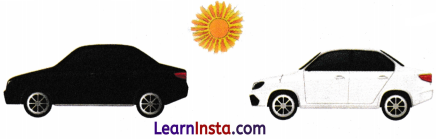
B. It is a hot summer day, and you are going on a holiday with your family. You plan to rent a car. You see two cars, one is black and the other is white. To save fuel on air conditioning, which car would you choose and why?
________________________________________________________
________________________________________________________
________________________________________________________
________________________________________________________
C. Give reasons for the following.
Question 1.
A metal spoon in hot soup becomes hot.
________________________________________________________
________________________________________________________
Question 2.
Smoke rises from burning wood.
________________________________________________________
________________________________________________________
Question 3.
Soil heats up and cools down faster than water.
________________________________________________________
________________________________________________________
Question 4.
The windows of the houses in coastal areas face the sea.
________________________________________________________
________________________________________________________
Question 5.
The ice stupa melts slowly in spring.
________________________________________________________
________________________________________________________
Learn By Doing
A. Put equal amounts of soil and water in two different bowls. Place them in sunlight for 20 minutes. With adult supervision, measure the temperature of each bowl using a thermometer. Now, fill in the table given below and answer the following questions.

Question 1.
Which material heats up faster? Why?
________________________________________________________
________________________________________________________
Question 2.
Which material will cool down faster if you keep both bowls in a cool room?
________________________________________________________
________________________________________________________
Question 3.
What do you learn about how soil and water respond to heat from the sun?
________________________________________________________
________________________________________________________
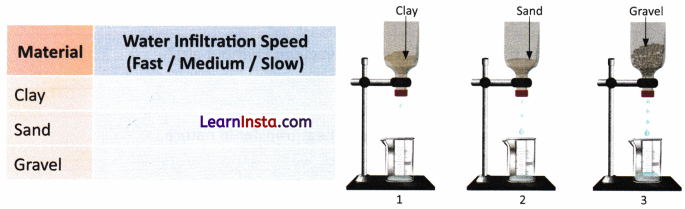
B. Pour equal amounts of water on clay, sand, and gravel. Observe and record how quickly water seeps through each material. Complete the table below to note the speed of water infiltration and answer the following questions.
Question 1.
Which material allowed water to seep through the fastest?
________________________________________________________
Question 2.
Which material is most effective in helping rainwater recharge groundwater? Why?
________________________________________________________
Question 3.
Why do cities with concrete roads and buildings have poor water infiltration?
________________________________________________________
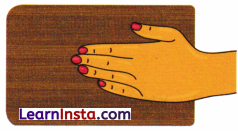
C. Place your hand flat on a table. Wait for a few seconds and notice how it feels. Based on what you feel, can you tell which way the heat is flowing — from your hand to the table, or from the table to your hand? Write the conclusion with a reason in the space given below.
________________________________________________________
________________________________________________________
________________________________________________________
________________________________________________________
Explore With Cariosity
A. Read the paragraph and answer the following questions.
Lila is stretching her hands towards the fire, being careful and not getting too close. Even without touching the flames, she felt a soothing warmth spread through her palms, as if the fire was reaching out to her with invisible hands. Her eyes widened in wonder. “How does it do that?”
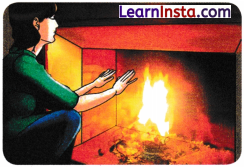
Question 1.
Which mode of heat transfer is involved here when Lila is stretching her arms?
________________________________________________________
________________________________________________________
Question 2.
Can heat be transferred this way in a vacuum (without air)?
________________________________________________________
________________________________________________________
Question 3.
Give another example of this type of heat transfer in nature.
________________________________________________________
________________________________________________________
B. Read the paragraph and answer the following questions.
Mihir took a long metal rod and heated one end of it using a candle. After a while, he noticed that the other end of the metal rod also become hot, even though it was not in direct contact with the flame.
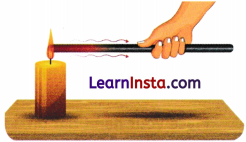
Question 1.
Which mode of heat transfer is taking place here?
________________________________________________________
________________________________________________________
Question 2.
Would this happen the same way if Mihir used a wooden stick? Why or why not?
________________________________________________________
________________________________________________________
Question 3.
What does this tell you about metal and wood as conductors of heat?
________________________________________________________
________________________________________________________
Word Puzzle
Complete the crossword with the help of the given clues.
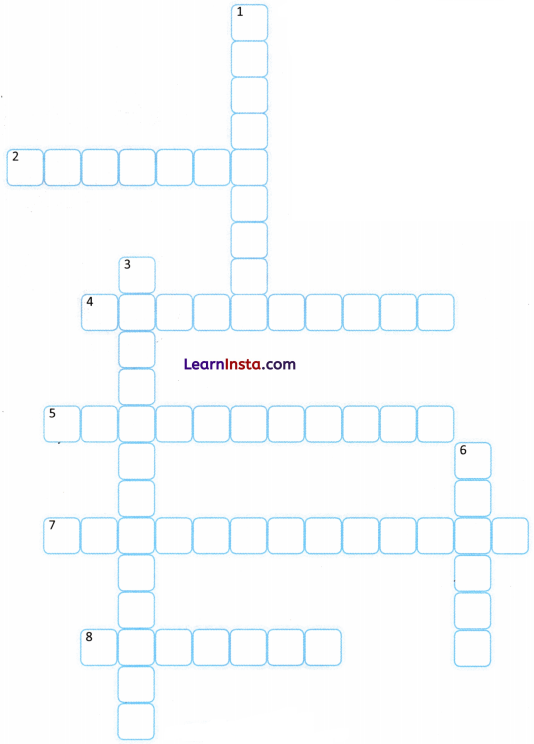
ACROSS
2. Underground layer storing groundwater
4. Heat transfer by the movement of particles of liquids and gases
5. Measures temperature
7. The famous ancient Indian methods for predicting seasonal rainfall by Varahamihira
8. Traditional room heater of the Himalayan region
DOWN
1. The movement of cooler air from the sea to land during the day
3. Tea or coffee kept in such cups stays hot longer
6. Materials that allow heat to pass through them easily
Activities
A. Talk to a few people in your community about how they conserve and use rainwater. Speak to at least three households. After your discussions, note what you learned. Based on their responses, suggest water-saving methods they could adopt. Prepare a detailed project with illustrations and present it to your teacher in class.
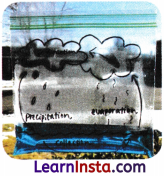
B. Create a mini water cycle in a ziplock bag by adding water and placing it in sunlight, as shown in the picture. What changes do you observe over a few days, and how do they represent the stages of the natural water cycle?
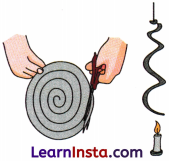
C. Take a sheet of paper and draw a spiral shape on it as shown in the picture. Carefully cut along the spiral line to create a spiral strip. Hang the paper spiral above a burning candle. What do you observe? What could be the reason behind this movement?